
8 Key Components of a Business Safety Program
A safe work environment does not happen by accident. A company’s management team must be fully engaged in creating, planning, implementing, communicating and making sure safety programs work and are designed to fit the business. Most importantly, employees have to understand their role in making their workplace safer.
Your company’s safety program should incorporate the following 8 key components:
- Demonstrate management involvement – Management must lead by example. A visible demonstration that you embrace a safety culture is imperative to its success. Provide the essential time, budget and resources to create and support a safety program.
- Communicate your safety plan clearly – Your safety plan must be published and available to all employees. Reminders and updates should be timely and effective. Allow employees to contribute their suggestions to making the workplace safer.
- Get everyone involved – A safety program is likely to be more effective when employees at all levels are involved. Standardized policies should outline responsibilities and accountability for all employees. Safety goals can become part of job descriptions and employee reviews. Safety committees can help ensure that safety practices are understood and reinforced throughout the company. Positive reinforcement of safe behaviors can be an effective way to help build the desired culture.
- Train your employees to work safely – Safety training should begin from the moment an employee is hired. Ongoing training is also essential to creating a safety culture.
- Review, revise, improve – A safety program should be dynamic, especially since most business environments continue to evolve. An effective safety program should be flexible enough to adjust to changes. Regularly review, evaluate and identify risks that could affect safety, and make the changes necessary to keep your workplace safe.
- Create safety standards – Each department should set safety standards through a Job Safety Analysis (JSA) to make sure every task is done correctly and safely. Recognize good safety performance, and cite and correct unsafe practices.
- Investigate every incident and accident thoroughly – Properly trained staff with experience in investigation, analysis and evidence collection should conduct an accident analysis as soon as possible after an incident. Report the claim within 24 hours to help ensure prompt response and injury management.
- Manage every injury – Even with the best safety program, an employee injury can still occur. Planning helps you to react immediately when an employee is injured on the job. Learn about five strategies that can help you put employees on the road back to productivity.
Initiating a comprehensive program can seem daunting, but I can help businesses like yours take the necessary steps to begin creating a safety culture. Insurance is only one piece of the puzzle. Effective risk management and loss prevention efforts go a long way to keeping insurance premiums down and other costs of doing business.
-JK
Source: Travelers Insurance
Slips, Trips & Falls, By The Numbers
Slips, trips and falls are one of the leading causes of unintentional injuries, according to the National Safety Council. Common areas for falls to occur are in doorways, ramps, cluttered hallways, unstable work surfaces, ladders and stairs. But how does this impact insurance? From National Underwriter P&C’s January issue, take a stats-eye view of these slippery expenditures:

Source: PropertyCasualty360
-JK
Travelers Insurance: Insuring Technology Companies
Travelers Insurance Company has joined the ranks of other major carriers such as The Hartford in writing coverage for technology companies. Travelers Global Technology President Ronda Wescott and Chief Underwriting Officer Mike Thoma provide their perspective:
If you have a Life Science or Software and Information Technology Company and would like a review of your current insurance portfolio, feel free to contact me anytime. I can help market your coverage’s with all the major carriers specializing in this sector.
Some of the most common insurance coverage’s important to the Life Science or Software and Information Technology industry are:
- Property
- Commercial General Liability
- Professional Liability (Errors & Omissions)
- Workers’ Compensation
- Commercial Automobile
- Commercial Umbrella/ Excess Liability
- Cyber Liability & First Party Data Privacy Expense
- Directors and Officers Liability (D&O)
- Employment Practices Liability
- Fiduciary Liability
- Crime
- Kidnap and Ransom
- Group Medical Insurance
- Group Life and Disability
-JK
The 10 Worst Cities for Drivers
Consumer advice website NerdWallet recently compiled a list of the 10 worst cities to drive in, based off five different criteria:
- number of days of precipitation
- annual hours of delay per commuter
- gas prices
- population density
- average city car insurance rates.
Here are the results:
- New York City, NY
- Detroit, MI
- San Francisco, CA
- Chicago, IL
- Washington, DC
- Seattle, WA
- Boston, MA
- Miami, FL
- Honolulu, HI
- Oakland, CA
I’m absolutely shocked that Los Angeles nor Orange County, CA is on this list. As the most dense city in America, New York City takes the top spot. While many of the others on this list are very dense cities as well, large
public transportation systems can be found in each and offer a less stressful option for getting around (Not true for LA or OC!)
-JK
The Ins and Outs of Small Business Insurance
Being an entrepreneur makes you the boss, but along with getting to choose your own hours, location, and business plan, it also means that you’re responsible for a lot of other things like commercial/business insurance. There’s a lot more to business insurance than getting the lowest business insurance quotes. It means understanding your business’s unique needs and the potential hazards that can threaten its success.
This brief video from the Insurance Information Institute touches on the ins and outs of small business insurance, including coverage for:
- Property loss
- Business disruption
- Theft
- General liability (including product liability)
- Professional liability (also known as “Errors & omissions,” or “E&O”)
- Employment Practices Liability
- Workers’ Compensation
Credit: Insurance Information Institute
-JK
An Audience Was Tricked Into Using Their Phones To See What Happens When You Text And Drive
Volkswagen created a pretty impressive PSA for an audience in Hong Kong that shows what happens when you look at your phone while driving.
After they were seated, the audience was shown a first-person view of a car on the road.
Using a location-based broadcaster, a person hiding upstairs then sent a text to everyone in the theater.
See what happens next…
“Mobile use is now the leading cause of death behind the wheel,” the ad finished.
Good work Volkswagen. I thought this was a clever and thoughtful message.
Credit: BuzzFeed
-JK
What’s Wrong With This Picture?

What’s Wrong With This Picture?
Powerful Driving-Safety Ad
This powerful and simple driving safety advertisement from the New Zealand Transport Agency will really make you think about speeding and will probably give you some serious goosebumps when you watch it.
From Mashable: the public-service announcement dissects an accident by freezing the moment before impact. A man who pulled out of an intersection too fast pleads for his life and that of his son. The request falls on deaf ears, though. “I’m going too fast,” replies the driver of the oncoming car. The point: Other drivers make mistakes, too, so be careful.
Take a look for yourself:
Be careful out there and make sure you think of others first before yourself when you’re running late for that party, for work, or wherever else you’re trying get to. Give yourself plenty of time so that you’re not putting yourself in the situation where you feel the need to speed.
-JK
Insurance For a Men’s Retail Clothing Store
I spent some time this Saturday morning working up some insurance quotes and options for a new men’s clothing retail store opening this Fall in Laguna Beach (CA). We’re looking into property, general liability, and workers’ compensation insurance coverage for the store.
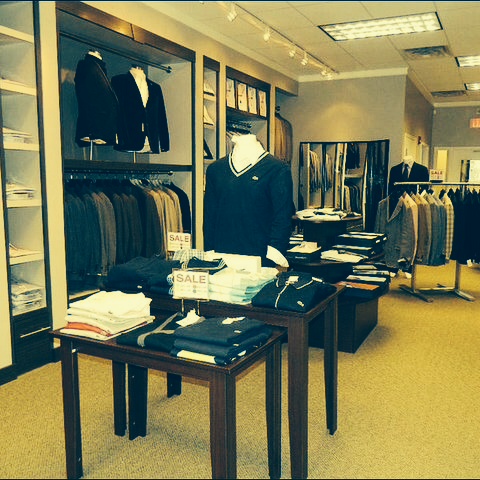 Since my brain is on the subject of insurance for retail clothing stores, i wanted to share a brief risk summary that you should think about if you own a retail clothing store.
Property exposures are limited, but if a fire should occur, the clothing provides a combustible fire load and is highly susceptible to water and smoke damage. Theft may be a concern if any of the items sold have high value. Appropriate security measures should be in place.
Crime exposures are from Employee Dishonesty and Theft of Money and Securities either from holdup or safe burglary. Employee dishonesty is controlled through inventory monitoring, control of the cash register, disciplined controls and division of duties. Theft prevention requires controls of monies kept in the cash drawers and regular bank drops.
Premises liability is always a concern in a retail exposure where the public comes to the premises. Floor covering must be in good condition with no frayed or worn spots on carpet and no cracks or holes in flooring. Sufficient exits must be provided and be well-marked, with backup systems in case of power failure. Dressing rooms must be well maintained and privacy carefully guarded. Shoplifting procedures must be fully understood and utilized by all employees.
Parking lots and sidewalks need to be in good repair with snow and ice removed, and generally level and free of exposure to slip and fall. If the business is open after dark, adequate lighting and appropriate security for the area must be present.
Products liability for this type of operation is normally low. Direct importing of clothes and tailoring can add to the exposure.
Workers compensation exposure is from lifting, which can cause back injury, hernia, sprain, and strain. What kind of training do employees receive, and what types of material lifting or conveying devices are used? If tailoring services are offered, injuries due to sewing and cutting injuries are possible.
Minimum recommended coverage:
Business Personal Property, Business Income, Employee Dishonesty, Money and Securities, Accounts Receivable, Computers, General Liability, Employee Benefits, Umbrella, Hired and Nonownership Auto, Workers Compensation. Many of these coverage’s can be included within a single Businessowners insurance policy.
Other coverages to consider:
Building, Leasehold Interest, Real Property Legal Liability, Forgery, Computer Fraud, Bailees Customers, Fine Arts, Employment Related Practices, Business Auto Liability and Physical Damage.
Have a retail clothing store and need some guidance on your insurance? You can contact me anytime to discuss. I’d be happy to help you out.
-JK
Source: Rough Notes, Inc
How Are Commercial Insurance Premiums Determined?
The way an insurance policy is rated determines how the policy premium is developed. Rating factors vary based on the line of insurance you are purchasing.
 If you are purchasing commercial property insurance, the building rating formula is based on factors including square footage, type of construction, sprinklered or non-sprinklered, the fire protection classification, etc.
If you are purchasing general liability insurance, the rating formula can be based on square footage, payroll, or gross sales depending on the general liability classification codes used. These are known as rating exposures.
Once the rating exposures are identified and the deductibles selected (usually from information you have provided on the application), the premium is calculated by a simple formula: rate x exposure = premium. The deductible amount you choose will be calculated in the rate. The higher the deductible (the amount you choose to self-insure) the lower the rate. By utilizing higher deductibles, you can bring your premium cost down; however, you do not want to jeopardize your company’s financial future by choosing overly large deductibles.
Speak with your broker-agent for the deductible options available to you when purchasing commercial insurance.
The basic rating equation most often utilizes other modification factors, which can include experience modifications, schedule rating, or judgment rating. Because rating formulas can range from simple to complex, depending on the line of insurance, it is important to discuss how your policy is rated and how the policy premium is calculated with your broker-agent.
Source: California Department of Insurance
-JK
About Me

I grew up in Fullerton, CA and graduated from Servite High School in Anaheim. I have my Bachelors degree from Loyola Marymount University in Los Angeles. I currently live in Tustin, CA.
Please contact me if you need help with any of the following lines of insurance for your business:
-Cyber / Data Breach
-Commercial Property
-Commercial General Liability
-Products Liability
-Workers Compensation
-Commercial Auto
-Umbrella/Excess Liability
-Errors & Omissions/ Professional Liability
-Employment Practices Liability
-Directors & Officers
-Life & Disability Insurance
 Jimmy Kinmartin, CPCU