
Commercial Building Vacancies – A Property Insurance Concern
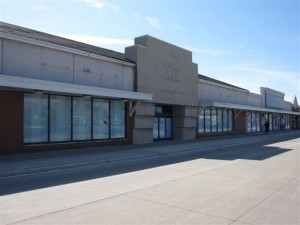 These past few years, the economy has been merciless. We’ve seen homes lost, businesses folding, and the American public as a whole has been agonizing as a result. It’s a trickle down effect. When jobs are lost, people don’t have money to spend, and businesses must close their doors. When those doors are closed, commercial building owners don’t have tenants to fill their space. All too often, it takes months or years before a vacancy is filled. And when things can’t seem to be any worse, this creates a whole new potential problem from an insurance standpoint.
Under the commercial property insurance form drafted by the Insurance Services Office and used by most insurance carriers, there is a vacancy clause in the property policy form which alters insurance coverage for buildings vacant for more than 60 consecutive days. Insurance carriers will generally not pay for any physical loss or physical damage caused by any of the following perils:
• Vandalism • Sprinkler leakage, unless you had protected the system against freezing • Building Glass Breakage • Water Damage • Theft • Attempted Theft
For any other covered causes of loss besides these, insurance carriers will usually reduce the amount they would otherwise pay by 15%.
If you own a commercial building which is currently vacant, contact your insurance agent to discuss possible alternatives or resolutions. As if the unrelenting economy hasn’t thrown enough at us, make sure you’re aware of this very important clause on your property insurance policy and stay protected!
-JK
9 Tips For Emergency Preparedness Planning
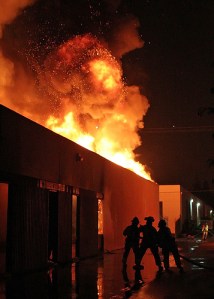
Courtesy of http://www.flickr.com/photos/smokeshowing
With everything going on out here in California this week with the Kern County wildfires, this post is more about risk management and mitigation rather than insurance. Fires and natural disasters can happen to anyone at anytime and in the blink of an eye and destroy everything you own and have worked extremely hard to build. Although there’s no stopping the rage of a fire, the devastation of an earthquake, or the wreckage of a flood, there are things you can do to mitigate loss.
Here’s a small list of steps you can take to prepare yourself for a natural disaster courtesy of The Hartford Emergency Preparedness Planning.
9 Practical Tips for the Small Business Owner
1- Establish an Evacuation Plan: Be sure everyone can get out quickly in an emergency. Designate primary and secondary evacuation routes and exits. Make sure these routes are clearly marked, well-lit, wide enough, and clear at all times. Train your employees in evacuation procedures and practice at least annually.
2- Keep an updated list of telephone numbers, including emergency personnel, hospital, public health, utilities, insurance agent, and disaster relief agencies. Include contact names and telephone numbers for customers, suppliers, and distributors. Keep a copy off site
3-Keep essential items on hand in the event of an emergency: first aid kit, flashlight with fresh batteries, battery powered radio, waterproof plastic bags and covers, camera with film, tool kit, and appropriate supply of bottled water and nonperishable food.
4- Protect vital records critical to your business (e.g., financial statements, account information, blueprints, product lists, etc.) Select a safe that has been tested and listed by Underwriters Laboratories UL rates safes for resistance to fire and heat, as well as resistance to burglary tools and torches. Or, keep copies offsite if possible.
5- Back up all critical electronic data and programs at least daily. Backing up these valuable assets can help a business recover from a data loss or hardware failure and get back online quickly.
6- Secure backup copies of critical data and programs in a physical location seperate from your premises to protect against damage from theft, fire, water and other physical hazards.
7- Determine if your business is located in an area that is prone to natural hazards (e.g., flood, earthquake, wildfires). Once you have identified perils to which your business is vulnerable, take steps to minimize potential damage to the building and contents (e.g.- if you are in earthquake territory, anchor tall bookcases and file cabinets to wall studs to keep them from falling).
8- Review your current property insurance policy with your insurance agent. Be sure that you understand the coverages (e.g., buildings, personal property, presonal property of others, business income, etc.), deductibles, and limits of insurance. You will need to buy seperate policies for flood or earthquake damage as they are excluded perils on property insurance policies.
9- Keep insurance information and contact names and numbers in a safe place. This will expedite the claim process in the event of a loss.
-JK
Blanket Your Commercial Property Insurance
Perhaps you’re a property owner of more than one commercial building. Or, a retailer with several retail stores. Maybe a professional service firm with multiple office locations. In any case, you want to blanket all your property together on your insurance policy under a combined single limit of insurance.

Think about it, blankets are always comforting, even insurance blankets
WHAT IS BLANKET INSURANCE?

Think about it, blankets are always comforting, even insurance blankets
Blanket insurance combines a number of separate property coverages and/or coverages at two or more locations under a single combined limit of insurance.
For example:
(1) A distribution plant at one location address has three different warehouse buildings on the property. You can combine the replacement cost of each of the three buildings and add them together to get one blanket limit. The benefits of this are if one of the buildings went down in fire, that particular structure isn’t at risk of being under-insured with its own insurance limit. It is covered under the blanket limit of all three buildings.
(2) A commercial building owner owns five different buildings, all at different location addresses. Under his/her commercial property insurance policy, they should take the total replacement cost of all five of their properties and blanket them together under one limit. Why? For the same reasons as above. If there was a loss at one location, the owner wouldn’t run the risk of being under-insured at that particular location.
It’s very inexpensive to endorse your commercial property insurance policy and blanket everything together. Blanketing your property offers you better protection on your assets for next to nothing in annual premium. It’s a no-brainer.
As with any property insurance policy, loss due to flood and earthquakes is excluded.
-JK
What Is Coinsurance?
If you think about a building and consider the potential causes of loss, what do you think the chances are that it could suffer a total loss vs. a partial loss? Take into account some of the more common causes of loss: fire, theft, water damage, vandalism, etc. It’s not often that a building is completely destroyed. Usually the only time you hear stories about this is in the news under extreme circumstances.
 Insureds who recognize this might take a gamble and limit the amount of insurance they purchase. Why pay the higher premium for full coverage when chances are it will never be needed? Individuals who purchase full coverage pay much higher premium than those who reduce the amount of their insurance.
In an effort to prevent this for happening and to encourage insureds to carry a reasonable amount of insurance in relation to the true value of their property, a coinsurance clause is included within many commercial property insurance policies. The coinsurance clause determines what percentage of the value of your property must be insured in order to be fully reimbursed for a loss. The most commonly issued coinsurance percentage is 80%
Here’s how it works:
Say a policy carries an 80% coinsurance clause. Using the following numbers as an example:
Total replacement cost of Building – 1,000,000
Applicable Coinsurance Percentage – 80%
Amount insurance carried – $600,000
Amount of Loss – $300,000
80% coinsurance means the insured is required to carry an amount of insurance equal to 80% of the replacement cost of the building ($800,000 in this case).
To compute the loss payout for the above example, use the following coinsurance equation:
(Amount of insurance Carried / Amount of insurance required) multiplied by the amount of loss equals the settlement.
Filling in the numbers, take ($600,000 / $800,000) multiplied by $300,000 equals $225,000.
So the insured lost out on $75,000 by not insuring their building to 80% of the replacement cost ($800,000)
Coinsurance limits the amount the insurer must pay for damaged property to that proportion of the loss. It is crucial that values of property are accurately reported and updated annually to reflect inflation and other increases in cost.
Now you know, and knowing is half the battle. –G.I. Joe
About Me

I grew up in Fullerton, CA and graduated from Servite High School in Anaheim. I have my Bachelors degree from Loyola Marymount University in Los Angeles. I currently live in Tustin, CA.
Please contact me if you need help with any of the following lines of insurance for your business:
-Cyber / Data Breach
-Commercial Property
-Commercial General Liability
-Products Liability
-Workers Compensation
-Commercial Auto
-Umbrella/Excess Liability
-Errors & Omissions/ Professional Liability
-Employment Practices Liability
-Directors & Officers
-Life & Disability Insurance
 Jimmy Kinmartin, CPCU