
Do I Need A Commercial Auto Insurance Policy For My Work Vehicle?
 I was asked a question last week about commercial auto insurance for a home based business. “Do I need a commercial auto insurance policy for a delivery van which will be used to deliver my product?” This particular business is a new venture. It’s a baked goods catering business which prepares all product at a third-party commercial kitchen.
It can be confusing trying to determine when a commercial auto insurance policy is necessary, especially for home based businesses. If you’re trying to figure out if you need commercial auto insurance, or if you can just get by with your personal auto insurance policy, here are some scenarios that will hopefully help you decide.
When Might I Need Commercial Auto Insurance?
- If a vehicle is used in tasks related to the operator’s job, profession or business (other than commuting).
- If you are using your vehicle to transport goods or people for a fee or if you use your vehicle to conduct a service
- If you need higher limits of liability because of the nature of your work.
- If you are hauling a considerable weight in tools or equipment or towing a trailer used to conduct your business.
- If employees operate the vehicle or if ownership is in the name of a corporation or partnership.
If you as an individual are the titled owner of your vehicle, and use it for business purposes, contact your insurance agent to discuss your policy. Be certain you’re covered adequately for business use and appropriate estimated annual mileage. Many business uses and vehicle types may be excluded from personal auto insurance policies, so you want to be sure you have the right coverage.
–JK
Tustin, CA Commercial Office Building Burns In Massive Fire
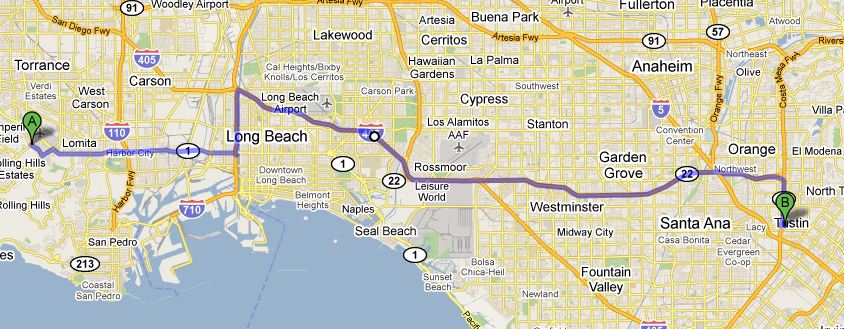 Not far from our office in Torrance, about 35 miles east in the city of Tustin, two firefighters were injured while battling a massive fire in a 50,000-square-foot commercial building on Tuesday.
The fire erupted inside the Maxim Healthcare building which is ironically the company I used to work for almost four years ago before I transitioned into the insurance world.
“All of a sudden, the glass just burst out of the first floor window, and flames immediately started coming out,” said a Maxim Healthcare employee. Firefighters had difficulties dealing with the massive 6-alarm fire. There were people inside the building at the time the fire was reported, however everybody got out okay.
The building was filled with years of important medical files and records. “All of our records were in there, either on the computer or on paper, so they’re up in flames,” said one Maxim employee. The flames were so intense that at one point, firefighters had to back out of the structure, and smoke could be seen for miles. About 100 firefighters responded, but an official cause of the fire has not been determined.
Here are pictures taken from the scene:


Large local fires like these always hit closer to home and make people realize it could happen to anyone, anytime. What if this happened to your building, your business, your office? Are you prepared?
7 tips for fire preparedness planning:*
- Establish an Evacuation Plan: Be sure everyone can get out quickly in an emergency. Designate primary and secondary evacuation routes and exits. Make sure these routes are clearly marked, well-lit, wide enough, and clear at all times. Train your employees in evacuation procedures and practice at least annually.
- Keep an updated list of telephone numbers, including emergency personnel, hospital, public health, utilities,insurance agent, and disaster relief agencies. Include contact names and telephone numbers for customers, suppliers, and distributors. Keep a copy off site
- Protect vital records critical to your business (e.g., financial statements, account information, blueprints, product lists, etc.) Select a safe that has been tested and listed by Underwriters Laboratories UL rates safes for resistance to fire and heat, as well as resistance to burglary tools and torches. Or, keep copies offsite if possible.
- Back up all critical electronic data and programs at least daily. Backing up these valuable assets can help a business recover from a data loss or hardware failure and get back online quickly.
- Secure backup copies of critical data and programs in a physical location separate from your premises to protect against damage from theft, fire, water and other physical hazards.
- Review your current property insurance policy with your insurance agent. Be sure that you understand the coverages (e.g., buildings, personal property, personal property of others, business income, etc.), deductibles, and limits of insurance. You will need to buy separate policies for flood or earthquake damage as they are excluded perils on property insurance policies.
- Keep insurance information and contact names and numbers in a safe place. This will expedite the claim process in the event of a loss.
*Other or additional measures may be required. Talk to a risk management professional
Never think it can’t happen to you! Be prepared.
–JK
Christmas Tree Safety Tips

(See video below showing how fast a dry tree can ignite)
Well, Thanksgiving has come and gone and the countdown for Christmas has officially begun, although retailers have been counting down since the end of September. We are officially 25 days away from the big day and that means it’s time to get out and find yourself that perfect Christmas tree. For most people, decorating the Christmas tree is their favorite part of the holiday. Although fun and decorative, natural and artificial Christmas trees start an average of 250 structure fires each year according to the National Fire Protection Association. These fires cause approximately 14 deaths, 26 injuries and $13.8 million in property damage yearly.
With this being said, the National Safety Council offers some Christmas tree safety tips to make sure a mishap doesn’t spoil your holiday season.
Christmas Trees
- Try to select a fresh tree by looking for one that is green. The needles of pines and spruces should bend and not break and should be hard to pull off the branches. On fir species, a needle pulled from a fresh tree will snap when bent, much like a fresh carrot. Also, look for a trunk sticky with sap.
- Cut off about two inches of the trunk and put the tree in a sturdy, water-holding stand. Keep the stand filled with water so the tree does not dry out quickly.
- Stand your tree away from fireplaces, radiators and other heat sources. Make sure the tree does not block foot traffic or doorways.
- If you use an artificial tree, choose one that is tested and labeled as fire resistant. Artificial trees with built-in electrical systems should have the Underwriters Laboratory (UL) label.
- Line-voltage holiday or decorative lights start an average of 170 home structure fires each year, according to the National Fire Protection Association. These fires cause approximately 7 deaths, 17 injuries and $7.9 million in property damage yearly.
- Keep natural trees watered!
Tree lights
- Only use indoor lights indoors (and outdoor lights only outdoors). Look for the UL label. Check lights for broken or cracked sockets, frayed or bare wires, or loose connections. Replace or repair any damaged light sets.
- Also, use no more than three light sets on any one extension cord. Extension cords should be placed against the wall to avoid tripping hazards, but do not run cords under rugs.
- Turn off all lights on trees and decorations when you go to bed or leave the house.
Tree ornaments
- Always use the proper step stool or ladder to reach high places.
- Read labels before you use materials that come in jars, cans and spray cans.
- Never place lighted candles on a tree or near any flammable materials.
- Avoid placing breakable tree ornaments or ones with small, detachable parts on lower branches where small children or pets can reach them.
- Do not hang popcorn chains and candy canes on the tree when small children are present. They may think that other tree ornaments are also edible.
Take these Christmas tree safety tips very seriously. Check out how fast this dry tree burns:
30 seconds might be too late!
(CYA disclaimer: Information and recommendations are compiled from sources believed to be reliable. I don’t assume responsibility for the correctness, sufficiency or completeness of this information or recommendations. Other or additional safety measures may be required under particular circumstances!)
–JK
Happy Thanksgiving!
Happy Thanksgiving Everyone!!! Be thankful for the things that matter: your health, your family, and your loved ones. And that there are three football games on today.

Hope you are enjoying it with family and friends!
–JK
Employee Injuries & Return to Work Programs
When you think about workplace injuries and workers compensation insurance, what are the first thoughts that come to mind? Perhaps the cost for medical care and rehab? Compensation for lost wages? Legal services related to a claim?
Have you ever thought of the hidden costs associated with workplace injuries? Consider the following:
- Lost productivity from an experienced employee
- Equipment or product damage
- Lost efficiency among employees
- Time spent completing forms and communicating with medical providers and insurance adjusters
Hidden costs are those costs that are not immediately recognized, but take a toll on business profitability. These hidden costs are not typically covered under a workers compensation policy and drain from a business’s bottom line. This is why a Return to Work (RTW) Program should be implemented to help control costs.
What is a Return to Work Program?
A return to work program gets an injured employee back to work in a productive position when they are physically capable; not necessarily the position they had at the time of injury. There are studies show that the longer an injured employee is off work, the more difficult it becomes to get them back into the workplace. A return to work program keeps the employee engaged in a work based routine, interacting with fellow employees and contributing productively to the business.
For a Return To Work Program to be effective, communication must occur. Prompt notification of the injury to your insurance carrier allows the carrier to work with the injured employee and medical provider to assess the employee’s physical capabilities after the injury. From there, your carrier and provider can work with you to develop a plan to return the employee to work.
Benefits of Returning Employees To Work
Accepting an injured employee into the workplace can help your business:
- Regain lost productivity.
- Avoid temporary or new employee hiring and training costs.
- Reduce or avoid litigation and discourage malingering.
- Increase awareness of safe work practices.
How to Develop a Return To Work Program
- Identify the physical demands of jobs or tasks. Involve key employees to help with this task. Evaluation forms are available from the Safety and Health Department.
- Identify transitional jobs that an injured employee could perform. Full time work is not required. Injured employees may work fewer hours and at a lower wage and be eligible to receive compensation benefits. This reduces insurance costs which may affect your insurance rates for several years.
- Tell existing and new employees during orientation that your company has a RTW Program and at time of hire. Let employees know that if they are injured on job, the company will attempt to find modified work for them.
- Before an injury occurs, speak with your designated medical provider or doctor. Tell them that you have a RTW Program, and that you have jobs to accommodate an employee who has physical limitations.
A RTW program can help control workers’ compensation costs after an injury occurs; however, the best method to control these costs is to prevent injuries through an effective Injury and Illness Prevention (IIP) Program. Contact the Safety & Health Department for a model IIP program.
–JK
Detroit Hospital Laptop Stolen With Personal Information
Henry Ford Health Systems in Detroit, MI notified patients of a possible security breach this week after a laptop was stolen out of an unlocked medical office on September 24th. Hospital representatives said although the password was protected, there is a possibility some personal patient information could be at risk.
The laptop contained patient information related to prostate services received between 1997 and 2008 and included some but not all of the following information: Patient name, medical record number, date of birth, mailing and e-mail addresses, telephone number, treatment and doctor visits. No Social Security numbers or health insurance information were stored on the laptop.
So, what does this have to do with my business?
Hospitals and medical offices are not the only organizations exposed to this type of loss. When you consider the massive exchange of data with portable devices like smart phones and laptops, and easily assessable web-hosted data systems and servers, there is a ton of data being transmitted through cyberspace. Throw technically sophisticated computer hackers into the mix and a whole new recipe of liability for your organization comes into focus- Cyber Liability.
Although you may have a general liability insurance policy to protect for company from bodily injury or property damage claims, traditional liability policies do not address internet exposures and the risks involved with internet business. That is why you must consider Cyber Liability Insurance. Cyber liability insurance policies can include:
- Coverage for any negligent act, error or omission by an insured that results in the improper dissemination of nonpublic personal information due to the unauthorized access or unauthorized use of an insured’s computer system.
- Coverage for any negligent act, error or omission by an insured resulting in the unauthorized access or unauthorized use of the computer system
- Coverage for any negligent act, error or omission resulting in the wrongful publication, defamation, slander or libel, product disparagement or other tort related to disparagement or harm to the reputation or character of any person or organization in an insureds Electronic Content or Advertising
Hospital or not, your business may be exposed to cyber liability claims if you do any business on the internet, or in this case, use portable devices like smart phones and laptops to conduct business.
–JK
Terrell Owens Nails Security Guard on MNF
Did anybody watch this touchdown catch by Terrell Owens on Monday Night Football? After the catch, a security guard on the sidelines gets nailed pretty good, and he looks like a pretty big guy too! Practicing insurance every day, my mind always thinks like an insurance agent. Call me sad, but the first thing that came to my mind watching this live was workers compensation insurance. If this guy was hurt on the hit, it would be a unique work comp claim. ‘Security guard hit by T.O. after a touchdown catch.’ Since he was on the job, it would definitely be a legitimate claim!
Take a look at this video.
Cyber Liability Insurance – New Technology Means New Liability Exposures
 The internet has changed the world over the past 15+ years. Almost daily, I am amazed about some cool new website or program that comes along which affects the way we do things in our lives. People and businesses alike are being transformed by technology and the internet. It’s an amazing progression, but as businesses continue utilizing new technology-based processes, they may not be aware of the emerging risks that could potentially threaten their bottom line. The Internet has yielded a whole new assortment of liability exposures which means anyone with a website now has additional legal liabilities to be concerned about. Creating a website is simple in comparison to the exposures that come along with having one. Companies on the web face liability exposures that are emerging, evolving, and complex.
Consider the following scenarios:
- External hackers gain access to your computer system and steal credit card information, SSN’s, or bank account information
- An internal employee mistakenly posts the names, addresses and SSN’s of your customers on the company homepage
- One of your employees inadvertently passes along a virus or other type of malware
- A rogue employee posting on a blog, social media page or discussion forum can make your company liable for slander or defamation
These are just a handful of examples of where your business could be exposed. Although you may have a general liability insurance policy to protect for company from bodily injury or property damage claims, traditional liability policies do not address internet exposures and the risks involved with internet business. That is why you must consider Cyber Liability Insurance.
Cyber liability insurance can be tailored to the needs of your business. Cyber liability insurance policies may include:
- Coverage for any negligent act, error or omission by an insured that results in the improper dissemination of nonpublic personal information due to the unauthorized access or unauthorized use of an insured’s computer system.
- Coverage for any negligent act, error or omission by an insured resulting in the unauthorized access or unauthorized use of the computer system
- Coverage for any negligent act, error or omission resulting in the wrongful publication, defamation, slander or libel, product disparagement or other tort related to disparagement or harm to the reputation or character of any person or organization in an insureds Electronic Content or Advertising
Businesses that get drawn into claims often have to deal with crisis management after the fact, so a cyber liability policy may also extend supplemental coverage for costs incurred in connection with a data privacy wrongful act to pay for a public relations firm, law firm or crisis management firm to maintain or restore confidence in an insured.
The bottom line is this: like it or not, the internet is here to stay. Some experts believe cyber liability insurance will become the norm for businesses, along with other common insurance types, such as property, general liability and workers compensation insurance. If your company is on the web, strongly consider making Cyber Liability insurance part of your insurance program.
Sports Championships, Riots and How They Relate To Insurance
Congratulations to the San Francisco Giants who beat the Texas Rangers to win the World Series this week. It was the franchises first championship since 1954 and their first since moving to San Francisco from New York after the 1957 season. You think the fans were happy? Like many other professional sports championship victories, passionate “fans” often congregate and begin to riot in celebration.
Luckily, riots don’t happen often but rest assured if they do, it is a covered peril on a property insurance policy (unless there is a specific exclusion attached to the policy form). So if your business gets stuck in the middle of excess celebration and your business property is damaged in a riot or civil commotion, you are covered under a standard property insurance form. Just make sure you carry the appropriate amount of insurance to cover your particular needs.
Six Employment Practices Statutes You Should Be Aware of as a Business Owner
 If you’re a small business owner, chances are you don’t have the luxury of your own Human Resources department to oversee employment law compliance or employee relations and communication. You probably have your hands tied in many other areas just trying to make it through each day. To make your job more difficult, state and federal bureaucracies throw lists of employment statutes at you that you must comply with or run the risk of getting sued. Among the long list, the following statutes are some of the more noteworthy ones, but certainly not the only to be concerned about:
- Title VII of Civil Rights Act of 1964 (Title VII): This statute is a common source of employment litigation. This Federal statute makes it unlawful for an employer to refuse to hire or terminate any individual, or otherwise to discriminate against any individual with respect to his compensation, terms, conditions, or privileges of employment because of race, color, religion, sex, including sexual harassment, national origin, and pregnancy, childbirth, or related medical conditions.
- Equal Pay Act: This act deals specifically with unlawful differentials in compensation based on sex. The Equal Pay Act makes it unlawful to pay employees at rates less than the rate applicable to employees of the opposite sex for equal work for jobs requiring equal skill, equal effort, equal responsibility, and where the work is performed in similar working conditions.
- Americans with Disability Act (ADA): The ADA prohibits discrimination on the basis of disability against a qualified prospective or current employee, defined as an individual with a disability who, with or without reasonable accommodations can perform his or her essential duties of the employment position for which the person desires or holds. Many states also have statutes that place additional requirements upon employers.
- Age Discrimination in Employment Act (ADEA): The ADEA applies to employees who are age 40 or over and makes it unlawful for an employer to fail or refuse to hire or terminate any employee or otherwise discriminate against any individual with respect to his or her compensation, terms, conditions, or privileges of employment because of their age. Many states apply ADEA to all ages prohibiting age discrimination of any kind.
- Fair Labor Standards Act (FLSA): The FLSA sets the minimum wage and maximum hour/overtime requirements. The Wage and Hour Division of the Department of Labor manages the administration of the FLSA.
- Family Medical Leave Act (FMLA): The FMLA offers certain employees with up to 12 weeks of unpaid, job protected leave a year, and requires health benefits to be maintained during leave as if the employee continued to work instead of taking the leave. This statute is the responsibility of the Department of Labor (DOL).
As a business owner, how do you feel when you read these? Content and compliant? Or disturbed? What if a lawsuit was brought against your business tomorrow for wrongful termination or emotional distress, among other things? You probably wouldn’t feel as bothered if you knew you had an Employment Practices Liability Insurance policy in force to protect your business.
As I’ve written on prior posts, Employment Practices Liability Insurance provides protection for an employer against claims made by employees, former employees, or potential employees. It covers discrimination (age, sex, race, disability, etc.), wrongful termination of employment, sexual harassment, and other employment-related allegations. Employment Practices Liability Insurance (EPLI) is needed by any business with employees and those which begin to hire employees. EPL claims are not limited to major corporations. In today’s litigious climate, employers of all sizes are vulnerable. In fact, six out of ten employers have faced employee lawsuits within the last five years.
The cost of employment practices liability coverage depends on your type of business, the number of employees you have, and various risk factors such as prior claims or loss history. Your insurance agent can provide a quote with very minimal information, often right on the spot. If you don’t have a policy in force now, you must consider calling your insurance agent right away to discuss. This might be your best alternative to not having your own HR department or HR director.
About Me

I grew up in Fullerton, CA and graduated from Servite High School in Anaheim. I have my Bachelors degree from Loyola Marymount University in Los Angeles. I currently live in Tustin, CA.
Please contact me if you need help with any of the following lines of insurance for your business:
-Cyber / Data Breach
-Commercial Property
-Commercial General Liability
-Products Liability
-Workers Compensation
-Commercial Auto
-Umbrella/Excess Liability
-Errors & Omissions/ Professional Liability
-Employment Practices Liability
-Directors & Officers
-Life & Disability Insurance
 Jimmy Kinmartin, CPCU