
What Is A Workers Compensation Insurance Experience Rating?
I attended a workers compensation related seminar this past week on the subject of insurance and more specifically, the infamous “experience rating.” Five minutes after the seminar began, I was reminded how complicated the subject is when it comes to the statistics and calculations of experience ratings. I figured it would make a good insurance blog topic if I could somehow weed out the x’s and o’s and put it into layman’s terms on what it all means to you, the business owner who has an experience rating tied to your workers compensation insurance policy.
What is an experience rating?
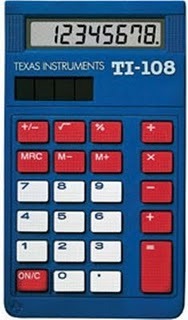 California’s workers’ compensation experience rating system is a rating system intended to provide employers a financial incentive to reduce work-related accidents. It’s a method for adjusting premium rates to reflect an individual employer’s claims history. Essentially, it predicts an employer’s future losses based on past experience and compares the loss or claims history of one company to all other companies within the same industry/classification.
Employers may receive discounts off their premium for good claims records or may be surcharged for their poor claims records.
There are approximately 500 different business classifications used to describe the various types of businesses in California. Businesses assigned to your SIC (standard industry classification) are relatively similar to your business, however, there are differences which can have an impact on workers’ compensation claims costs. To address these variations and encourage workplace safety, experience rating adjusts the premium you pay either upward or downward based on a comparison of your company’s history of payroll and claims to what is expected for businesses of similar size within the same industry classification. This comparison results in your “experience modification.” An experience modification greater than 100 results from less favorable loss experience compared to the average of other similar businesses, and vice-versa, an “ex-mod” less than 100 results from more favorable loss experience compared to the average of other similar businesses .
Experience rating places more emphasis on the frequency of injuries than on the severity. An employer with one large loss ($100,000) will pay less for future insurance than an employer with 10 smaller lost time claims of $5,000 each – a total of $50,000 in losses. Experience rating cushions the blow of a large loss, but hammers employers with frequent losses.
What is the need for experience rating?
- To provide a direct financial incentive for employers to reduce accidents and encourage safety– This allows employers to develop loss control programs and establish safety programs which create premium incentives.
- To distribute the cost of insurance equally among employers in an industry classification– The reality is there is no “average” employer for a given classification code. The experience modification takes this into account to encourage the emphasis on loss control. Differences in management practices and methods of operation are reflected in final premium.
Who gets experience rated?
All California employers meeting minimum qualifying premium (Qualifying premium for 1/1/2011 is $16,700 and is amended annually). This accounts for approximately 120,000 employers in CA. Qualification is automatic and mandatory.
So what does this mean?
The science to determining your experience modification is pretty complicated. What you need to know is you want to keep your experience modification down, as it will bring your workers compensation premium down. To do help do this, you should develop loss control and safety programs to control work related injuries. It starts with you. Your management practices and methods of operation are reflected in your final workers compensation premium. If you don’t know where to start, contact your agent or carrier. Insurance carriers will help customize a loss control program for your business. They want to control loss just as much as you do.
Resources: WCIRB California; State Compensation Insurance Fund
–JK
U.S. Open During Thursday Lunch Hour
I just joined a fantasy golf league so I need to keep on top of the action this weekend in the U.S. Open of golf. I spent the lunch hour today at my desk to watch the action live online from Congressional Country Club in Bethesda, Maryland. Not a good start for my team though…

-JK
Safety First: Ladders
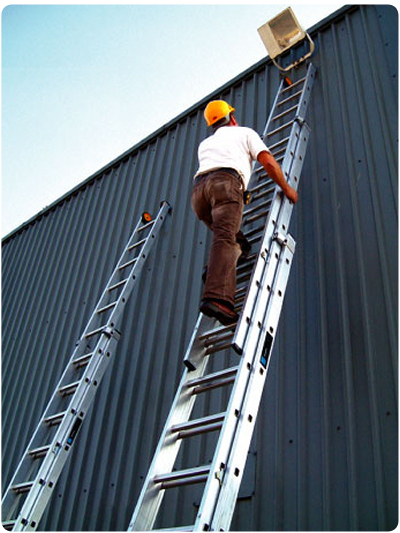 Yesterday I received a call from a client, a contractor, reporting that one of his employees fell off a ladder and broke his elbow on the job on Monday afternoon. As the employer, he did the right thing in seeking immediate medical care for the employee at the nearest medical facility. He obtained as much information as he could about the injury and supporting info from the employee’s personnel file including name, address, phone, DOB, SS#, date of hire, and wage info. We called in the claim this morning to the carrier and a claim adjuster is now working with our insured to guide him and the employee through the treatment process.
Safety In The Workplace
Statistics show that falls from ladders injure over 20,000 workers annually. Some injuries result in permanent disabilities and even fatalities. If you’re working in a job capacity that calls for ladder use, be sure to make ladder safety a high priority for your employees. By following these safety guidelines, you can help prevent ladder accidents.
Safety starts before the ladder is even mounted.
- Before using any ladder, check its condition. Make sure there are no broken, cracked, or missing rails and that rungs are not slippery from grease or oil.
- Check for damage or corrosion on metal ladders.
- If a ladder is in poor condition, don’t use it. Report the problem so it can be tagged and repaired.
- A competent person should periodically inspect all ladders and remove damaged ladders from use until they are repaired.
When choosing and using a ladder, keep the following in mind:
- Choose the appropriate type and size ladder for the job, including correct fittings, and safety feet.
- Near electrical conductors or equipment, use only ladders with non-conductive side rails.
- Set the ladder on solid footing, against a solid support.
- Place the base of a straight ladder out away from the wall or edge of the upper level about one foot for every four feet of vertical height.
- Be sure straight ladders are long enough so that the side rails extend above the top support point by at least 36 inches.
- Single cleat job-made ladders should be 15 to 20 inches wide with ladder cleats uniformly spaced 12 inches apart.
- Never try to increase the height of a ladder by standing it on other objects, such boxes or barrels, or by splicing two ladders together.
- Portable ladders should be tied, blocked or otherwise secured against movement.
- Keep ladders away from doorways or walkways, unless they can be protected by barriers.
- Keep the area around the top and base of the ladder clear. Don’t run hoses, extension cords, or ropes on a ladder; these may create obstructions.
- To avoid slipping on a ladder, check your shoes for oil, grease, or mud and wipe it off before climbing.
- Climb the ladder carefully, facing it and using both hands. Use a tool belt or hand line to carry materials.
- Most ladders are designed to hold only one person at a time. Two persons may cause the ladder to fail or be thrown off-balance.
- Don’t lean out to the side when you’re on a ladder. If something is out of reach, get down and move the ladder.
- Ladders should never be used sideways as platforms, runways or scaffolds.
- Choosing and using ladders wisely is a step in the right direction.
Source: State Compensation Insurance Fund
–JK
Why Am I Being Asked For A “Waiver of Subrogation” On My Insurance?
Ever heard of the term, “waiver of subrogation”? Sounds pretty foreign, doesn’t it? Well it kind of is. If you’re a business owner with liability insurance, you may have had a request from a client or landlord at some point asking for a certificate of insurance with a “waiver of subrogation” for general liability, workers compensation and/or auto liability. I’m actually writing this post because it’s something that I have been working on this week trying to place a new client with an insurance carrier. This client happens to be a self-storage facility.
You see, this self storage facility houses a beer distributor. One of the conditions of writing insurance for this client (the storage facility) with this particular carrier, is to have the tenant (beer distributor) provide a “certificate showing that the insured is named as an additional insured on the General Liability policy with waivers for both the GL and auto. Minimum $1 million limits.”
What does Waiver of Subrogation mean?
The definition of ‘Waiver of Subrogation” is: “The relinquishment by an insurer of the right to collect from another party for damages paid on behalf of the insured. A waiver of subrogation is often referred to as “transfer of rights of recovery.” A waiver prohibits an insurance carrier from recovering the money they paid on a claim from a negligent third-party.
For example, suppose you own a building which burns down due to the negligence of a third-party. Normally you could sue the negligent third-party for causing your building to burn down. If your fire insurance company pays off your claim, however, the insurance company is then “subrogated” to your claim against the negligent third-party. This means your claim against the negligent third-party is treated as having been assigned to the insurance company, which may sue him/her to recover the amount it paid you on account of the fire loss.
Many, but not all, general liability policies allow you to waive your rights of subrogation as long as it is done in writing and prior to a loss. Some contractual agreements, such as some facility rental agreements, require you to waive your right of subrogation (and therefore your insurance company’s rights) against them in the event of a claim.
The good news is that you, the insured, doesn’t have to worry too much about what this terminology means should you get a request from a client or landlord. Simply forward to your insurance agent/broker and be sure to bounce any questions that you may have off them. Our job is to be your insurance partner and deal with these types of insurance requirements or questions you have.
–JK
Memorial Day Weekend In Chicago
I’ve been wanting to put up a post for a few days now, but our internet has been all messed up since a power outage we faced earlier in the week. Anyhow, we had an awesome Memorial weekend in Chicago last weekend, a city I can say I’ve FINALLY seen. I’ve been wanting to go for forever but the wait was well worth it.
We got to go game 5 of the NBA Eastern Conference finals between the Heat and the Bulls. That was an unbelievable surprise from friends, Mike and Sara. Also, the one thing I wanted to do most, we went to Wrigley Field for a Cubs/Pirates game. For a huge baseball fan- what an experience…..I was in awe the entire game that we were sitting in Wrigley friggin field. My brother and I used to watch daytime baseball almost daily on WGN, listening to Harry Caray on our summer breaks. No school, nothing to worry about, just watching baseball.
Oh yeah, has anyone ever been to Kuma’s Corner?!?! We waited an hour and a half on a Thursday afternoon to be seated (I hear 3+ hours on the weekend). Best mac-n-cheese I’ve ever had and possibly the best burger too, along with an excellent variety of beers. This is an even better atmosphere if you like metal. My burger, the Iron Maiden burger. This place is a must if you visit Chicago.
Here are some photos of our trip. Enjoy…
About Me

I grew up in Fullerton, CA and graduated from Servite High School in Anaheim. I have my Bachelors degree from Loyola Marymount University in Los Angeles. I currently live in Tustin, CA.
Please contact me if you need help with any of the following lines of insurance for your business:
-Cyber / Data Breach
-Commercial Property
-Commercial General Liability
-Products Liability
-Workers Compensation
-Commercial Auto
-Umbrella/Excess Liability
-Errors & Omissions/ Professional Liability
-Employment Practices Liability
-Directors & Officers
-Life & Disability Insurance
 Jimmy Kinmartin, CPCU