
Booze At the Office Holiday Party?
How many times have you been to a company holiday party with an open bar where the booze is flowing and everyone’s getting loose? As the night progresses you begin to see that one co-worker of yours getting sloppy and progressively more sloshed? The words start to slur and the volume picks up as the inhibitions fall. Maybe it was you? Heck, maybe it was everyone there. Who knows what can happen from there!
 An office holiday party can be a nice way to mark the season and to share a little warmth and appreciation with co-workers, but they can also be danger zones where inappropriate behavior could lead to highly unforeseen consequences. Employers want to share their appreciation for their employees and allow them to have a little fun, but serving alcohol at the office holiday party can be a huge source of potential disaster.
Some people interpret office parties as an invitation to let their guard down in ways that are a liability to the company. It is no big revelation that infusing a holiday party with alcohol can lead to lowered inhibitions and poor judgment. Even a well-meaning and otherwise mild-mannered employee might throw out an inappropriate joke or comment after a few drinks. And even if the party itself ends without incident, employers can still be liable for any harm caused by an intoxicated employee on his or her way home.
Alcohol consumption just might be the most sensitive issue an employer must consider when planning an office holiday party. Sure, employers can always opt to have a nonalcoholic gathering (party like it’s prohibition) which would significantly reduce the likelihood of booze-induced problems, but this might be a little extreme to some. Short of complete ban of alcohol, employers might want to consider some of the following options, and implement measures specific to the makeup of their workforce:
- Have an all-cash bar, and staff it with a professional bartender.
- Cut off the free flow of alcohol well before the party ends.
- Provide employees with a specific number of drink tickets redeemable at the bar.
- Restrict the type of alcohol available, either none or only beer and wine
- Provide plenty of food to balance the effect of a couple drinks.
- Provide for company-paid taxis to ensure a safe trip home for any employees who drink at the holiday party.
- Collect car keys from employees who drink.
- Offer door prizes to employees who volunteer as designated drivers.
- Station a high-level management employee at the exit to wish everyone goodnight, while monitoring for tipsy party-goers.
- Hold the party at a location that discourages driving, such as a hotel
- Invite deterrents. Sometimes the presence of a spouse or significant other can help employees keep their behavior and their drinking under control.
- Holiday party hosts should be on the lookout for any revelers who have overindulged and take whatever steps are appropriate, including ensuring that no further alcohol is consumed by such employees and arranging for transportation.
Maybe you have other ideas that are just as effective. Whatever it might be, even if you take every measure in the book to curb liability, there is no guarantee that nothing problematic will happen. I’m not saying to let your worries get the best of you to the point you can’t enjoy your own party, but don’t turn your head and look the other way if a dicey situation arises. Who knows what can happen when you throw booze into the equation. It’s better to be safe than sorry!
–JK
Four Insurance Endorsements You Shouldn’t Go Without
First off, what’s an endorsement you ask? As defined by the Insurance Information Institute, an endorsement is a written form attached to an insurance policy that alters the policy’s coverage, terms, or conditions. When an insurance policy is endorsed, the premium paid for the policy can change. However, not by much considering the additional coverage provided.
The following four endorsements are not typically part of a regular property or general liability insurance policy, but they are a must if they apply to your operations.
- Hired & Non-Owned Auto Liability: Hired & Non-owned auto is a small endorsement which can have a huge impact on your general liability insurance coverage. It protects your business from bodily injury and property damage claims caused by a vehicle you rent or borrow; or caused by vehicles owned by others, such as your employees. A simple errand to the store by an employee can put your business at high risk if you don’t have this endorsement on your general liability policy.
- Employee Benefits Liability: Liability of an employer for an error or omission in the administration of an employee benefit program. Coverage is intended to extend to the “administration” of these plans, including counseling employees, handling records, enrolling/terminating/cancelling employees in specified plans on a timely basis, etc. This endorsement is usually added to the general liability policy but may also be provided by a fiduciary liability policy.
- Earthquake Sprinkler Leakage (For CA & other earthquake regions): Earthquake is an excluded peril on a standard property insurance policy and your fire sprinklers bursting as a result of an earthquake and discharging water all over your property is not covered either. However, by adding an Earthquake Sprinkler Leakage endorsement to your property policy, you would be covered for the water damage caused by bursting sprinklers from an earthquake. This is never more than a few hundred dollars to add.
- Sewer Drain & Backup: Fall and spring tend to be the wettest seasons of the year, making buildings and homes most susceptible to the backup of sewer or drain lines. These events don’t occur often, but when they do, it can become a small disaster. A standard property insurance policy excludes coverage for such an event. The backup of sewer and drains as well as the failure of a sump pump is also excluded on a standard property policy. The damage you sustain from either of these problems will not be covered and you’ll be responsible to pay for the loss and the clean up. You shouldn’t go without this coverage endorsement.
To reiterate, it’s never more than a few hundred dollars annually to add any of these endorsements to your existing property or general liability insurance policies. In fact, it’s usually less than $100 in many cases for small businesses. With the amount of coverage provided by adding them, this is pocket change! Be sure to review your policies today to see if you carry these endorsements on your current policies.
–JK
All Businesses Are Vulnerable to Catastrophic Auto Liability Claims
Last month, on August 9th, a tour bus carrying Japanese sightseers from Las Vegas, NV to a national park in Utah, crashed on Interstate 15 north of Cedar City, Utah. Three were killed in the crash and 11 injured.
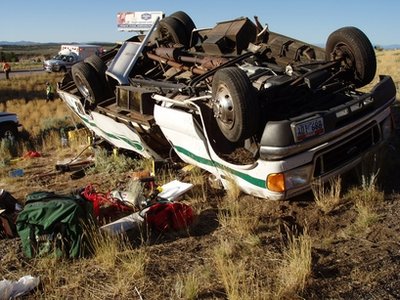
This photo released by the Utah Highway Patrol shows the bus at the scene of a crash north of Cedar City, Utah
The 26 year-old driver of the bus was reported to have smoked marijuana heavily for several days before falling asleep at the wheel of the tour bus when it crashed. He was charged yesterday with 10 felony counts of negligent driving under the influence, and one misdemeanor charge of having marijuana residue in his system.
To date, no charges have been filed against the bus company he was driving for. That company supplied the shuttle bus and driver to other tour operators who organized the trip.
What if this happened to your business?
You might not be in the tour bus industry, but this doesn’t mean an accident of this magnitude can’t happen to your business. Do you own commercial autos titled under your business? Have a commercial auto insurance policy in force? Or, do you simply have employees run errands to the post office, store, or to pick up your lunch? What if your employee was distracted at the wheel and veered off the road killing or injuring others? Are you certain your business is covered for these circumstances? You may want to inquire with your insurance agent NOW to confirm.
Aside from having the proper insurance coverage in force to protect your business from auto liability claims, here are some basic risk management measures you can take as a business owner to help mitigate the situation. Although, following these measures is no guarantee accidents will NOT happen.
If you have additional stories, advice, or recommendations to share, please comment!
–JK
Not So Fun Business Injury Facts
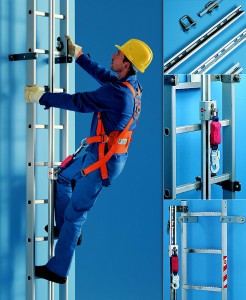 Businesses deal with risk everyday. Whether it be liability risks such as injuries to employees or customers, or property loss risks such as fire or theft, businesses must implement risk control and risk management procedures to protect their operations. Of course, accidents happen and this is why insurance is necessary. Here are six (not so fun) injury facts courtesy of Travelers Insurance:
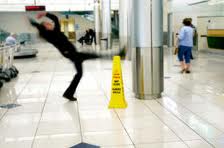
- 25,000 slip and fall accidents occur daily in the U.S., accounting for 15 percent of all workplace accidents. It is also the leading injury to people on company premises.
- Back injuries account for more lost work time than any other workplace injury. Often, the source is improper lifting.
- Fires in commercial buildings cost more than $2 billion in annual property damage and loss. Lack of, or improper maintenance of sprinkler systems plays a significant role.
- Musculoskeletal disorders results in over $45 billion in loss wages and productivity costs. Organized office workstations and poor ergonomic practices are contributors.
- Adverse weather is the leading cause of vehicle accidents and fatalities. Many company drivers don’t understand the risk or how to adjust their driving behaviors.
- Falls from ladders injure over 20,000 American workers annually. Some injuries result in permanent disabilities and even fatalities. Safety starts before the ladder is even mounted.
General Liability Insurance – Medical Expenses Coverage
As it has been established, general liability coverage is for situations where a third-party claims you or your business was negligent for bodily injury or property damage and sues for those damages. General liability protects your business against incidents that may occur on your premises or at other covered locations where you normally conduct business. When you look at the declarations pages on your commercial general liability policy, it looks like this:
| BUSINESS LIABILITY | LIMITS OF INSURANCE |
| LIABILITY AND MEDICAL EXPENSES | $1,000,000 |
| MEDICAL EXPENSES – ANY ONE PERSON | $10,000 |
| PERSONAL AND ADVERTISING INJURY | $1,000,000 |
| DAMAGES TO PREMISES RENTED TO YOU | $300,000 |
| PRODUCTS-COMPLETED OPERATIONS AGGREGATE | $2,000,000 |
| GENERAL AGGREGATE | $2,000,000 |
Business owners often wonder what the medical expenses coverage entails. They sometimes ask why this limit is so low in comparison to the other limits listed? “Medical expenses are costly, why only $10,000 limits here?” The answer to this question is, where liability coverage is for situations where a third-party claims your negligence for bodily injury or property damage, the medical payments coverage is an exception, as it pays medical expenses for bodily injury to third parties as a result of your operations regardless of fault.
People are less likely to sue you if they receive prompt medical payments to cover the costs of any injuries they have sustained for which they could claim your business or organization is liable. Medical Payments coverage gets the payments to them without their having to file a lawsuit or go to court and engage in a lengthy claims process. This coverage also allows your insurer to pay small nuisance claims without the need for costly legal expenses.
If there is a liability claim and medical expenses are paid, but a lawsuit still arises, general liability will still protect for a covered claim. The purpose of medical expense coverage, however, is to prevent this from happening.
-JK
Commercial Umbrella Insurance Defined
 Commercial umbrella insurance, also referred to as excess liability, provides coverage when a liability claim goes above the aggregate limit of liability and the basic policy limits are exhausted. By purchasing a commercial umbrella, you can protect your business from being liable for this excess liability in a judgement. For instance, if you have $1 million in general liability coverage and a covered claim is settled for $1.5 million, your small business’s umbrella liability insurance policy would pick up the additional amount.
Commercial automobile, commercial general liability, workers compensation, or any other liability policies can be covered by a commercial umbrella.
Not only does an umbrella cover underlying insurance policies, but they may also provide coverage if a basic liability policy is not in force or when there are gaps in coverage under basic liability policies. When a commercial umbrella needs to step up and provide coverage for basic liability loss, it does not pay the loss from the first dollar. It’s common to have a Self-Insured Retention (SIR) amount of at least $10,000. SIR is the equivalent to a deductible. That means if there is a liability claim or loss and no corresponding underlying policy in force, you must pay the first $10,000 of the loss before the umbrella policy responds.
Commercial umbrella policies are typically purchased in $1M increments. The premiums vary depending on your business classification and underlying policies. Policies are often inexpensive considering the added coverage a business gains. For everyday businesses with average risk exposures, umbrella premiums are usually in the ballpark of $400-$600 annually for each $1M purchased.
You can never go wrong purchasing a commercial umbrella policy for your small business. A single umbrella provides broadened protection over all your small business liability exposures. Having the added protection of a liability umbrella policy is coverage no small business should go without.
-JK
General Liability Insurance: What Does “Additional Insured” Mean?
As a business owner, it’s likely you’ve been asked at some point or another to add a client, landlord, or similar entity onto your general liability insurance policy as an “additional insured.” You might ask, why do I need to put them on my business insurance policy?? What about their insurance policy? Well, here’s a little background on what it means and why it is requested so often in doing business.
 Adding another entity as an additional insured on your general liability insurance policy serves to protect that additional party in the event of negligence on your part as the primary policyholder, or “named insured.” It is not the intent of your policy to pick up the liability of another party when you had nothing to do with a claim or occurrence.
Here are some loss examples to give you a better understanding:
• You are a sub-contractor and have added a general contractor on your policy as an additional insured by request. An individual walking the grounds of your job site sustains a serious injury from a fall caused by a pothole in a parking lot. The parking lot is being built by you. This individual brings a suit against the general contractor who is covered as an additional insured on your policy.
• You are a tenant of a commercial building and have added the landlord of your building as an additional insured per the terms of your lease. A customer visits your premises and slips on a wet spot on the vinyl floor. The customer cracks their head open and brings a suit against the landlord who is covered under your policy.
Typically, a larger and more powerful business will require that smaller entities (desiring to do business) have the larger business named as an additional insured. This reduces the loss exposure of the additional insured and keep its premiums manageable.
-JK
Why Your Business Should Consider A Cell Phone Usage Policy
Did you know that more than 1.5 million collisions a year, or 4,300 crashes daily are caused by driver distractions or inattentive driving? This comes from the National Highway Traffic Safety Administration. Probably the most obvious reason for driver distraction comes from cell phones and PDA’s. Whether it be text messaging, emailing, or straight talking, people on the road seem to make it their priority, putting driving secondary. Even here in California where it’s against the law to use hand-held devices while operating a vehicle, most don’t seem to care from what we see first-hand on the road every day. If it isn’t the cell phone, then it might be laptops, GPS systems, food, drinks, reading, writing, grooming and other crazy things.
 A 2009 study from the Virginia Tech Transportation Institute reflects the severity of cell phone distraction while driving. From dialing and talking to reaching and texting, cell phone usage while driving can be over 23 times riskier than non-distracted driving. Text messaging is by far the riskiest as the study results show.
The important message here is if you’re an employer, you may be held liable if one of your employees causes an accident, catastrophic or not, from distracted driving. As long as that employee is driving in the course of employment, then beware. It’s highly recommended to establish a cell phone usage policy for your business and to educate your employees on the potential severity of their actions. If employees must use their phone to conduct business, they should at least pull over to the side of the road or into a parking lot. Or, get out of the car completely.
1.5 million accidents a year is substantial number. However, it might only take one employee accident to affect your business substantially. Know your risks!
-JK
Photo Courtesy of TPS Report; Additional Resource: Insurance Information Institute
Auto Liability Insurance You Must Have
For all you business owners out there, do you ever send your employees on errands to the store or to the post office? To pick up food for the office? Do you have sales reps driving their own autos to meet clients or potential clients? Ever go on business trips and rent cars? If you have a business of any kind, I’d be shocked if none of these scenarios apply to your daily/weekly/yearly operations.
 Have you ever thought about what would happen if that employee you sent to pick up lunch hit a pedestrian and seriously injured or even killed them? Or if your sales rep was involved in an accident causing serious bodily injury or property damage to others involved? Unfortunately, accidents are not uncommon and when an employee causes an accident, the injured party will more than likely look to YOUR company to pay damages.
This is why you need to be certain ‘Hired & Non-Owned Auto’ liability is added as an endorsement to your commercial general liability insurance policy. Your business doesn’t need to own vehicles for this to apply.
Hired & Non-owned auto is a small endorsement which can have a huge impact on your general liability insurance coverage. It protects your business from bodily injury and property damage claims caused by a vehicle you rent or borrow; or caused by vehicles owned by others, such as your employees. It usually does not pay for physical damage to the vehicle itself; that’s covered by the owner’s insurance (although this option is sometimes available).
What’s great is that it’s incredibly inexpensive to add this coverage to your existing general liability insurance policy. Usually no more than $100-$200 annually for $1,000,000 in coverage! To be blunt, you would be dumb not to carry this endorsement if it is an option on your GL policy.
Be sure to check your current policy to see if this endorsement has been included. If it’s not, or if you’re uncertain, call your agent today to discuss! Accidents are not uncommon, so tomorrow may be too late!
-JK
What Is The Aggregate Limit On A Liability Insurance Policy?
When you see the term “aggregate” on an insurance quote or policy, it is a limit stipulating the most an insurance carrier will pay for all covered losses sustained during an insurance policy term, usually a policy year. Aggregate limits are commonly included in liability policies, from general liability to professional liability. These policies have a “per occurrence” or a “per claim” limit as well.
When you look at your policy form, the liability section is laid out something like this:
| BUSINESS LIABILITY | LIMITS OF INSURANCE |
| LIABILITY AND MEDICAL EXPENSES | $1,000,000 |
| MEDICAL EXPENSES – ANY ONE PERSON | $10,000 |
| PERSONAL AND ADVERTISING INJURY | $1,000,000 |
| DAMAGES TO PREMISES RENTED TO YOU | $300,000 |
| PRODUCTS-COMPLETED OPERATIONS AGGREGATE | $2,000,000 |
| GENERAL AGGREGATE | $2,000,000 |
The per occurence limit is the most the carrier will pay per occurence, and the aggregate is the most they’ll pay in claims during the policy period regardless of the number of claims.
About Me

I grew up in Fullerton, CA and graduated from Servite High School in Anaheim. I have my Bachelors degree from Loyola Marymount University in Los Angeles. I currently live in Tustin, CA.
Please contact me if you need help with any of the following lines of insurance for your business:
-Cyber / Data Breach
-Commercial Property
-Commercial General Liability
-Products Liability
-Workers Compensation
-Commercial Auto
-Umbrella/Excess Liability
-Errors & Omissions/ Professional Liability
-Employment Practices Liability
-Directors & Officers
-Life & Disability Insurance
 Jimmy Kinmartin, CPCU