
Commercial Insurance Market Remains Firm, But Shows Early Signs of Moderation
According to the latest data from the Ivans Index, the commercial insurance market continues to stay firm overall. Nevertheless, there are early signals that conditions may be easing from the peak tightening we’ve seen in recent years.
For most major commercial lines, average premium renewal rates increased year-over-year in the fourth quarter of 2025. This is a sign that carriers are still disciplined in their pricing. They demonstrate careful underwriting. However, some lines showed moderation or even decreases compared to the prior quarter.
Here is some notable data by line of business (Q4 2025 vs Q3 2025):
Lines Showing Reduced Renewal Momentum
- Commercial Auto: Average renewal rate declined to 6.97% from 7.60% last quarter potentially indicating more competitive pricing or underwriting tightening easing. Based on other reports I regularly monitor, I don’t expect this to be the case anytime soon.
- Business Owners Policy (BOP): Averaged 7.52% with a slight reduction vs Q3.
- Workers’ Compensation: Continued its downtrend with a -1.61% change. Still negative but a modest move compared with prior quarters.
Lines Still Firm or Hardening
- General Liability: Saw a notable increase……7.23% in Q4 vs 5.89% in Q3.
- Commercial Property: Continued upward momentum with an average 8.01% renewal change.
- Umbrella: Also ticked up slightly, ending the quarter at 9.49%.
The data suggests the overall market is still firm, particularly in liability and property exposures where carriers remain cautious. That said, the softening in some lines, like commercial auto and workers’ compensation, indicates that carriers are adapting. They are reacting to evolving risk conditions and competitive dynamics.
For insureds, expect continued firm conditions in key exposures, especially if loss activity or inflationary pressures persist.
One thing that remains consistent, proactive risk management and strong loss history remain crucial differentiators when negotiating renewals with underwriters.
If you’d like help analyzing how these market trends impact your portfolio, I can also help with your renewal strategy. Feel free to reach out. I’m here to help you navigate this dynamic landscape.
-JK
Guest Appearance: Talking Business and Insurance with Chris Chudacoff of True Point Lending
I recently had the opportunity to join my friend Chris Chudacoff on his podcast. It was an absolute honor.
Chris doesn’t cut corners. That’s immediately clear in the production quality of his podcast. It is evident in everything he does, personally and professionally.
For over 31 years, Chris has been helping clients secure the right real estate financing based on their goals and objectives. His company, True Point Lending, provides a noticeably different lending experience — one built on transparency, expertise, and genuine care for clients.
I’ve known Chris for several years, and he’s always my first call for any mortgage or real estate financing needs. I recommend him to family, friends, and clients without hesitation.
We had a great conversation about business, relationships, and the real challenges that come with building and protecting both.
👉 Watch the full episode here:
-JK
Why Are Commercial Property Insurance Costs So High Right Now?
The market for commercial property insurance has been getting more and more challenging over the past couple of years and it’s feeling like there’s no immediate end in sight.
Over the past 12 months, we’ve seen countless insured’s get non-renewed on their property insurance policies even with no claims. Very few markets are looking to write new business unless a risk is impeccable. Underwriting is tight and it seems like you have to go through hell and back providing loads of information to carriers for review.
In many cases, coverage is getting cut in half with limitations and endorsements and premium is doubling. It’s frustrating to be in the thick of all of it. No doubt, this is the hardest property insurance market we’ve seen in a generation.
So, why are commercial property insurance costs so high you ask?
Here are several factors contributing to premium increases for commercial property insurance coverage:
Catastrophe Losses: Hurricanes, floods, wildfires, tornadoes, winter storms. The frequency and severity of major catastrophes continue to stress the industry. In five of the past six years, these events have caused annual insured losses of more than $100B. Last year, total insured losses globally were estimated at a shocking $140B.
Reinsurance: Catastrophic events are a major factor driving up the cost of reinsurance — an expense carriers need to pass along to policyholders. Call it a perfect storm, but inflation and the economic environment has been making reinsurers more selective.
Underinsurance: High inflation has driven the cost of materials and services much higher, but not even half of business owners say they have increased their policy limits to accurately reflect what it would take to replace insured property now. Policyholders must have accurate valuations for their assets so they don’t come up short after a loss, and premiums will reflect those higher values.
Property Replacement Costs: Led by sizable increase in the cost of structural steel and the price of lumber, construction costs have jumped over the past few years. Similarly, machinery and equipment costs have increased over the same period. Also, many are still dealing with materials shortages and supply chain disruptions.
Skilled Labor Shortage: Nearly half of reconstruction costs are wages and salaries, which have increased over the past few years. Even with higher pay, contractors are struggling to find skilled labor and are delaying projects as a result. Higher rebuilding costs and longer delays may trigger an increase in business interruption losses.
Property Rate Need: For years, rising loss trends have outpaced rate increases, primarily because of the costs of catastrophes. Carriers need to continue to raise rates to try to close the gap.
In a nutshell, it’s a “perfect storm” of these variables that have really put the commercial property insurance market in a tough spot. And in talking to many professionals in the industry, this doesn’t seem to be ending any time soon. Maybe by way of a miracle we can get a year with [much] lower than average catastrophe loss? That would be a good start. And we definitely need inflation to level out too. Maybe we can get the perfect storm to happen the opposite way to get us back on track for a more stabilized commercial property insurance market. Fingers crossed.
2023 Commercial Property Insurance Outlook
The commercial property insurance market has been a tough one over the past several years. Unfortunately, 2023 won’t be any better. The property insurance market will certainly see increased rates in 2023, so it’s critical to start renewals well before deadlines. At least 90 days + prior to expiration.
Most seasoned industry brokers and underwriters agree that 2023 will likely be the firmest market they have ever experienced, despite most buyers feeling that they didn’t think things could get much worse after the last few years.
Almost all carriers have had less reinsurance capacity and options available to them to offset rate and retention increases, so without a doubt, buyers need to be prepared for carriers to pass the bulk of these costs onto them.
It’s more important now than ever to start property insurance renewals as far out as possible because it’s likely that renewal terms will continue to come down to the wire, despite everyone’s best efforts. As insurance programs see changes and increased costs, policyholders will need to see various deductible and limit options, and each option will take time to iron out with underwriters.
This post definitely has a pessimistic tune which is not how I like to sound. I’m simply passing along what I’ve seen in the market and what I have heard from industry leaders.
The positive in all of this is knowing that this is the state of the commercial property insurance market which we cannot control. What you can control is being prepared ahead of time for your policy renewals, so that you can secure the best possible terms for your organization.
If You Want Quality Commercial Insurance Coverage, it Starts With You
Several months ago, a client of mine lost their commercial building to a fire. A total loss. It was a really unfortunate situation.
There’s been a lot going on since then, but I’ll fast forward to the claims process today.

In speaking with the claims adjustor, my client was told he should feel really good about his policy coverage. That you “should be thankful that your broker put together a nice comprehensive policy for you” with all the bells and whistles.
My client called me to share the news of this conversation. In a time of difficulty, it was refreshing to hear such a strong statement from the carrier side.
As their agent/broker, this made me happy to hear. It’s NEVER fun when you get a call from a client sharing they sustained a property insurance loss. These are really technical policies with so many coverage types, endorsements, and exclusions that vary from carrier to carrier. In fact, I would argue that commercial property insurance is the most complicated line of insurance to deal with after sustaining a loss.
The thing is, you can’t just get a “Cadillac” policy for just any old subject of insurance. Whether it’s for Commercial Property, Liability, Workers Compensation, or any other form of insurance, the subject of insurance needs to be well maintained in order to get quality coverage from an insurance policy.
It’s like having good credit. When you do, you get better interest rates, better loans, better terms. You have banks lining up wanting to lend you money.
The same goes for insurance policies. You see, my insured’s commercial building was totally renovated within the past 10 years. Roof, plumbing, electrical, and heat were totally updated to modern standards. Carrier underwriters LOVE to see this. This allowed me as their agent/broker to build a quality policy that ultimately came through in a big way during my insured’s greatest time of need.
This doesn’t just apply to commercial property insurance either. Take Workers Compensation insurance for example. Your company has a sound safety program/culture with favorable claims/loss history. As a business owner, you conduct employee screenings, background checks, physicals, etc., etc. When all these details align, you will have carriers fighting to insure your business knowing you take the necessary measures to try to prevent claims from happening in the first place.
Or let’s talk about Commercial General Liability. You can get better terms and pricing if you have proper contracts in place with vendors and other interested parties. Sound quality assurance procedures for your products or operations. These things and so many more will help not only mitigate claims, but it’ll help swoon underwriters like you’re a contestant on The Bachelor (ABC).
The list goes on with all types of business insurance policies.
It’s then up to your insurance agent or broker to put together a quality policy to protect your business. This too is extremely important because, like all industries or professions, there are a lot of good insurance professionals out there but bad ones too.
At the end of the day, you have to give in order to receive it. You make sound business decisions and have proactive risk management procedures in place, you can get exceptional insurance coverage at a reasonable price. But if you don’t really care about the important details and don’t put much TLC into what you do, don’t expect the world from your insurance policy. You don’t give a crap? Well, you will only get crap in return.
As for my client who lost their building, the carrier has already paid out $180,000 of almost $500,000 in losses. They have superior coverage because they have a superior broker of course ;). But more importantly, superior coverage because they had a superior building which was well maintained with love. In return, this allowed me to build the “Cadillac” insurance policy that will ultimately keep their asset protected and give rest at night knowing they will be made whole again by the carrier in response to this unfortunate loss.
-JK
Burglary and Theft Prevention
A lot of businesses are shut down right now and suddenly there are many individuals who find themselves out of work. Premises’ that are typically bustling with business and commerce are at a standstill sitting vacant as we wait for this Coronavirus pandemic to pass.

I’m hoping this doesn’t become a trend but just this morning alone, I had two different retail clients call in to report claims burglary and theft overnight with the doors busted open as a point of entry. Luckily due to monitored alarm and surveillance cameras, the burglars didn’t seem to get away with much based on early indications.
This serves as a reminder to be vigilant with your business premises and your neighbors in the surrounding areas.
Here is a Burglary Prevention Checklist from The Hanover Insurance Group to help get your brain thinking about measures you can take to help prevent burglary and theft at your place of business. We have enough to deal with right now, so let’s try to eliminate additional perils like this if at all possible.
-JK
Coronavirus Emergency Loans Small Business Guide and Checklist
The Coronavirus Aid, Relief, and Economic Security (CARES) Act allocated $350 billion to help small businesses keep workers employed amid the pandemic and economic downturn. Known as the Paycheck Protection Program, the initiative provides 100% federally guaranteed loans
to small businesses.
Importantly, these loans may be forgiven if borrowers maintain their payrolls during the crisis or restore their payrolls afterward.
The administration soon will release more details including the list of lenders offering loans under the program. In the meantime, the U.S. Chamber of Commerce has issued this guide to help small businesses and self-employed individuals prepare to file for a loan.
Here are the questions you may be asking— and what you need to know:
Radio Interview: The Different Types of Insurance To Protect Your Business
I hope you’ll catch my radio interview hosted by Candy Messer of Affordable Bookkeeping & Payroll. We discuss all things Business Insurance and Risk Management. From General Liability for a home based business to Cyber Liability and Employment Practices Liability for small to middle market companies. You can catch our interview HERE. Also, link included below.

Topics include: General Liability Insurance, Errors & Omissions Insurance, Cyber Liability Insurance, Businssowners Insurance policies, Employment Practices Liability, Workers Compensation, Risk Management.
-JK
Brand New Excavator Gets Dropped Two Stories
Who knows if the excavator was brand new or not but it makes the heading sound better.
This is a good visual lesson of the importance of Inland Marine insurance if you’re a contractor with expensive equipment like this:
Inland marine insurance coverage is intended for property that may be moving from location to location, property off premises at new locations, temporary locations, or work locations, and/or subject to “unique” causes of loss that traditional property policies do not cover.
Contractors equipment, like this excavator, is one of the majors areas covered by Inland Marine Insurance.
New or old, this excavator needs to be replaced now. And there’s no time for lagging. The job needs to get done. This is why you should but Inland Marine insurance if you’re a contractor with expensive equipment that you cannot afford to lose.
-JK
Graffiti Prevention for Businesses
You see it everywhere you go. It doesn’t matter what city, state, or country…..graffiti is EVERYWHERE. And it looks like crap and if it’s on the wall of your business or building! Not only does it look like crap, but graffiti contributes to reduced retail sales, a decline in property values, and citizen fear. Not what you want when it comes to running a thriving business. Or owning a successful commercial building.
A business littered with graffiti is less likely to be patronized. Citizens feel less safe and secure entering a storefront where graffiti is present.
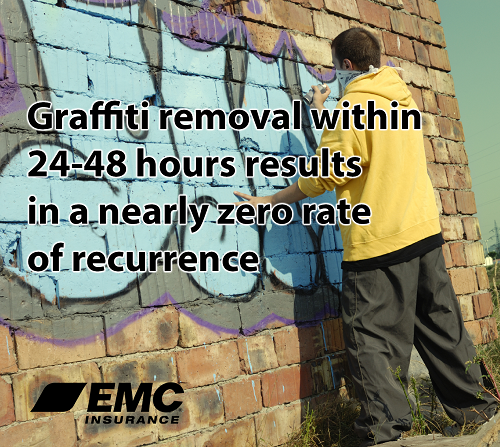
Graffiti Prevention: Tips for Businesses
If you have any questions about the following:
- How can a business prevent graffiti?
- How might a “graffiti ordinance” affect a business?
- What should a business do if it’s hit with graffiti?
- How should graffiti be removed?
Then check out this Tips for businesses fact sheet
Hopefully with enough businesses on board to prevent graffiti, we don’t have to see it everywhere we go. Pure and simple, it looks like CRAP! More importantly, it contributes to reduced retail sales, declines in property values, and community fear.
What measures are you taking to prevent graffiti on the walls of your business or building?
-JK
About Me

I grew up in Fullerton, CA and graduated from Servite High School in Anaheim. I have my Bachelors degree from Loyola Marymount University in Los Angeles. I currently live in Tustin, CA.
Please contact me if you need help with any of the following lines of insurance for your business:
-Cyber / Data Breach
-Commercial Property
-Commercial General Liability
-Products Liability
-Workers Compensation
-Commercial Auto
-Umbrella/Excess Liability
-Errors & Omissions/ Professional Liability
-Employment Practices Liability
-Directors & Officers
-Life & Disability Insurance
 Jimmy Kinmartin, CPCU