
Dramatic Rescue of Construction Worker From Blaze
A construction worker is rescued from a giant fire at AIG campus in Houston, Texas, on Tuesday. The amateur footage, filmed by onlooker Karen Jones, shows a man trapped on a top-floor balcony of an apartment complex that had been under construction. He manages to escape as fire destroys the building. No injuries were reported as a result of the blaze. It is still unclear what caused the fire. You’ll get some sweaty palms watching this one! Especially when the construction worker swings down to the lower level balcony!
-JK
Forklift Operator Knocks Over $100,000 Worth of Liquor
As seen in this Youtube video, “in a Russian liquor warehouse, a forklift driver hits the gas in reverse and plows into a warehouse rack filled with liquor, causing a domino effect that brings down half the warehouse. There was over a hundred thousand dollars in damage. The driver survived. No report if he is still employed.”
All joking aside, an accident like this can have a vast impact on your business operations such as Property Damage with the destroyed product. Think about the extensive clean up and reorganization; the suspense of business operations/ business income/interruption exposure. Also, from a Workers Compensation and Employee Disability standpoint, there are injured employees which means lost time, recovery, employee shortage, and training costs for other employees to fill the void. This can have a devastating impact on your bottom line.
Here are some Safety Tips For Forklift Drivers:
Maintenance
- Each day, check that the forklift is ready for the day’s work and perform any necessary maintenance before operating.
- Report any malfunction or poor performance to your supervisor immediately.
Loading
- Use reverse when going down inclines and go forward up inclines.
- Do not travel with the load elevated, and keep the load stable and as close to the floor as possible.
- Avoid raising or lowering a load while the forklift is moving.
- Always keep the load tilted back towards the carriage while raising and lowering.
- Make sure the load is balanced and is within the capacity of the truck.
- Never use the forks as a personnel elevator unless properly equipped.
Driving
- Always make sure your driving path is clear.
- Slow down for corners, blind spots and doorways.
- Drive defensively by always being aware of your surroundings and watching for the unexpected.
- Be aware of ground conditions and always take the smoothest possible path.
- Never try to turn on an incline.
- Cross tracks diagonally and slow down for uneven surfaces.
- Keeps legs, arms, feet, hands and head inside the forklift.
- Be aware of others around the job site, in case they do not see you.
- Always give those on foot the right of way.
- Stay out from under forks and loads.
- Never show off or use the machine for anything other than your specified job tasks.
- Never give anyone a ride or allow anyone who is untrained to operate the forklift.
Finally, here’s a Sample Performance Test for Forklift Operators for reference to monitor your employee forklift drivers.
Minimize, monitor, and control the probability and/or impact of unfortunate events before they happen. That’s what Risk Management is all about.
-JK
REMINDER: Post your OSHA Log Summary by Feb. 1
It’s that time of year again—Feb. 1 marks the deadline for you to tabulate your annual OSHA Log Summary (OSHA Form 300A) and post it in a common area wherever notices to employees are usually posted.
The summary must list the total number of job-related injuries and illnesses that occurred in calendar year 2013 and logged on the OSHA 300 Form. And don’t forget to leave the Summary posted until April 30, 2014.
If you need additional assistance, have questions about recordability, or would like to compare your loss performance trends against national benchmarking data, contact me today for more information.
-JK
OSHA Releases 2013 Most-cited Workplace Violations
Fall protection was once again the most-cited workplace safety violation in OSHA’s annual top 10 violations list for fiscal year 2013. The whole list is as follows:
- Fall protection: 8,241 Violations
- Hazard communication: 6,156 Violations
- Scaffolding: 5,423 Violations
- Respiratory protection: 3,879 Violations
- Electrical – wiring methods: 3,452 Violations
- Powered industrial trucks: 3,340 Violations
- Ladders: 3,311 Violations
- Lockout/ tagout: 3,254 Violations
- Electrical – general requirements: 2,745 Violations
- Machine guarding: 2,701 Violations
The list was presented at the National Safety Council Congress & Expo in early October.
Take this opportunity to review your company’s safety policies and address any areas of weakness.
Contact me or your risk manager to find out more about how you can reduce worker injuries and keep your employees safe and healthy.
-JK
Insurance For a Men’s Retail Clothing Store
I spent some time this Saturday morning working up some insurance quotes and options for a new men’s clothing retail store opening this Fall in Laguna Beach (CA). We’re looking into property, general liability, and workers’ compensation insurance coverage for the store.
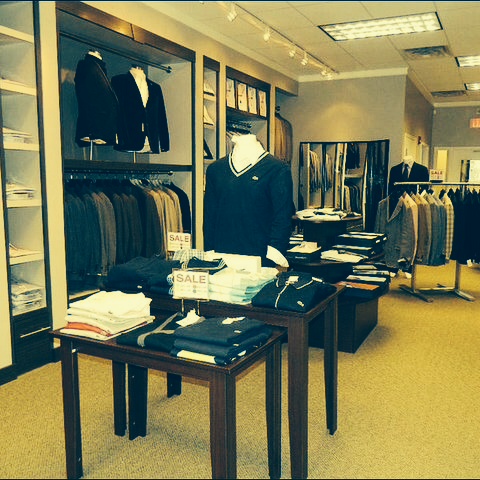 Since my brain is on the subject of insurance for retail clothing stores, i wanted to share a brief risk summary that you should think about if you own a retail clothing store.
Property exposures are limited, but if a fire should occur, the clothing provides a combustible fire load and is highly susceptible to water and smoke damage. Theft may be a concern if any of the items sold have high value. Appropriate security measures should be in place.
Crime exposures are from Employee Dishonesty and Theft of Money and Securities either from holdup or safe burglary. Employee dishonesty is controlled through inventory monitoring, control of the cash register, disciplined controls and division of duties. Theft prevention requires controls of monies kept in the cash drawers and regular bank drops.
Premises liability is always a concern in a retail exposure where the public comes to the premises. Floor covering must be in good condition with no frayed or worn spots on carpet and no cracks or holes in flooring. Sufficient exits must be provided and be well-marked, with backup systems in case of power failure. Dressing rooms must be well maintained and privacy carefully guarded. Shoplifting procedures must be fully understood and utilized by all employees.
Parking lots and sidewalks need to be in good repair with snow and ice removed, and generally level and free of exposure to slip and fall. If the business is open after dark, adequate lighting and appropriate security for the area must be present.
Products liability for this type of operation is normally low. Direct importing of clothes and tailoring can add to the exposure.
Workers compensation exposure is from lifting, which can cause back injury, hernia, sprain, and strain. What kind of training do employees receive, and what types of material lifting or conveying devices are used? If tailoring services are offered, injuries due to sewing and cutting injuries are possible.
Minimum recommended coverage:
Business Personal Property, Business Income, Employee Dishonesty, Money and Securities, Accounts Receivable, Computers, General Liability, Employee Benefits, Umbrella, Hired and Nonownership Auto, Workers Compensation. Many of these coverage’s can be included within a single Businessowners insurance policy.
Other coverages to consider:
Building, Leasehold Interest, Real Property Legal Liability, Forgery, Computer Fraud, Bailees Customers, Fine Arts, Employment Related Practices, Business Auto Liability and Physical Damage.
Have a retail clothing store and need some guidance on your insurance? You can contact me anytime to discuss. I’d be happy to help you out.
-JK
Source: Rough Notes, Inc
The Cost of NOT Buying Insurance. A True Story
Last week I got a phone call from a guy (a business owner) who sounded totally panicked. I could hear it in his voice immediately. Panicked about the need for workers’ compensation insurance. The conversation started casually,
“Um, yeah, we need a workers’ compensation insurance policy to cover our employees.”
We talk for a bit as I try to get an understanding of his current situation.
“Well it was something we kind of, um, overlooked over the past couple years.”
“Past couple years?” I ask. “So why are you suddenly looking for a policy now?”
Still no direct answer.
“Have you had any claims or losses in the past 3 years?” I ask.
I didn’t need to ask much more.
“Yes, I received notification from an attorney about a former employee of mine.”
The business, a retail bakery, received a letter from an attorney in the mail. It turns out a former employee who quit over a month ago dropped a bomb with a claim for cumulative trauma to the feet, back, neck, knees.
So here this business is at a point with a serious issue to contend with. They didn’t buy workers compensation insurance policy when they first hired employees. Their reasoning was they just didn’t want to incur the costs and figured this could never happen to them.
As an insurance resource partner, I hear this way too often from prospective clients trying to save money on insurance. Not just for workers compensation insurance either. This is for all lines of insurance like general liability, errors & omissions, property, etc.
Buying a workers compensation policy now will not do anything to help this business for a loss that has already occurred. You cannot buy a workers compensation policy with retroactive coverage. That’s like buying a health insurance policy after getting sick. This retail bread bakery is going to have deal with this claim on their own, without the support of insurance.
As if the day-to-day stress of operating a business isn’t enough, throwing this claim into the mix is sure to make things much more challenging from both a time and cost standpoint.
It doesn’t end here. In addition to handling this claim on their own, finding workers compensation insurance coverage at a reasonable cost moving forward with a standard carrier is going to be pretty much impossible. Any underwriter who sees a business with active employees and no insurance for over two years AND a claim?? No way. Costs now will be more than they would have ever paid if they secured insurance before they hired new employees.
Another potential problem this business could face is:
“It is a criminal offense for an employer to be unlawfully uninsured regardless of whether or not an employee is injured. California Labor Code Section 3700.5 specifies that it is a misdemeanor punishable by either a fine of up to $10,000 or imprisonment in the county jail for up to one year, or both. In addition, the state issues penalties of up to $100,000 against illegally uninsured employers. If an employee is injured, the employer is responsible for paying all benefits and may be subject to additional liability.”
So I ask you business owners out there, are you avoiding buying insurance because you feel it costs too much? Are you one of those who think a loss will never happen to you?
Well I recommend you think again. If this scenario isn’t enough to get you to think twice, there’s probably not a whole lot more that will. Put yourself in this business owners shoes. How much do they wish now that they were paying a workers compensation premium over the past two years for a policy to help now when they need it most?
It will be interesting to see how things pan out for this business, but one thing’s for sure, this mistake could put them out of business for good depending on the ultimate severity of the claim.
Can you afford to not carry insurance? The cost of not buying it in some form or another could be the demise of your business and livelihood depending on the severity of a loss.
-JK
Fall Protection and Safety
Five construction workers are killed from falls each week in the U.S., according to new data from the Census of Fatal Occupational Injuries (CFOI).
Watch this new video from the California State Compensation Insurance Fund with expert instructions on proper harnessing techniques to protect workers from falls and reduce risk of injuries on construction sites. Topics include: A, B, C, D of Fall Protection, inspection of Body Harness, using the correct type of connector and de-accelerating devices.:
Do you have a Fall Protection safety program established for your business? If no, you can contact me and I can help you establish one.
For a few more pointers on Fall Protection and Safety, click here: Safety Matters Fall Protection and Safety
-JK
New Smartphone App Addresses Extension Ladder Safety
 Is your extension ladder positioned at an optimal and safe angle? Now it’s easier for you to figure this out with a new smartphone application the National Institute for Occupational Safety and Health (NIOSH) introduced in June.
Positioning extension ladders at the proper angle is critical for preventing accidents—if the ladder is set too steeply or too shallowly, it could fall. Using audio and visual signals, the Ladder Safety app provides feedback to help the user set the ladder at the best angle.
Additionally, the app provides a safety guide for extension ladder selection, inspection, accessorizing and use. Misjudging the angle at which a ladder is set is a big risk factor for falls, which are one of the leading causes of injuries for workers in any industry, especially construction.
The Ladder Safety app is free to download on both iPhone and Android devices. For more information, visit www.cdc.gov/niosh/topics/falls/.
Credit: Zywave
Workplace Safety in the Restaurant
Last night I found the most horrifying commercial/ad ever on Youtube. It shows very graphically that Commercial Kitchens can be extremely dangerous places to work. It’s only an advertisement, but it’s a heavy message but I guess it served it’s purpose as it’s now scarred in my brain. See for yourself:
The pressure of service and working in a restaurant with dangerous equipment and products can have a serious impact on one’s livelihood. As a restaurant owner, it’s critical to maintain a safe workplace for your kitchen staff. Good communication between co-workers as well as understanding and following all workplace safety procedures are essential in preventing burn injuries in restaurants. To reduce your risk of suffering a scald burn injury or causing a co-worker to be burned, consider the following precautions:
- When you are manually transferring hot liquids, make sure the container is no more than half full, and use a lid or splash guard.
- When using a rolling cart to transfer hot liquids, check to be sure the container is secure on the cart so it will not tip or fall from sudden stops or jarring.
- Use extreme care when handling foods or liquids that have been microwaved, as they can reach temperatures greater than boiling without bubbling.
- Keep floors clear of liquids and debris. Slips, trips and falls are responsible for many restaurant scald burns, and often these injuries can result in more time lost at work than other scald injuries.
- When appropriate, use hot pads, pot-holders or proper gloves/mittens.
- Always wear protective shoes with slip-resistant soles – never open-toed shoes, sandals or boots.
- Follow all safety procedures when working with deep fryers.
*This information is for informational purposes only . It’s not intended as medical or legal advice
Source: Zywave, Inc.
-JK
15 Signs of Workers’ Compensation Insurance Fraud
Workers’ compensation fraud costs the insurance industry roughly $5 billion each year, according to estimates by the National Insurance Crime Bureau. And depending on whom you ask, fraud accounts for as much as 10% of the costs of all workers’ comp claims.
With the tougher economic times, particularly as lay-offs mount, we’ve definitely seen a trend in our agency of work-related injuries for a variety of manufactured reasons, such as for an injury that occurred on personal time.
Look for these tell-tale signs of potentially fraudulent claims. Usually one of these items alone is not enough to point to fraud, but if you have two or more of these signs, it could suggest a problem.
1. Late reporting. If you have an employee who suffers a legitimate on-the-job injury, they will generally report it right away. This may not always be indicative of a fraudulent claim, though, because sometimes the true effects of an injury may not be known until the following day.
2. The Monday morning claim. If the injury allegedly occurred on Friday, usually late in the day, but did not get reported until Monday, there is reason to suspect there might be a little more going on than meets the eye. The logic is that the employee likely suffered an injury over the weekend and does not want to pay for it themselves if they lack health coverage, or if they don’t want to foot the bill even for their health coverage deductible.
3. Lack of witnesses. Often your employees won’t be working in a solitary environment and there ought to be somebody on your staff who witnessed the accident. Still, not every claim has a witness and this should not be used solely to determine fraud.
4. Sketchy details or conflicting descriptions. Most claimants can recall the details of their injury. If the claimant seems to be fuzzy on the details and gives vague responses to questions, it could be a warning sign. Also, if the employee’s description of the accident conflicts with the medical history or First Report of Injury, there may be a problem. This could arise if, upon further investigation, the employee keeps changing the story and adding or removing pertinent information – a good reason to suspect it to be a fraudulent workers’ compensation claim.
5. Disgruntled employee. A disgruntled employee is more likely to place fraudulent claims than an employee with high job satisfaction.
6. Financial hardship at home. Workers’ compensation benefits are sometimes seen as a way out of a tight financial situation at home. Although temporary disability benefits are lower than normal working wages, the worker could use the time to “double dip,” that is, take on extra work when they are supposed to be at home recovering from the alleged injury.
7. Hard to reach. This ties in with number six. If this occurs every time the claimant is called, there is a possibility of fraud.
8. Misses medical appointments. If an employee is truly injured, they want to get better and will make sure to go to all medical appointments. Missing appointments is another reason to suspect fraud.
9. Employee is engaged in activities at home that are not consistent with the injury. If your employee reported a back injury and other employees find that he is playing softball on the weekends or renovating his yard, there is a good reason to suspect fraud.
10. Employment change. The employee reports the injury right before or after being laid off, near the end of a contract job or near the end of seasonal work.
11. Post-termination claims. If an employee files a claim after being laid off or fired, red flags should pop up.
12. Frequent moves and changes. The claimant has a history of frequently changing physicians, addresses and places of employment.
13. History of claims. If the claimant has filed suspicious or litigated claims in the past, they could be a person who feeds off the system.
14. Employee refuses treatment. There should be no reason that a legitimately injured worker refuses a diagnostic procedure to confirm the nature or extent of an injury.
15. Rigorous hobby. If the injured worker has a pastime that could cause an injury similar to the alleged work injury, the claim could warrant further investigation.
Remember, if you suspect fraud, you should talk to your broker or the insurance company claims representative to alert them. All insurance companies are required to have special investigations units that look into claims fraud. It benefits both you the employer and the insurer if the insurance company investigates and uncovers a fraudulent claim.
If the insurer suspects fraud, they can reject the claim and report their suspicions to the local district attorney’s office and the Department of Insurance.
Credit: Atlas General Insurance Services
About Me

I grew up in Fullerton, CA and graduated from Servite High School in Anaheim. I have my Bachelors degree from Loyola Marymount University in Los Angeles. I currently live in Tustin, CA.
Please contact me if you need help with any of the following lines of insurance for your business:
-Cyber / Data Breach
-Commercial Property
-Commercial General Liability
-Products Liability
-Workers Compensation
-Commercial Auto
-Umbrella/Excess Liability
-Errors & Omissions/ Professional Liability
-Employment Practices Liability
-Directors & Officers
-Life & Disability Insurance

