
Employee Injuries & Return to Work Programs
When you think about workplace injuries and workers compensation insurance, what are the first thoughts that come to mind? Perhaps the cost for medical care and rehab? Compensation for lost wages? Legal services related to a claim?
Have you ever thought of the hidden costs associated with workplace injuries? Consider the following:
- Lost productivity from an experienced employee
- Equipment or product damage
- Lost efficiency among employees
- Time spent completing forms and communicating with medical providers and insurance adjusters
Hidden costs are those costs that are not immediately recognized, but take a toll on business profitability. These hidden costs are not typically covered under a workers compensation policy and drain from a business’s bottom line. This is why a Return to Work (RTW) Program should be implemented to help control costs.
What is a Return to Work Program?
A return to work program gets an injured employee back to work in a productive position when they are physically capable; not necessarily the position they had at the time of injury. There are studies show that the longer an injured employee is off work, the more difficult it becomes to get them back into the workplace. A return to work program keeps the employee engaged in a work based routine, interacting with fellow employees and contributing productively to the business.
For a Return To Work Program to be effective, communication must occur. Prompt notification of the injury to your insurance carrier allows the carrier to work with the injured employee and medical provider to assess the employee’s physical capabilities after the injury. From there, your carrier and provider can work with you to develop a plan to return the employee to work.
Benefits of Returning Employees To Work
Accepting an injured employee into the workplace can help your business:
- Regain lost productivity.
- Avoid temporary or new employee hiring and training costs.
- Reduce or avoid litigation and discourage malingering.
- Increase awareness of safe work practices.
How to Develop a Return To Work Program
- Identify the physical demands of jobs or tasks. Involve key employees to help with this task. Evaluation forms are available from the Safety and Health Department.
- Identify transitional jobs that an injured employee could perform. Full time work is not required. Injured employees may work fewer hours and at a lower wage and be eligible to receive compensation benefits. This reduces insurance costs which may affect your insurance rates for several years.
- Tell existing and new employees during orientation that your company has a RTW Program and at time of hire. Let employees know that if they are injured on job, the company will attempt to find modified work for them.
- Before an injury occurs, speak with your designated medical provider or doctor. Tell them that you have a RTW Program, and that you have jobs to accommodate an employee who has physical limitations.
A RTW program can help control workers’ compensation costs after an injury occurs; however, the best method to control these costs is to prevent injuries through an effective Injury and Illness Prevention (IIP) Program. Contact the Safety & Health Department for a model IIP program.
–JK
Terrell Owens Nails Security Guard on MNF
Did anybody watch this touchdown catch by Terrell Owens on Monday Night Football? After the catch, a security guard on the sidelines gets nailed pretty good, and he looks like a pretty big guy too! Practicing insurance every day, my mind always thinks like an insurance agent. Call me sad, but the first thing that came to my mind watching this live was workers compensation insurance. If this guy was hurt on the hit, it would be a unique work comp claim. ‘Security guard hit by T.O. after a touchdown catch.’ Since he was on the job, it would definitely be a legitimate claim!
Take a look at this video.
Worker Loses Part of Finger at Large Commercial Bakery
From LATimes.com:
Another employee has lost part of a finger at Bimbo Bakeries, a company with plants throughout California whose record of workplace accidents was highlighted by The L.A. Times last year. Bimbo Bakeries USA makes a number of well-known brands of breads, tortillas and pastries, including Orowheat, Tia Rosa and Entenmann’s
The company’s total number of amputations is nine since 2003!
“Nine Bimbo Bakeries workers have had parts of digits or a limb amputated since 2003 at plants across the state, where regulators have found inadequate training and machines without proper guarding.”
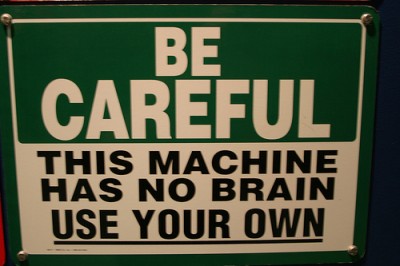 In an investigation last fall, the L.A. Times found that seven employees had lost parts of fingers or a limb in accidents at California plants over the last seven years. In six of those cases, investigators found that machines did not have proper guards to prevent employees from reaching in, officials said.
In October, Cal/OSHA sent its “high hazard” unit to four California Bimbo plants. Inspectors found equipment that lacked proper guarding. The division fined Bimbo $230,000, including more than $120,000 in rarely issued “willful” citations for companies that intentionally disregard safety regulations. Bimbo has appealed those charges.
Then, in January, an employee lost part of his finger in a tortilla machine that investigators later found did not have proper guards.
Inspectors cited “the willful failure of Bimbo Bakeries to guard the openings around … the tortilla production lines” and insufficient training of workers, among other things. The division recommended $123,000 more in fines, including more willful citations. (read full story here)
What Can I do to Keep My Employees Safe?
The following page provides links to numerous Occupational Safety and Health Administration (OSHA) resources and information designed specifically for smaller employers, including the free On-site Consultation Program, safety and health tools and publications, easy-to-follow guides for specific OSHA standards, and descriptions of benefits that small businesses receive from OSHA.
–JK
Workers Compensation and Strip Clubs Seem To Have Something In Common
From HRMmorning.com
It’s not what you think — workers compensation cheats aren’t spending their extra dough at strip clubs. Apparently, they’re making a little extra cash on and off stage.
It appears as though one of the best places to find a workers’ compensation cheats is at the local strip clubs.
Consider the evidence:
- A Quakertown, PA, woman was arrested and charged with two
 counts of insurance fraud and theft by deception after an investigation found her working as a stripper at a local gentleman’s club while receiving workers’ compensation payments for a back injury. She had received nearly $23,000 in compensation and more than $4,000 in medical expenses after she claimed to have been injured in a fall while working as a waitress at a family restaurant.

- A Frankfort, NY, man was found working as a DJ for a strip club while collecting benefits for an accident he sustained as a painter 23 years ago. He had even denied in three written statements to the New York State Insurance Fund that he had returned to work. He was arrested on felony charges of third-degree insurance fraud and fraudulent practices after bilking more than $46,000 from the system.
- An Islip, NY, man has been charged with insurance fraud after police
 found him working as a bouncer at an all-nude club while collecting worker’s compensation payments. Officials claim he defrauded the town of Islip, where he used to work as a mechanic, out of more than $17,000.

–JK
Not So Fun Business Injury Facts
 Businesses deal with risk everyday. Whether it be liability risks such as injuries to employees or customers, or property loss risks such as fire or theft, businesses must implement risk control and risk management procedures to protect their operations. Of course, accidents happen and this is why insurance is necessary. Here are six (not so fun) injury facts courtesy of Travelers Insurance:
- 25,000 slip and fall accidents occur daily in the U.S., accounting for 15 percent of all workplace accidents. It is also the leading injury to people on company premises.
- Back injuries account for more lost work time than any other workplace injury. Often, the source is improper lifting.
- Fires in commercial buildings cost more than $2 billion in annual property damage and loss. Lack of, or improper maintenance of sprinkler systems plays a significant role.
- Musculoskeletal disorders results in over $45 billion in loss wages and productivity costs. Organized office workstations and poor ergonomic practices are contributors.
- Adverse weather is the leading cause of vehicle accidents and fatalities. Many company drivers don’t understand the risk or how to adjust their driving behaviors.
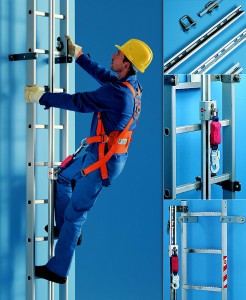
- Falls from ladders injure over 20,000 American workers annually. Some injuries result in permanent disabilities and even fatalities. Safety starts before the ladder is even mounted.
Workers Compensation – Employee or an Independent Contractor?
One of the biggest dilemma’s concerning workers compensation insurance coverage is whether a given individual is an employee or an independent contractor. It applies to pretty much any industry. Recently, I had a discussion with a janitorial services business which uses a specialist to do  floor waxing when needed. The owner told me this individual is an independent contractor. I explained to the owner that individual might be considered an employee in the eyes of an insurance carrier.
The reality is there is no definitive test to determine Employee or an Independent Contractor! It’s not a black and white issue. In many cases, it is the court of law who decides. California Workers Compensation laws are construed liberally; in other words, in favor of the claimant. There is a presumption of employment unless the employer can prove otherwise.
There are certain basic questions which might help determine the status, however. The following circumstances can help determine the relationship between and employee versus an independent contractor:
| Employee | Independent Contractor |
| Has the right to control the manner and means of accomplishing the result desired | Responsible only for the result of the work performed |
| Has a specific title and/or position | Engaged in a distinct occupation or business |
| Works under the direction of a boss | Is a specialist, does actual work without supervision |
| Uses company tools and/or equipment | Supplies their own |
| Working hours are set by the company | Has no set hours, may come and go at will |
| Is paid salary or by the hour | Paid on a per-job basis |
| The person assumes they are an employee | The person believes they are an independent contractor and usually has a certificate of insurance |
These are just a handful of circumstances. If you have additional insight to share, please comment below!
-JK
What If I Have Employees and No Workers Compensation Insurance?
So you’re an employer looking for ways to save money and trim your business expenses. There are plenty of areas you can probably pinch and save but let me tell you, workers compensation insurance shouldn’t be one of them and let me explain why.
The very core of workers compensation insurance is that it provides medical care for employees who are injured in the course of  employment. Beyond medical care, Workers Comp insurance provides temporary and/or permanent disability benefits, supplemental job displacement benefits or vocational rehabilitation and death benefits. Workers Comp is a trade-off between employers and employees. Employees receive prompt effective medical treatment for on-the-job injuries or illnesses no matter who is at fault and, in return, are prevented from suing employers over those injuries.
[Did I bore you yet?]
Putting the definition of workers compensation insurance aside, one might ask:
“Does an employer have to purchase workers’ compensation insurance?”
Yes. California law requires all employers to have coverage for their California employees, even if they have only one employee. (This applies in all states, not just CA. I am using CA as an example since I reside here).
What happens if an employer is unlawfully uninsured and an employee is injured?
According to the WCIRB, it is a criminal offense for an employer to be unlawfully uninsured regardless of whether or not an employee is injured. California Labor Code specifies that it is a misdemeanor punishable by either a fine of up to $10,000 or imprisonment in the county jail for up to one year, or both. In addition, the state issues penalties of up to $100,000 against illegally uninsured employers. If an employee is injured, an employer also opens himself/herself up to liability lawsuits from injured employees.
Would you be willing to take that gamble? The way I look at it, an annual insurance premium is nothing in comparison to the possible fines and penalties one might face should they decide to take that gamble. Please, find other ways to save on your business expenses, workers compensation insurance isn’t the place to do it.
About Me

I grew up in Fullerton, CA and graduated from Servite High School in Anaheim. I have my Bachelors degree from Loyola Marymount University in Los Angeles. I currently live in Tustin, CA.
Please contact me if you need help with any of the following lines of insurance for your business:
-Cyber / Data Breach
-Commercial Property
-Commercial General Liability
-Products Liability
-Workers Compensation
-Commercial Auto
-Umbrella/Excess Liability
-Errors & Omissions/ Professional Liability
-Employment Practices Liability
-Directors & Officers
-Life & Disability Insurance
 Jimmy Kinmartin, CPCU