
How far has car safety come in 50 years? Take a look
1959 Chevrolet Bel Air vs. 2009 Chevrolet Malibu car safety crash test.
In the 50 years since US insurers organized the Insurance Institute for Highway Safety, car crashworthiness has improved. Demonstrating this was a crash test conducted between a 1959 Chevrolet Bel Air and a 2009 Chevrolet Malibu. In a real-world collision similar to this test, occupants of the new model would fare much better than in the vintage Chevy.
“It was night and day, the difference in occupant protection,” says Institute president Adrian Lund. “What this test shows is that automakers don’t build cars like they used to. They build them better.”
The crash test was conducted at an event to celebrate the contributions of auto insurers to highway car safety progress over 50 years. Beginning with the Institute’s 1959 founding, insurers have maintained the resolve, articulated in the 1950s, to “conduct, sponsor, and encourage programs designed to aid in the conservation and preservation of life and property from the hazards of highway accidents.”
More information at http://www.iihs.org/50th/default.html
–JK
Happy Small Business Week 2013
This year marks the 50th anniversary of National Small Business Week. Every year since 1963, the President of the United States has issued a proclamation announcing National Small Business Week, which recognizes the critical contributions of America’s entrepreneurs and small business owners.
More than half of Americans either own or work for a small business, and they create about two out of every three new jobs in the U.S. each year. Small businesses have always been the backbone of our economy, and we know that the success of America’s small businesses is critical to growing our economy and increasing our nation’s global competitiveness.
Small businesses create two out of three net new private sector jobs in our economy. And today, half of all working Americans either own or work for a small business.
To all of the small businesses out there, this week is about you. Happy Small Business Week!
–JK
Rolling Deep…Literally
I found this picture on Google+ today. Talking about rolling deep! Check this guy out…

Thinking about purchasing a used car? If so, protect yourself from buying a flood damaged vehicle by doing a little research and by having the vehicle thoroughly checked by a mechanic.
Every year, tens of thousands of cars are damaged by floodwaters and more than half end up back on the road. Damaged cars are often repaired cosmetically and moved to adjacent states or other areas of the country where many are sold to unsuspecting consumers. These floodwaters can cause damage to a vehicle’s computer and electrical systems, as well as potentially causing anti-lock braking and airbag systems to malfunction.
Used Car Buying Tips: Detecting and Avoiding Flood Damaged Vehicles (from CARFAX Vehicle History Reports)
To help you avoid cars with water damage, CARFAX offers these tips:
- Check the trunk, glove compartment, the dashboard and below the seats for signs of water damage such as silt, mud or rust.
- Examine upholstery and carpeting closely; if it doesn’t match the interior or fits loosely, it may have been replaced. Discolored, faded or stained materials could indicate water damage.
- Turn the ignition key and make sure that accessory and warning lights and gauges come on and work properly. Make sure the airbag and ABS lights come on.
- Test lights (interior and exterior), windshield wipers, turn signals, cigarette lighter, radio, heater and air conditioner several times to make sure they work.
- Flex some of the wires beneath the dashboard. Wet wires will become brittle upon drying and may crack.
- Take a deep breath and smell for musty odors from mildew.
- Go to a trusted mechanic for a pre-purchase inspection. Always get vehicles checked BEFORE handing over any money.
- Ask to see a vehicle history report.
Facts: Flood Damage from Hurricanes and Tropical Storms
- Hurricane Floyd (1999) damaged 75,000 vehicles and than half were put back out on the road.
- Tropical Storm Allison (2001) – More than 95,000 vehicles flooded by the most extensive tropical storm in U.S. history.
- Hurricane Ivan (2004) – Left more than 100,000 cars submerged in floodwaters throughout the Southeast.
- Hurricane Katrina, Hurricane Rita and Hurricane Wilma (2005) – claimed more than 600,000 cars across the Gulf Coast. Many of these cars still are showing up for sale around the country.
- Hurricane Ike (2008) – more than 100,000 cars in Texas and Louisiana, from Galveston and Houston over to Baton Rouge, were left underwater.
If all else fails, you can do what the dude above did and you won’t have to worry about flood damage to your car.
–JK
FEMA Wireless Emergency Alerts
Today the The Ready Campaign and the Ad Council released a new Public Service Announcement to help Americans Prepare for Severe Weather with Wireless Emergency Alerts (WEAs). There are many things that can save your life, and now your phone could be one of them. For more information visit www.Ready.gov/alerts.
You do not need to register to receive Wireless Emergency Alerts notifications. You will automatically receive alerts if you have WEA-capable phone and your wireless carrier participates in the program. To find out if your mobile device is capable of receiving WEA alerts, contact your mobile device carrier or visit this CTIA Customer Info Page
–JK
Even the Cutest Dog Has a Nasty Bite
Nothing exemplifies “nasty bite” more than the dog you’re about to see in this video. Trust me, it’s worth watching the full 2:33. It gets really good at 1:30. Dog bites aren’t supposed to be funny, but this clip might be an exception
According to the Insurance Information Institute, dog bites accounted for $479 million in homeowners insurance liability claims paid out in 2011 in the United States. Unfortunately, dog bites are now the largest cause of Homeowners Insurance claims in the U.S.
Tips To Lessen Your Risk of Getting Bitten By A Dog
- Never pet dogs without allowing them to smell you first.
- Do not approach a dog that you do not know.
- Do not turn your back to a dog and start to run away if you feel threatened, since their natural instinct is to chase and catch you.
- Avoid disturbing a sleeping or eating dog, as it may bite out of fear.
- Always leave dogs alone who are playing with toys or who are caring for their young.
Have you experienced a dog bite before?
–JK
Heartwell Golf Course, Long Beach
I love golf and I’m fortunate to live practically walking distance from Heartwell Golf Course in Long Beach. It’s a fun little 18-Hole Par 3 course which opened in 1964. The distance of the holes range from 85 to 140 yards, so you don’t need much club here. It’s great for practicing your short game.
There are a couple of water hazards, and sand traps on a lot of the holes. Heartwell Golf Course has lights for night golf with a driving range, two huge practice greens, and restaurant which I have yet to try. The course is always in great shape every time I play.
My wife just picked up golf and on 5/11 she played her first ever real round on a golf course. No better place for a beginner than Heartwell! it was a perfect afternoon. Here’s a picture I took on the back 9.
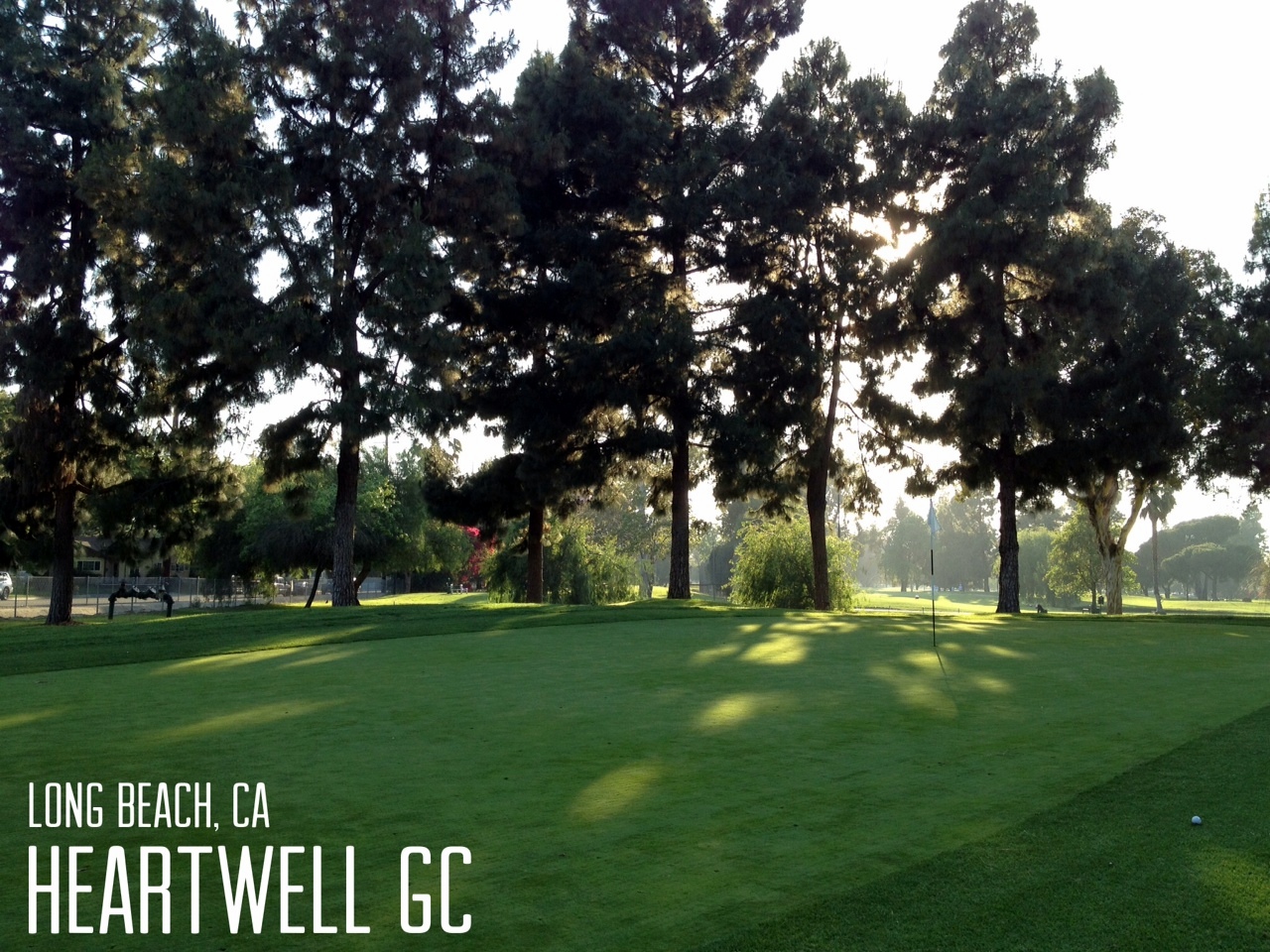
Check out Heartwell Golf Course in East Long Beach at 6700 East Carson Street, Long Beach, CA 90808
Website: www.heartwellgc.com
-JK
Worst First Pitch in Baseball, Ever?
This insurance guy was brought out to throw the ceremonial first pitch before a recent college baseball game between Stetson University & Florida State. He looked a little bit more like the guy in the Volkswagen commercial teaching his son how to throw the baseball.
–JK
Sharefest Annual Workday 2013
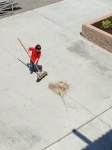
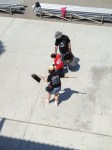
This past Saturday, a few of us from my office, ISU-Olson Duncan Insurance, participated in the Sharefest annual workday. Special thanks to my wife Joanelle for joining us.
Sharefest Community Development is an organization dedicated to creating an imprint of lasting positive change in the South Bay and Harbor areas of Los Angeles County. The organization partners with churches, businesses, civic leaders, schools, and residents.
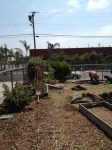
Sharefest’s annual workday is a community building day where thousands of volunteers are mobilized into the community to work on projects designed to meet tangible needs. Volunteers paint, clean, plant, refurbish, and beautify schools, parks and public facilities all at no cost to recipients.
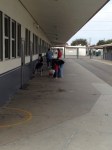
Our job for the day was sanding and re-painting classroom doors at Jane Addams Middle School in Lawndale.
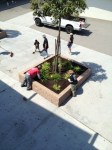
Here are some pictures from the day:
-
- Enjoying lunch from Chick-fil-A
-

- Joanelle prepping to paint
-
- Sanding before painting



-
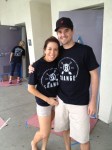
- Joanelle an Me





-

- Heidi D. and Joanelle teaming up on a door
-JK
The Importance of Terrorism Insurance
In the wake of the recent Boston Marathon bombings, the issue of terrorism was brought to light again as a harsh reality we face this day in age in the United States and throughout the world.
Bob Hartwig of the Insurance Information Institute http://www.iii.org interviewed on FOX recently talking about terrorism insurance for businesses.
A standard business policy does not cover for damage or loss of business due to an act of terror. In an age where terrorism is becoming “the new normal”, having the proper coverage is important.
Contact me if I can help with questions on terrorism insurance, or the Terrorism Risk Insurance Act and how it relates to you business insurance.
-JK
What To Do In the Event of An Insurance Claim
When you deal with an incident that gives rise to an insurance claim, it’s usually a pretty crappy situation. It can be stressful, terrifying, frightening, and alarming in many cases. First things first, try not to panic. Hopefully it’s an incident you carry insurance for to be protected.
Your insurance contract requires that you report all claims promptly. Contact your insurance carrier or broker as possible after a property, liability, worker’s comp or automobile claim. An insurance company claims adjuster will be assigned to handle your claim. You should then be able to deal directly with the adjuster to settle your claim, but your broker can be there with you to assist you along the way.
Here’s step-by-step suggestions on how you should handle property, liability, workers compensation, and auto insurance claims.
Property Claims
In the event of damage to your building or contents:
- Protect the property from further damage:
- Call the proper authorities and utilities (gas, electric, telephone).
- Take photos of the damage before having emergency repairs made, such as boarding up windows or covering holes in the roof.
- Call your insurance broker or carrier to report the loss.
- Call a contractor to estimate the building damages.
- Separate damaged contents from undamaged contents. Do not discard any items until the claims adjuster gives you the authority to do so.
- Keep records of expenses if you are forced to temporarily relocate your business.
- Do not authorize repairs until the claims adjuster has given you the authority to do so.
After the claim is reported to the insurance company, the claims adjuster will:
- Contact you by phone or mail to discuss the loss
- Arrange for an appraiser to inspect extensively damaged property
- Assist you with your choice of contractors to make the repairs
- Contact you for a settlement
Liability Claims
In the event of injuries or damage to property of others which you allegedly caused:
- Call your insurance broker or carrier to report the claim.
- Forward any correspondence, including a summons from an attorney representing the other party.
- Do not discuss the claim with the other party or their attorney. Refer them to your insurance company’s claims adjuster or to us.
After the claim is reported to the insurance company, the claims adjuster will:
- Contact you to discuss the incident that allegedly caused the injury or damage to the property
- Deal directly with the other party and/or attorney to handle the claim
Workers’ Compensation Claims
In the event an employee is injured on the job:
- Complete the Employer’s First Report of Injury or Disease form for all claims. Either use the “call in” reporting system or fax the original form to the insurance company.
- Forward a copy of the First Report to your broker in the event of a disabling injury or death claim. They should follow-up with the insurance company for their prompt handling of the claim.
- Contact the insurance company to question the status of a claim. If you experience delays or have questions, contact your broker for assistance.
After you report the claim to the insurance company, the claims adjuster will:
- Contact the injured employee to discuss the accident
- Request copies of bills and doctors’ reports for medical treatment administered
- Contact you, the employer, if there is any lost time from work as a result of the injury
Auto Insurance Claims
In the event of an automobile accident:
- Report the accident to the police.
- Obtain information about the other people involved in the accident such as:
- Names, addresses and phone numbers
- Insurance company
- Type of vehicle
- Auto and driver’s license numbers.
- Have your vehicle towed to the nearest repair shop if the vehicle is not drivable. Do not authorize repairs until the claims adjuster gives you the authority to do so.
- Call your insurance broker or carrier to report the accident.
In the event of a windshield, vandalism or theft loss:
- Report the vandalism loss or theft to the police.
- Call us to report a loss.
After the claim is reported to the insurance company, the claims adjuster will:
- Contact you to request details of the accident and repair estimates
- Arrange for an appraiser to inspect the damages of vehicles that are not drivable or extensively damaged
- Contact you for a settlement
- Deal directly with the others involved in the accident
You should not talk to others involved in the accident, but refer them to your claims adjuster.
-JK
Source: Zywave, Inc.
About Me

I grew up in Fullerton, CA and graduated from Servite High School in Anaheim. I have my Bachelors degree from Loyola Marymount University in Los Angeles. I currently live in Tustin, CA.
Please contact me if you need help with any of the following lines of insurance for your business:
-Cyber / Data Breach
-Commercial Property
-Commercial General Liability
-Products Liability
-Workers Compensation
-Commercial Auto
-Umbrella/Excess Liability
-Errors & Omissions/ Professional Liability
-Employment Practices Liability
-Directors & Officers
-Life & Disability Insurance
 Jimmy Kinmartin, CPCU