
Massive Overnight Fire Destroys Businesses in Cerritos
This morning I woke up and was having my morning coffee and catching up on the news when I read on Twitter that a major fire broke out locally overnight and destroyed a retail strip mall about four miles from my home. I decided to jump in the car to check out the scene of the fire. Here’s a short video I took:
According to the Cerritos-Artesia Patch, flames burned for more than three hours at Cerritos’ Fountain Plaza, destroying businesses in the two-story strip mall. Estimates are the fire caused about $5.5 million in damages.
The blaze broke out at 2 a.m. Sunday, Oct. 23 and burned for more than three hours, according to the Los Angeles County Fire

Cerritos on the map
Department. About 75 firefighters were on scene to battle the massive blaze.
The fire reportedly began at a Chinese restaurant in the building along the back-end of the shopping plaza — then spread to adjoining businesses. The roof of the restaurant eventually caved in as firefighters tried to tame the flames, according to reports from the scene.
Aside from the restaurant, the commercial building also housed at least 10 other businesses, including an ultrasound clinic, a dental practice, and an escrow firm.
Damage to the structure was estimated at $4 million, and roughly $1.5 million worth of contents were also destroyed, a county fire inspector said. The cause of the fire was not yet known.
Lesson Learned
When’s the last time you reviewed your property insurance coverage? Do you have adequate coverage to protect your assets? What about business interruption coverage? Whether you own a commercial building or a business, don’t think that a catastrophic fire won’t ever happen to you! This single fire completely destroyed ten different businesses. Not only are all the contents destroyed from fire and water, but all the businesses will need to be re-built and relocated. It will be quite some time before operations are restored, but the bills won’t stop coming. The salaries, loans, mortgage, and overhead still need to be paid. Don’t get burned before it’s too late.
–JK
What Does “Third Party” Mean In Employment Practices Liability Insurance?
I’ve touched on Employment Practices Liability Insurance in the past here.
In a nutshell, Employment Practice Liability Insurance provides protection for employers against claims made by employees, former employees, or potential employees for discrimination (age, sex, race, disability, etc.), wrongful termination of employment, sexual harassment, and other employment-related allegations.
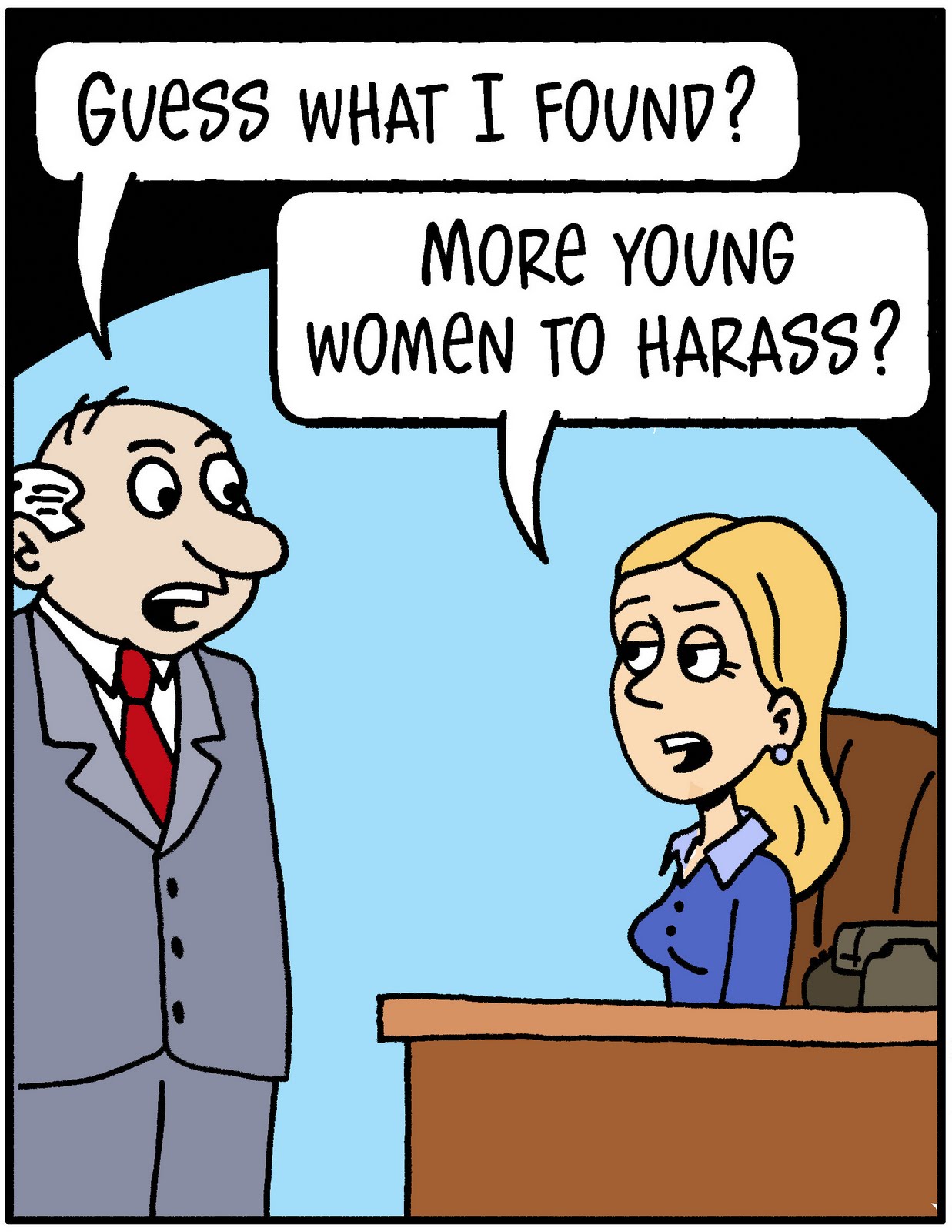 Some Employment Practices Liability Insurance (EPLI) policies have “third-party” coverage included. “Third-party” coverage refers to claims made by non-employees, usually customers, who allege that an employee engaged in wrongful conduct such as sexual harassment or discrimination. Without a specific policy endorsement for third-party claims, EPLI policy forms do not cover this exposure. Without third-party coverage, a gap in coverage results because EPLI policies are written to cover employment related claims by employees or applicants against their respective employers.
Beware that coverage for third-party employment practices liability claims is excluded under commercial general liability (CGL) policies.
Companies that are heavily customer oriented, such as retail stores, restaurants, or auto dealerships, are most exposed to third-party liability claims. On the other hand, companies not involved much in customer interaction such as manufacturers are not nearly as exposed to these kinds of claims.
Third-party liability coverage is generally available by endorsement for additional premium and should be seriously considered by firms which face these exposures.
Our economy is in such a state where liability claims are on the rise. Many, but not all people, are out there are looking for any way they can make an extra buck during these challenging times. This rise in claims doesn’t only apply to Employment Practices Liability insurance, but general liability, workers compensation, and other forms of liability as well. Business owners beware!
–JK
Small Business Health Care Tax Credit – Deadline today!
Small business owners: it is not too late to claim the Affordable Care Act’s Small Business Health Care Tax Credit! For those of you who are small business owners, this tax credit is available for your own business. The filing deadline for many small businesses has already passed, but qualifying employers that provided group health insurance in 2010 can still claim this significant assistance on 2010 tax returns:
- Small businesses that have yet to file – for example because they took advantage of the automatic extension – can claim the credit on their 1040 series returns by today, Monday, October 17.
- Small businesses that have already filed and want to claim the credit can amend their returns using Form 1120X for corporations or Form 1040X for others, including individual sole proprietors.
- Eligible tax-exempt organizations can claim the credit on Form 990-T.
- Small businesses without taxable income to offset should remember that the credit is part of the general business credit for Tax Year 2010, meaning they may be eligible to carry back the credit for five years or forward for 20 years.
The credit is worth up to 35% of the health insurance premium costs a small business incurred for insuring its employees in 2010. Eligible small businesses that do not yet provide insurance can start doing so to claim the credit for 2011 forward.
The credit remains available for several years, so small employers should check each year to see if they are eligible.
More information is available on the IRS website at:
http://www.irs.gov/newsroom/article/0,,id=223666,00.html
–JK
Know Your Deductible
Picture this scenario- You own a pizza parlor. It’s late Tuesday evening and business is closed as you are getting your premises fumigated. You have the pest control company at your premises to “bug bomb” the joint. As a passerby walks by your front window, he thinks he sees smoke and frantically calls the fire department. The fire department arrives and see’s “smoke” so they break down your front door and hammer through your front window to access the interior only to find out that the white stuff wasn’t smoke. Rather, a routine pest control measure you’re trying to take to maintain your restaurant.
 The end result? You get called to come down to the scene. You have to temporarily board up the front door and windows to keep things safe until the morning; and when the morning arrives, you have a contractor come out to fix everything so that you’re back in order for business.
When it’s all said and done, the contractor gives you an invoice for $2,800. You call your insurance carrier to put a claim in on the loss. In the process, your claims adjuster advises that you carry a $2,500 deductible. “Ahhh man! That means it’s coming out of my pocket!”
Have you ever experienced a similar situation where you find yourself paying out a loss entirely because your deductible was high? Was it burdensome for you to have to pay, or do you wish you had a lower deductible to save some cash?
The reality is people’s preferences are different when it comes to insurance and their deductibles. Some businesses like higher deductibles to save some money on their insurance premium. They may feel anything under their deductible amount wouldn’t be an issue to cover out-of-pocket. Or, they don’t anticipate many losses, so it’s not a big deal. For others, an unexpected loss like this might put them in a financial bind, but they never knew what their deductible was in the first place.
Solution
The story above is a true story. It happened to a client of mine last week. Since he carried a $2,500 deductible on a $2,800 insured loss, we didn’t move forward with the claim. Yes, it was a burden to have to fork out $2,800, but luckily it wasn’t too much for him to handle. However, we did make some changes on the deductible, and it really didn’t impact the premium much at all looking at the big picture:
- Changing the deductible from $2,500 to $1,000 = Additional annual premium of $114
- Changing the deductible from $2,500 to $500 = Additional annual premium of $194
So what’s the moral of this story? For one, know what property insurance deductible you carry, and two, picture yourself in a loss. Can you handle the deductible, or will it put a dent into your savings? Why not play with the different deductible options to see what difference in annual premium you’re looking at. Really, it’s not much in the grand scheme of things. You never know when the fire department might be banging down your front door.
–JK
Almost Famous: The ISU- Olson Duncan Insurance Commercial
Check out our web video commercial for ISU-The Olson Duncan Insurance which I made a cameo appearance in:
Remember, we are a full service insurance agency capable of handling all of your insurance needs, business or personal:
Business Insurance (business owners policy, general liability, commercial property, errors and omissions, professional liability, workers compensation, commercial auto, cyber liability, umbrella/excess liability, employment practices liability, directors and offices liability, and group life, health, dental, and vision benefits)
Personal Insurance (auto insurance, home insurance, life insurance, health insurance, earthquake insurance, umbrella insurance, mechanical breakdown, watercraft/boat insurance, dental insurance, long term care, and flood insurance)
–JK
Retailers with Sales in CA at Risk of Penalties Following State Court Decision
A recent decision by the California Supreme Court has placed retailers and other businesses that obtain and record personally identifiable customer information during point-of-sale transactions in the state at risk of significant penalties.
 Retailers with transactions in California are being named in class-action lawsuits following a February 2011 California Supreme Court decision, Pineda v. Williams Sonoma Stores, Inc. The decision found that the state’s Song-Beverly Credit Card Act of 1971 prohibits retailers and other businesses engaged in credit card transactions from collecting and recording customer information such as zip codes or any other personally identifiable information not provided by the credit card itself during point-of-sale transactions.
The statute authorizes penalties of up to $1,000 for each transaction that violates the statute. While coverage will depend upon the claimant’s allegations, the loss is likely not covered by a business’ general liability insurance policy.
A retailer may be headquartered anywhere in the country, but only the transactions conducted in the state of California are subject to the statute and its penalties.
Retailers with California transactions, consider the following tips:
- Do not ask for customer zip codes, even if only for marketing or security purposes. Asking for this information is risky.
- If retailers use zip codes for security measures, instead ask to see customers’ driver’s license or other forms of identification, but don’t record the information.
- If a retailer has been recording zip code information, even if only for marketing purposes, seek legal counsel.
Source: The Hartford
Can Your Business Survive a Natural Disaster?
I am happy to share this article from Inc. Magazine which I was interviewed for and quoted on. The basis of the article is – Don’t let a natural disaster spell ruin for your business. Make sure you’re protected against natural disasters such as earthquakes, flood, hurricanes, tornadoes and recoup on your financial loss.
Read the article HERE

Thanks!
–JK
Beware of Driver

Everyone has to start somewhere. I caught this on Catalina Island this past weekend.
Paso Robles Weekend Trip
This past weekend, Joanelle and I spent the time in Paso Robles (CA) with friends to do some wine tasting. Those not familiar with Paso Robles, it’s about halfway between Los Angeles and San Francisco on California’s central coast. Paso Robles is wine country where winegrape growing climate is perfect for the production of many amazing wines.

Paso Robles On the Map
According to the website www.pasowine.com, you will find 26,000 vineyard acres, producing more than 40 winegrape varieties – from Spanish to Italian, Bordeaux to Rhône, including the area’s heritage variety Zinfandel. With so many different wineries, it’s tough to decide which ones to see in a single day. We made it to five:
- Turley Wine Cellars
- Four Vines Winery
- Lone Madrone
- Bianchi
- Tobin James
Paso Robles is a must if you enjoy wine or can appreciate some beautiful scenery. Here are a fraction of the photos we took over the weekend:
-JK
Contractor Dies After Falling 30 feet at Local Plant
A man working on a construction project at the coastal Hyperion wastewater treatment plant near Playa del Rey was killed last Tuesday after 30-foot fall. Los Angeles city firefighters were called to the plant and found the worker dead at the scene.

The Hyperion Treatment Plant, Playa del Rey, CA
The man, who was not an employee, was erecting a 30-foot wall panel at the plant according to the state Division of Occupational Safety and Health (Cal/OSHA).
The man’s employer is a Stanton-based general contracting firm which has been working at the plant to construct a gas compressor facility that will replace equipment built in the 1950s. The incident is believed to be the plant’s first construction-related fatality since the plant was first modernized in the 1950s.
This incident is a strong reminder of the importance of carrying workers’ compensation insurance. Even more notably, the importance of making sure any subcontractors you have working for you carry workers’ compensation insurance. No matter if you’re a professional consultant, or a large construction company, you MUST be certain any independent contractors you hire carry workers compensation insurance and show you proof with a certificate of insurance before working any jobs for you. Otherwise, you as the employer are liable for any work related injuries or loss.
Have them furnish you with evidence of coverage with a Certificate of Insurance. Mark their policy expiration down on your calendar to remind yourself to request a renewal Certificate before their policy expires. (While you’re at it, make sure their general liability coverage is also listed on the Certificate and that you’re named as an Additional Insured)
Your workers’ compensation insurance carrier will want to see copies of your independent contractor’s workers’ compensation certificates. Without the certificates, your carrier may consider the independent contractors your employee and charge you an additional workers’ compensation premium at the time of audit.
A good rule of thumb is to have ALL your workers, whether employees or independent contractors, covered by workers’ compensation insurance. Numerous court cases have ruled the hiring party is responsible for injuries to independent contractor’s employees when the independent contractor did not have their own workers’ compensation insurance.
–JK
About Me

I grew up in Fullerton, CA and graduated from Servite High School in Anaheim. I have my Bachelors degree from Loyola Marymount University in Los Angeles. I currently live in Tustin, CA.
Please contact me if you need help with any of the following lines of insurance for your business:
-Cyber / Data Breach
-Commercial Property
-Commercial General Liability
-Products Liability
-Workers Compensation
-Commercial Auto
-Umbrella/Excess Liability
-Errors & Omissions/ Professional Liability
-Employment Practices Liability
-Directors & Officers
-Life & Disability Insurance
 Jimmy Kinmartin, CPCU