
Featured Client Partner: ‘Mac–n-Mo’s Magical Morsels’
As an insurance agent, I take great pleasure in working with so many different types of businesses, large and small. Each and every business has its own story and background which make them unique. This is why my job is so enjoyable….every day brings something new to the table. There are some really notable stories behind these great businesses which I am going to start sharing with you here on my site. These are client partners I value and think you should know about. Without further ado, meet Maura Knowles and her business, ‘Mac–n-Mo’s Magical Morsels’.
 Maura Knowles, an established actor and creator of ”Mac–n-Mo’s Magical Morsels , usually begins her story with the line: ”Mac–n-Mo’s Magical Morsels were created out of love by Mo (that’s me), for Mac (that’s my Dad).” [See story from Jessica Lymberopoulos.]
In February, 2010, Mo’s dad suffered 2 massive heart attacks and underwent a quadruple bypass surgery. The operation was successful and he was discharged with very clear and strict dietary guidelines. To further complicate things, Mac is a diabetic.
Mac’s doctor put him on a new diet with strict guidelines and limitations. “Low salt, low-fat, low sugar, low cholesterol, no trans fat, more fiber. None of this, some of that. More of this, less of that.” Mac’s new diet proved to be a giant challenge, as he craved baked goods.
One Saturday morning, in March, Mac begged Mo to bake something sweet. Mo’s challenge was to find all natural ingredients, no preservatives, very little salt, no added sugar, higher fiber. She sought out doctor-approved ingredients and avoided all sugar, sodium, wheat (due to a wheat intolerance) and “fake stuff.” Maura returned to her parents’ kitchen with bags of seemingly incompatible food items. No one in the family could predict what the end result would be, but after a couple of days of concocting, Maura came up with “Magical Morsels.”
She, along with her mom and sister devoured them and most importantly, her dad relished each morsel, exclaiming, “these are magic!” Mo shared some with friends and soon she was taking order requests. One of those friends loved the morsels so much that he shared them with a friend who owned a food store in Los Angeles. After trying them, she approached Maura about selling them in her store.
Initially, Maura was skeptical of the idea. “I’m not in business. I’m an actor,” she said. But the store owner persisted, claiming that Maura’s Magical Morsels were delicious and that her son had devoured the entire bag. “I decided to go for it because there is nothing like it on the market. There’s no homemade treat for people with health conditions like my Dad that taste good,” Maura said. Each morsel is only 30 calories, 1g sugar, 0 sodium, 4 carbs & NO preservatives or artificial anything!
In September of this year, Maura took the plunge and Mac-n-Mo’s became a company. Now, four stores in the Los Angeles area are selling her gluten-free and vegan treats.
Maura’s mission for Mac-n-Mo’s is simple, yet deliberate. She’s hoping to change the way we eat snacks and treats, one morsel at a time.
You can visit Mo’s website at www.macnmos.com. Also, be sure to follow her on Twitter at @macnmomorsels.
Check out this video on Mo’s Magical Morsels:
Source: Fooducopia
–JK
Merry Christmas – Insurance Style
This infamous poem, “T’was the Night Before Christmas”, was emailed to our agency years ago (author unknown). It’s not the traditional Christmas poem however. This is the insurance version which other insurance nerds like me should appreciate. Insurance people out there, let me know what you think.
Enjoy!
T’was the night before Christmas (12:01 A.M. PST 12/25/10) and all through the house (single family, stucco frame, 2 story, 2400 sq. ft. territory 61, PC 2)
Not a creature was stirring, not even a mouse (pride of ownership, excellent maintenance). The stockings (flame retardant) were hung by the chimney (contractor installed) with care in hopes that St. Nicholas would soon be there. (in spite of dead-bolt locks and central station alarm, certificate on file).
The children (ages 4,8,14 &16) were all nestled snug in their beds (check on 16-year-old – possible undisclosed driver) while visions of sugar plums danced in their heads. (check for substance abuse)
Mama in her kerchief (scheduled heirloom) and I in my cap had just settles down for a long winters nap. (check employment status)
When out on the lawn there arose such a clatter (check condition of premises/housekeeping), I jumped out of bed to see what was the matter. Away to the window I flew like a flash, threw back the curtains and tore open the sash (intentional destructive act – no coverage)
What to my wondrous eyes should appear but a miniature sleigh and 8 tiny reindeer. (note to check if sleigh rated business use and corporate owned or maybe mobile equipment) With a little old driver, so lively and quick, I knew in a moment it must be St. Nick (order medical on older driver, notify life underwriter for possible table rating)
More rapid than eagles (check mvr) his coursers they came, and he whistled and shouted (possible aggressive driver) and called them by name: Now Dasher (turbo?) now Dancer (classic?) now Prancer (check lifestyle) now Vixen (definitely check lifestyle) on Comet (possible muscle deer) on Cupid (lifestyle again) on Donner (4X4) and Blitzen (drinking problem?)
To the top of the porch to the top of the wall (check for structural damage also look into height exposure and CGL PD deductible?), now dash away, dash away, dash away all. So up to the house-top the coursers they flew, with sleigh full of toys and St. Nicholas to. (check for possible retail delivery classification)
And then in a twinkling, I heard on the roof the prancing and pawing of each little hoof. (check for shingle damage also classification of operations; roofing is a prohibited class) As I drew in my head and was turning around, down the chimney St. Nicholas came with a bound. He was dressed all in fur (scheduled item?) from his head to his foot and his clothes were tarnished with ashes and soot. A bundle of toys he had flung on his back (Check to be sure there is a safety manual and that there has been lifting training) and he looked like a peddler just opening his pack.
His eyes how they twinkled, his dimples how merry, his cheeks were like roses, his nose like a cherry. (order medical report) The stump of a pipe he held tight in his teeth (note-not eligible non-tobacco discount) and the smoke it encircled his head like a wreath. (check smoke alarms to be sure operational) He was chubby and plump, a right jolly old elf (overweight for height – additional table rating) and I laughed when I saw him in spite of myself.
A wink of his eye and a twist of his head, soon gave me to know I had nothing to dread (home invasion, stranger enters past alarm and insured not worried? Possible moral risk) He spoke not a word, but went straight to his work, and filled all the stockings, then turned with a jerk (review work place ergonomic compliance) and laying his finger side of his nose and giving a nod, up the chimney he rose. (Chimney sweeps is a prohibited class?)
He sprang to his sleigh, to his team gave a whistle, and away they all flew like a down of a thistle. (check GVW for proper classification – light/service/local seems unlikely) But I heard exclaim as he drove out of sight, “Happy Christmas to all, and to all a good night” (check hours of operation?, seasonal risk? and limits of liability?)
Booze At the Office Holiday Party?
How many times have you been to a company holiday party with an open bar where the booze is flowing and everyone’s getting loose? As the night progresses you begin to see that one co-worker of yours getting sloppy and progressively more sloshed? The words start to slur and the volume picks up as the inhibitions fall. Maybe it was you? Heck, maybe it was everyone there. Who knows what can happen from there!
 An office holiday party can be a nice way to mark the season and to share a little warmth and appreciation with co-workers, but they can also be danger zones where inappropriate behavior could lead to highly unforeseen consequences. Employers want to share their appreciation for their employees and allow them to have a little fun, but serving alcohol at the office holiday party can be a huge source of potential disaster.
Some people interpret office parties as an invitation to let their guard down in ways that are a liability to the company. It is no big revelation that infusing a holiday party with alcohol can lead to lowered inhibitions and poor judgment. Even a well-meaning and otherwise mild-mannered employee might throw out an inappropriate joke or comment after a few drinks. And even if the party itself ends without incident, employers can still be liable for any harm caused by an intoxicated employee on his or her way home.
Alcohol consumption just might be the most sensitive issue an employer must consider when planning an office holiday party. Sure, employers can always opt to have a nonalcoholic gathering (party like it’s prohibition) which would significantly reduce the likelihood of booze-induced problems, but this might be a little extreme to some. Short of complete ban of alcohol, employers might want to consider some of the following options, and implement measures specific to the makeup of their workforce:
- Have an all-cash bar, and staff it with a professional bartender.
- Cut off the free flow of alcohol well before the party ends.
- Provide employees with a specific number of drink tickets redeemable at the bar.
- Restrict the type of alcohol available, either none or only beer and wine
- Provide plenty of food to balance the effect of a couple drinks.
- Provide for company-paid taxis to ensure a safe trip home for any employees who drink at the holiday party.
- Collect car keys from employees who drink.
- Offer door prizes to employees who volunteer as designated drivers.
- Station a high-level management employee at the exit to wish everyone goodnight, while monitoring for tipsy party-goers.
- Hold the party at a location that discourages driving, such as a hotel
- Invite deterrents. Sometimes the presence of a spouse or significant other can help employees keep their behavior and their drinking under control.
- Holiday party hosts should be on the lookout for any revelers who have overindulged and take whatever steps are appropriate, including ensuring that no further alcohol is consumed by such employees and arranging for transportation.
Maybe you have other ideas that are just as effective. Whatever it might be, even if you take every measure in the book to curb liability, there is no guarantee that nothing problematic will happen. I’m not saying to let your worries get the best of you to the point you can’t enjoy your own party, but don’t turn your head and look the other way if a dicey situation arises. Who knows what can happen when you throw booze into the equation. It’s better to be safe than sorry!
–JK
Do I Need A Commercial Auto Insurance Policy For My Work Vehicle?
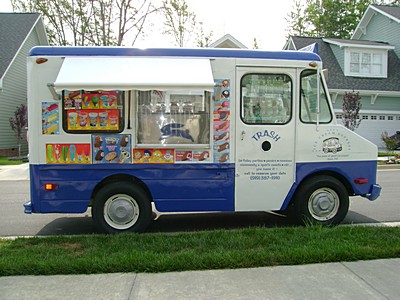 I was asked a question last week about commercial auto insurance for a home based business. “Do I need a commercial auto insurance policy for a delivery van which will be used to deliver my product?” This particular business is a new venture. It’s a baked goods catering business which prepares all product at a third-party commercial kitchen.
It can be confusing trying to determine when a commercial auto insurance policy is necessary, especially for home based businesses. If you’re trying to figure out if you need commercial auto insurance, or if you can just get by with your personal auto insurance policy, here are some scenarios that will hopefully help you decide.
When Might I Need Commercial Auto Insurance?
- If a vehicle is used in tasks related to the operator’s job, profession or business (other than commuting).
- If you are using your vehicle to transport goods or people for a fee or if you use your vehicle to conduct a service
- If you need higher limits of liability because of the nature of your work.
- If you are hauling a considerable weight in tools or equipment or towing a trailer used to conduct your business.
- If employees operate the vehicle or if ownership is in the name of a corporation or partnership.
If you as an individual are the titled owner of your vehicle, and use it for business purposes, contact your insurance agent to discuss your policy. Be certain you’re covered adequately for business use and appropriate estimated annual mileage. Many business uses and vehicle types may be excluded from personal auto insurance policies, so you want to be sure you have the right coverage.
–JK
Tustin, CA Commercial Office Building Burns In Massive Fire
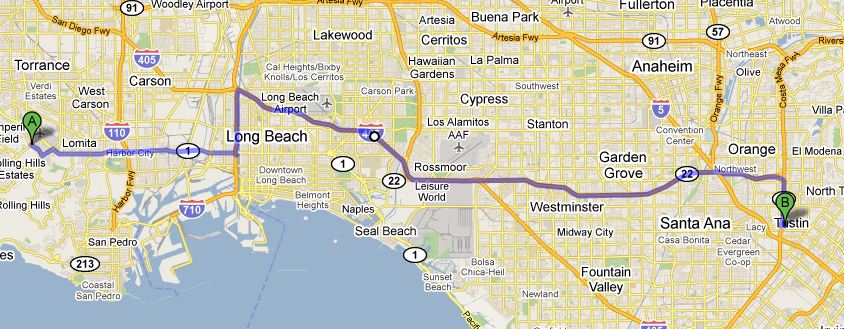 Not far from our office in Torrance, about 35 miles east in the city of Tustin, two firefighters were injured while battling a massive fire in a 50,000-square-foot commercial building on Tuesday.
The fire erupted inside the Maxim Healthcare building which is ironically the company I used to work for almost four years ago before I transitioned into the insurance world.
“All of a sudden, the glass just burst out of the first floor window, and flames immediately started coming out,” said a Maxim Healthcare employee. Firefighters had difficulties dealing with the massive 6-alarm fire. There were people inside the building at the time the fire was reported, however everybody got out okay.
The building was filled with years of important medical files and records. “All of our records were in there, either on the computer or on paper, so they’re up in flames,” said one Maxim employee. The flames were so intense that at one point, firefighters had to back out of the structure, and smoke could be seen for miles. About 100 firefighters responded, but an official cause of the fire has not been determined.
Here are pictures taken from the scene:


Large local fires like these always hit closer to home and make people realize it could happen to anyone, anytime. What if this happened to your building, your business, your office? Are you prepared?
7 tips for fire preparedness planning:*
- Establish an Evacuation Plan: Be sure everyone can get out quickly in an emergency. Designate primary and secondary evacuation routes and exits. Make sure these routes are clearly marked, well-lit, wide enough, and clear at all times. Train your employees in evacuation procedures and practice at least annually.
- Keep an updated list of telephone numbers, including emergency personnel, hospital, public health, utilities,insurance agent, and disaster relief agencies. Include contact names and telephone numbers for customers, suppliers, and distributors. Keep a copy off site
- Protect vital records critical to your business (e.g., financial statements, account information, blueprints, product lists, etc.) Select a safe that has been tested and listed by Underwriters Laboratories UL rates safes for resistance to fire and heat, as well as resistance to burglary tools and torches. Or, keep copies offsite if possible.
- Back up all critical electronic data and programs at least daily. Backing up these valuable assets can help a business recover from a data loss or hardware failure and get back online quickly.
- Secure backup copies of critical data and programs in a physical location separate from your premises to protect against damage from theft, fire, water and other physical hazards.
- Review your current property insurance policy with your insurance agent. Be sure that you understand the coverages (e.g., buildings, personal property, personal property of others, business income, etc.), deductibles, and limits of insurance. You will need to buy separate policies for flood or earthquake damage as they are excluded perils on property insurance policies.
- Keep insurance information and contact names and numbers in a safe place. This will expedite the claim process in the event of a loss.
*Other or additional measures may be required. Talk to a risk management professional
Never think it can’t happen to you! Be prepared.
–JK
Christmas Tree Safety Tips

(See video below showing how fast a dry tree can ignite)
Well, Thanksgiving has come and gone and the countdown for Christmas has officially begun, although retailers have been counting down since the end of September. We are officially 25 days away from the big day and that means it’s time to get out and find yourself that perfect Christmas tree. For most people, decorating the Christmas tree is their favorite part of the holiday. Although fun and decorative, natural and artificial Christmas trees start an average of 250 structure fires each year according to the National Fire Protection Association. These fires cause approximately 14 deaths, 26 injuries and $13.8 million in property damage yearly.
With this being said, the National Safety Council offers some Christmas tree safety tips to make sure a mishap doesn’t spoil your holiday season.
Christmas Trees
- Try to select a fresh tree by looking for one that is green. The needles of pines and spruces should bend and not break and should be hard to pull off the branches. On fir species, a needle pulled from a fresh tree will snap when bent, much like a fresh carrot. Also, look for a trunk sticky with sap.
- Cut off about two inches of the trunk and put the tree in a sturdy, water-holding stand. Keep the stand filled with water so the tree does not dry out quickly.
- Stand your tree away from fireplaces, radiators and other heat sources. Make sure the tree does not block foot traffic or doorways.
- If you use an artificial tree, choose one that is tested and labeled as fire resistant. Artificial trees with built-in electrical systems should have the Underwriters Laboratory (UL) label.
- Line-voltage holiday or decorative lights start an average of 170 home structure fires each year, according to the National Fire Protection Association. These fires cause approximately 7 deaths, 17 injuries and $7.9 million in property damage yearly.
- Keep natural trees watered!
Tree lights
- Only use indoor lights indoors (and outdoor lights only outdoors). Look for the UL label. Check lights for broken or cracked sockets, frayed or bare wires, or loose connections. Replace or repair any damaged light sets.
- Also, use no more than three light sets on any one extension cord. Extension cords should be placed against the wall to avoid tripping hazards, but do not run cords under rugs.
- Turn off all lights on trees and decorations when you go to bed or leave the house.
Tree ornaments
- Always use the proper step stool or ladder to reach high places.
- Read labels before you use materials that come in jars, cans and spray cans.
- Never place lighted candles on a tree or near any flammable materials.
- Avoid placing breakable tree ornaments or ones with small, detachable parts on lower branches where small children or pets can reach them.
- Do not hang popcorn chains and candy canes on the tree when small children are present. They may think that other tree ornaments are also edible.
Take these Christmas tree safety tips very seriously. Check out how fast this dry tree burns:
30 seconds might be too late!
(CYA disclaimer: Information and recommendations are compiled from sources believed to be reliable. I don’t assume responsibility for the correctness, sufficiency or completeness of this information or recommendations. Other or additional safety measures may be required under particular circumstances!)
–JK
Employee Injuries & Return to Work Programs
When you think about workplace injuries and workers compensation insurance, what are the first thoughts that come to mind? Perhaps the cost for medical care and rehab? Compensation for lost wages? Legal services related to a claim?
Have you ever thought of the hidden costs associated with workplace injuries? Consider the following:
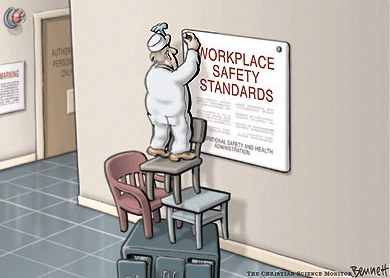
- Lost productivity from an experienced employee
- Equipment or product damage
- Lost efficiency among employees
- Time spent completing forms and communicating with medical providers and insurance adjusters
Hidden costs are those costs that are not immediately recognized, but take a toll on business profitability. These hidden costs are not typically covered under a workers compensation policy and drain from a business’s bottom line. This is why a Return to Work (RTW) Program should be implemented to help control costs.
What is a Return to Work Program?
A return to work program gets an injured employee back to work in a productive position when they are physically capable; not necessarily the position they had at the time of injury. There are studies show that the longer an injured employee is off work, the more difficult it becomes to get them back into the workplace. A return to work program keeps the employee engaged in a work based routine, interacting with fellow employees and contributing productively to the business.
For a Return To Work Program to be effective, communication must occur. Prompt notification of the injury to your insurance carrier allows the carrier to work with the injured employee and medical provider to assess the employee’s physical capabilities after the injury. From there, your carrier and provider can work with you to develop a plan to return the employee to work.
Benefits of Returning Employees To Work
Accepting an injured employee into the workplace can help your business:
- Regain lost productivity.
- Avoid temporary or new employee hiring and training costs.
- Reduce or avoid litigation and discourage malingering.
- Increase awareness of safe work practices.
How to Develop a Return To Work Program
- Identify the physical demands of jobs or tasks. Involve key employees to help with this task. Evaluation forms are available from the Safety and Health Department.
- Identify transitional jobs that an injured employee could perform. Full time work is not required. Injured employees may work fewer hours and at a lower wage and be eligible to receive compensation benefits. This reduces insurance costs which may affect your insurance rates for several years.
- Tell existing and new employees during orientation that your company has a RTW Program and at time of hire. Let employees know that if they are injured on job, the company will attempt to find modified work for them.
- Before an injury occurs, speak with your designated medical provider or doctor. Tell them that you have a RTW Program, and that you have jobs to accommodate an employee who has physical limitations.
A RTW program can help control workers’ compensation costs after an injury occurs; however, the best method to control these costs is to prevent injuries through an effective Injury and Illness Prevention (IIP) Program. Contact the Safety & Health Department for a model IIP program.
–JK
Detroit Hospital Laptop Stolen With Personal Information
Henry Ford Health Systems in Detroit, MI notified patients of a possible security breach this week after a laptop was stolen out of an unlocked medical office on September 24th. Hospital representatives said although the password was protected, there is a possibility some personal patient information could be at risk.
The laptop contained patient information related to prostate services received between 1997 and 2008 and included some but not all of the following information: Patient name, medical record number, date of birth, mailing and e-mail addresses, telephone number, treatment and doctor visits. No Social Security numbers or health insurance information were stored on the laptop.
So, what does this have to do with my business?
Hospitals and medical offices are not the only organizations exposed to this type of loss. When you consider the massive exchange of data with portable devices like smart phones and laptops, and easily assessable web-hosted data systems and servers, there is a ton of data being transmitted through cyberspace. Throw technically sophisticated computer hackers into the mix and a whole new recipe of liability for your organization comes into focus- Cyber Liability.
Although you may have a general liability insurance policy to protect for company from bodily injury or property damage claims, traditional liability policies do not address internet exposures and the risks involved with internet business. That is why you must consider Cyber Liability Insurance. Cyber liability insurance policies can include:
- Coverage for any negligent act, error or omission by an insured that results in the improper dissemination of nonpublic personal information due to the unauthorized access or unauthorized use of an insured’s computer system.
- Coverage for any negligent act, error or omission by an insured resulting in the unauthorized access or unauthorized use of the computer system
- Coverage for any negligent act, error or omission resulting in the wrongful publication, defamation, slander or libel, product disparagement or other tort related to disparagement or harm to the reputation or character of any person or organization in an insureds Electronic Content or Advertising
Hospital or not, your business may be exposed to cyber liability claims if you do any business on the internet, or in this case, use portable devices like smart phones and laptops to conduct business.
–JK
Cyber Liability Insurance – New Technology Means New Liability Exposures
 The internet has changed the world over the past 15+ years. Almost daily, I am amazed about some cool new website or program that comes along which affects the way we do things in our lives. People and businesses alike are being transformed by technology and the internet. It’s an amazing progression, but as businesses continue utilizing new technology-based processes, they may not be aware of the emerging risks that could potentially threaten their bottom line. The Internet has yielded a whole new assortment of liability exposures which means anyone with a website now has additional legal liabilities to be concerned about. Creating a website is simple in comparison to the exposures that come along with having one. Companies on the web face liability exposures that are emerging, evolving, and complex.
Consider the following scenarios:
- External hackers gain access to your computer system and steal credit card information, SSN’s, or bank account information
- An internal employee mistakenly posts the names, addresses and SSN’s of your customers on the company homepage
- One of your employees inadvertently passes along a virus or other type of malware
- A rogue employee posting on a blog, social media page or discussion forum can make your company liable for slander or defamation
These are just a handful of examples of where your business could be exposed. Although you may have a general liability insurance policy to protect for company from bodily injury or property damage claims, traditional liability policies do not address internet exposures and the risks involved with internet business. That is why you must consider Cyber Liability Insurance.
Cyber liability insurance can be tailored to the needs of your business. Cyber liability insurance policies may include:
- Coverage for any negligent act, error or omission by an insured that results in the improper dissemination of nonpublic personal information due to the unauthorized access or unauthorized use of an insured’s computer system.
- Coverage for any negligent act, error or omission by an insured resulting in the unauthorized access or unauthorized use of the computer system
- Coverage for any negligent act, error or omission resulting in the wrongful publication, defamation, slander or libel, product disparagement or other tort related to disparagement or harm to the reputation or character of any person or organization in an insureds Electronic Content or Advertising
Businesses that get drawn into claims often have to deal with crisis management after the fact, so a cyber liability policy may also extend supplemental coverage for costs incurred in connection with a data privacy wrongful act to pay for a public relations firm, law firm or crisis management firm to maintain or restore confidence in an insured.
The bottom line is this: like it or not, the internet is here to stay. Some experts believe cyber liability insurance will become the norm for businesses, along with other common insurance types, such as property, general liability and workers compensation insurance. If your company is on the web, strongly consider making Cyber Liability insurance part of your insurance program.
Sports Championships, Riots and How They Relate To Insurance
Congratulations to the San Francisco Giants who beat the Texas Rangers to win the World Series this week. It was the franchises first championship since 1954 and their first since moving to San Francisco from New York after the 1957 season. You think the fans were happy? Like many other professional sports championship victories, passionate “fans” often congregate and begin to riot in celebration.
Luckily, riots don’t happen often but rest assured if they do, it is a covered peril on a property insurance policy (unless there is a specific exclusion attached to the policy form). So if your business gets stuck in the middle of excess celebration and your business property is damaged in a riot or civil commotion, you are covered under a standard property insurance form. Just make sure you carry the appropriate amount of insurance to cover your particular needs.
About Me

I grew up in Fullerton, CA and graduated from Servite High School in Anaheim. I have my Bachelors degree from Loyola Marymount University in Los Angeles. I currently live in Tustin, CA.
Please contact me if you need help with any of the following lines of insurance for your business:
-Cyber / Data Breach
-Commercial Property
-Commercial General Liability
-Products Liability
-Workers Compensation
-Commercial Auto
-Umbrella/Excess Liability
-Errors & Omissions/ Professional Liability
-Employment Practices Liability
-Directors & Officers
-Life & Disability Insurance
 Jimmy Kinmartin, CPCU