
Christmas Tree Safety Tips
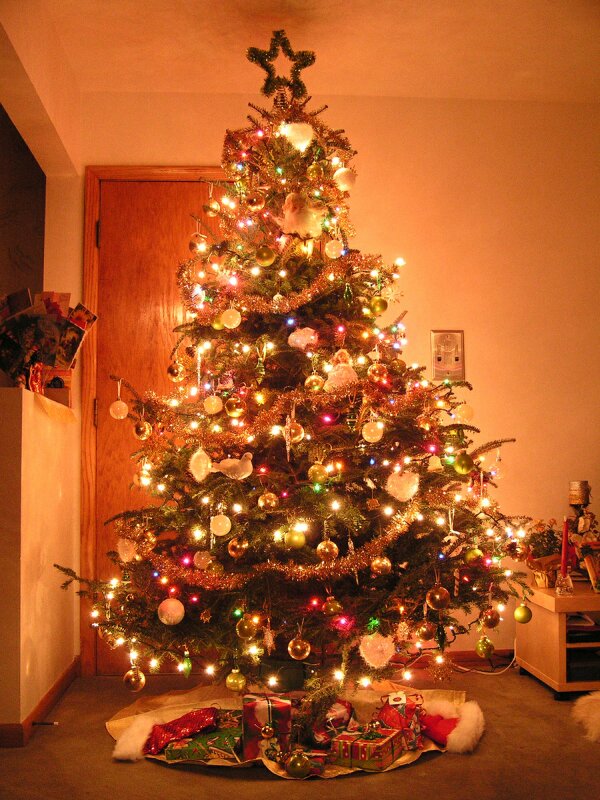
(See video below showing how fast a dry tree can ignite)
Well, Thanksgiving has come and gone and the countdown for Christmas has officially begun, although retailers have been counting down since the end of September. We are officially 25 days away from the big day and that means it’s time to get out and find yourself that perfect Christmas tree. For most people, decorating the Christmas tree is their favorite part of the holiday. Although fun and decorative, natural and artificial Christmas trees start an average of 250 structure fires each year according to the National Fire Protection Association. These fires cause approximately 14 deaths, 26 injuries and $13.8 million in property damage yearly.
With this being said, the National Safety Council offers some Christmas tree safety tips to make sure a mishap doesn’t spoil your holiday season.
Christmas Trees
- Try to select a fresh tree by looking for one that is green. The needles of pines and spruces should bend and not break and should be hard to pull off the branches. On fir species, a needle pulled from a fresh tree will snap when bent, much like a fresh carrot. Also, look for a trunk sticky with sap.
- Cut off about two inches of the trunk and put the tree in a sturdy, water-holding stand. Keep the stand filled with water so the tree does not dry out quickly.
- Stand your tree away from fireplaces, radiators and other heat sources. Make sure the tree does not block foot traffic or doorways.
- If you use an artificial tree, choose one that is tested and labeled as fire resistant. Artificial trees with built-in electrical systems should have the Underwriters Laboratory (UL) label.
- Line-voltage holiday or decorative lights start an average of 170 home structure fires each year, according to the National Fire Protection Association. These fires cause approximately 7 deaths, 17 injuries and $7.9 million in property damage yearly.
- Keep natural trees watered!
Tree lights
- Only use indoor lights indoors (and outdoor lights only outdoors). Look for the UL label. Check lights for broken or cracked sockets, frayed or bare wires, or loose connections. Replace or repair any damaged light sets.
- Also, use no more than three light sets on any one extension cord. Extension cords should be placed against the wall to avoid tripping hazards, but do not run cords under rugs.
- Turn off all lights on trees and decorations when you go to bed or leave the house.
Tree ornaments
- Always use the proper step stool or ladder to reach high places.
- Read labels before you use materials that come in jars, cans and spray cans.
- Never place lighted candles on a tree or near any flammable materials.
- Avoid placing breakable tree ornaments or ones with small, detachable parts on lower branches where small children or pets can reach them.
- Do not hang popcorn chains and candy canes on the tree when small children are present. They may think that other tree ornaments are also edible.
Take these Christmas tree safety tips very seriously. Check out how fast this dry tree burns:
30 seconds might be too late!
(CYA disclaimer: Information and recommendations are compiled from sources believed to be reliable. I don’t assume responsibility for the correctness, sufficiency or completeness of this information or recommendations. Other or additional safety measures may be required under particular circumstances!)
–JK
Not So Fun Business Injury Facts
 Businesses deal with risk everyday. Whether it be liability risks such as injuries to employees or customers, or property loss risks such as fire or theft, businesses must implement risk control and risk management procedures to protect their operations. Of course, accidents happen and this is why insurance is necessary. Here are six (not so fun) injury facts courtesy of Travelers Insurance:
- 25,000 slip and fall accidents occur daily in the U.S., accounting for 15 percent of all workplace accidents. It is also the leading injury to people on company premises.
- Back injuries account for more lost work time than any other workplace injury. Often, the source is improper lifting.
- Fires in commercial buildings cost more than $2 billion in annual property damage and loss. Lack of, or improper maintenance of sprinkler systems plays a significant role.
- Musculoskeletal disorders results in over $45 billion in loss wages and productivity costs. Organized office workstations and poor ergonomic practices are contributors.
- Adverse weather is the leading cause of vehicle accidents and fatalities. Many company drivers don’t understand the risk or how to adjust their driving behaviors.
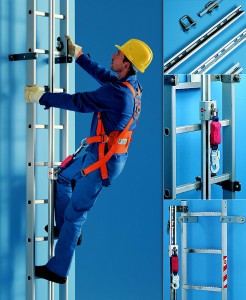
- Falls from ladders injure over 20,000 American workers annually. Some injuries result in permanent disabilities and even fatalities. Safety starts before the ladder is even mounted.
9 Tips For Emergency Preparedness Planning
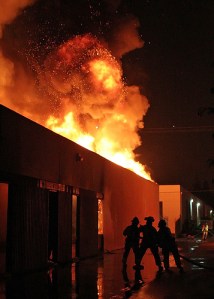
Courtesy of http://www.flickr.com/photos/smokeshowing
With everything going on out here in California this week with the Kern County wildfires, this post is more about risk management and mitigation rather than insurance. Fires and natural disasters can happen to anyone at anytime and in the blink of an eye and destroy everything you own and have worked extremely hard to build. Although there’s no stopping the rage of a fire, the devastation of an earthquake, or the wreckage of a flood, there are things you can do to mitigate loss.
Here’s a small list of steps you can take to prepare yourself for a natural disaster courtesy of The Hartford Emergency Preparedness Planning.
9 Practical Tips for the Small Business Owner
1- Establish an Evacuation Plan: Be sure everyone can get out quickly in an emergency. Designate primary and secondary evacuation routes and exits. Make sure these routes are clearly marked, well-lit, wide enough, and clear at all times. Train your employees in evacuation procedures and practice at least annually.
2- Keep an updated list of telephone numbers, including emergency personnel, hospital, public health, utilities, insurance agent, and disaster relief agencies. Include contact names and telephone numbers for customers, suppliers, and distributors. Keep a copy off site
3-Keep essential items on hand in the event of an emergency: first aid kit, flashlight with fresh batteries, battery powered radio, waterproof plastic bags and covers, camera with film, tool kit, and appropriate supply of bottled water and nonperishable food.
4- Protect vital records critical to your business (e.g., financial statements, account information, blueprints, product lists, etc.) Select a safe that has been tested and listed by Underwriters Laboratories UL rates safes for resistance to fire and heat, as well as resistance to burglary tools and torches. Or, keep copies offsite if possible.
5- Back up all critical electronic data and programs at least daily. Backing up these valuable assets can help a business recover from a data loss or hardware failure and get back online quickly.
6- Secure backup copies of critical data and programs in a physical location seperate from your premises to protect against damage from theft, fire, water and other physical hazards.
7- Determine if your business is located in an area that is prone to natural hazards (e.g., flood, earthquake, wildfires). Once you have identified perils to which your business is vulnerable, take steps to minimize potential damage to the building and contents (e.g.- if you are in earthquake territory, anchor tall bookcases and file cabinets to wall studs to keep them from falling).
8- Review your current property insurance policy with your insurance agent. Be sure that you understand the coverages (e.g., buildings, personal property, presonal property of others, business income, etc.), deductibles, and limits of insurance. You will need to buy seperate policies for flood or earthquake damage as they are excluded perils on property insurance policies.
9- Keep insurance information and contact names and numbers in a safe place. This will expedite the claim process in the event of a loss.
-JK
About Me

I grew up in Fullerton, CA and graduated from Servite High School in Anaheim. I have my Bachelors degree from Loyola Marymount University in Los Angeles. I currently live in Tustin, CA.
Please contact me if you need help with any of the following lines of insurance for your business:
-Cyber / Data Breach
-Commercial Property
-Commercial General Liability
-Products Liability
-Workers Compensation
-Commercial Auto
-Umbrella/Excess Liability
-Errors & Omissions/ Professional Liability
-Employment Practices Liability
-Directors & Officers
-Life & Disability Insurance
 Jimmy Kinmartin, CPCU