
Small Business Health Care Tax Credit – Deadline today!
Small business owners: it is not too late to claim the Affordable Care Act’s Small Business Health Care Tax Credit! For those of you who are small business owners, this tax credit is available for your own business. The filing deadline for many small businesses has already passed, but qualifying employers that provided group health insurance in 2010 can still claim this significant assistance on 2010 tax returns:
- Small businesses that have yet to file – for example because they took advantage of the automatic extension – can claim the credit on their 1040 series returns by today, Monday, October 17.
- Small businesses that have already filed and want to claim the credit can amend their returns using Form 1120X for corporations or Form 1040X for others, including individual sole proprietors.
- Eligible tax-exempt organizations can claim the credit on Form 990-T.
- Small businesses without taxable income to offset should remember that the credit is part of the general business credit for Tax Year 2010, meaning they may be eligible to carry back the credit for five years or forward for 20 years.
The credit is worth up to 35% of the health insurance premium costs a small business incurred for insuring its employees in 2010. Eligible small businesses that do not yet provide insurance can start doing so to claim the credit for 2011 forward.
The credit remains available for several years, so small employers should check each year to see if they are eligible.
More information is available on the IRS website at:
http://www.irs.gov/newsroom/article/0,,id=223666,00.html
–JK
Know Your Deductible
Picture this scenario- You own a pizza parlor. It’s late Tuesday evening and business is closed as you are getting your premises fumigated. You have the pest control company at your premises to “bug bomb” the joint. As a passerby walks by your front window, he thinks he sees smoke and frantically calls the fire department. The fire department arrives and see’s “smoke” so they break down your front door and hammer through your front window to access the interior only to find out that the white stuff wasn’t smoke. Rather, a routine pest control measure you’re trying to take to maintain your restaurant.
 The end result? You get called to come down to the scene. You have to temporarily board up the front door and windows to keep things safe until the morning; and when the morning arrives, you have a contractor come out to fix everything so that you’re back in order for business.
When it’s all said and done, the contractor gives you an invoice for $2,800. You call your insurance carrier to put a claim in on the loss. In the process, your claims adjuster advises that you carry a $2,500 deductible. “Ahhh man! That means it’s coming out of my pocket!”
Have you ever experienced a similar situation where you find yourself paying out a loss entirely because your deductible was high? Was it burdensome for you to have to pay, or do you wish you had a lower deductible to save some cash?
The reality is people’s preferences are different when it comes to insurance and their deductibles. Some businesses like higher deductibles to save some money on their insurance premium. They may feel anything under their deductible amount wouldn’t be an issue to cover out-of-pocket. Or, they don’t anticipate many losses, so it’s not a big deal. For others, an unexpected loss like this might put them in a financial bind, but they never knew what their deductible was in the first place.
Solution
The story above is a true story. It happened to a client of mine last week. Since he carried a $2,500 deductible on a $2,800 insured loss, we didn’t move forward with the claim. Yes, it was a burden to have to fork out $2,800, but luckily it wasn’t too much for him to handle. However, we did make some changes on the deductible, and it really didn’t impact the premium much at all looking at the big picture:
- Changing the deductible from $2,500 to $1,000 = Additional annual premium of $114
- Changing the deductible from $2,500 to $500 = Additional annual premium of $194
So what’s the moral of this story? For one, know what property insurance deductible you carry, and two, picture yourself in a loss. Can you handle the deductible, or will it put a dent into your savings? Why not play with the different deductible options to see what difference in annual premium you’re looking at. Really, it’s not much in the grand scheme of things. You never know when the fire department might be banging down your front door.
–JK
Almost Famous: The ISU- Olson Duncan Insurance Commercial
Check out our web video commercial for ISU-The Olson Duncan Insurance which I made a cameo appearance in:
Remember, we are a full service insurance agency capable of handling all of your insurance needs, business or personal:
Business Insurance (business owners policy, general liability, commercial property, errors and omissions, professional liability, workers compensation, commercial auto, cyber liability, umbrella/excess liability, employment practices liability, directors and offices liability, and group life, health, dental, and vision benefits)
Personal Insurance (auto insurance, home insurance, life insurance, health insurance, earthquake insurance, umbrella insurance, mechanical breakdown, watercraft/boat insurance, dental insurance, long term care, and flood insurance)
–JK
Retailers with Sales in CA at Risk of Penalties Following State Court Decision
A recent decision by the California Supreme Court has placed retailers and other businesses that obtain and record personally identifiable customer information during point-of-sale transactions in the state at risk of significant penalties.
 Retailers with transactions in California are being named in class-action lawsuits following a February 2011 California Supreme Court decision, Pineda v. Williams Sonoma Stores, Inc. The decision found that the state’s Song-Beverly Credit Card Act of 1971 prohibits retailers and other businesses engaged in credit card transactions from collecting and recording customer information such as zip codes or any other personally identifiable information not provided by the credit card itself during point-of-sale transactions.
The statute authorizes penalties of up to $1,000 for each transaction that violates the statute. While coverage will depend upon the claimant’s allegations, the loss is likely not covered by a business’ general liability insurance policy.
A retailer may be headquartered anywhere in the country, but only the transactions conducted in the state of California are subject to the statute and its penalties.
Retailers with California transactions, consider the following tips:
- Do not ask for customer zip codes, even if only for marketing or security purposes. Asking for this information is risky.
- If retailers use zip codes for security measures, instead ask to see customers’ driver’s license or other forms of identification, but don’t record the information.
- If a retailer has been recording zip code information, even if only for marketing purposes, seek legal counsel.
Source: The Hartford
Can Your Business Survive a Natural Disaster?
I am happy to share this article from Inc. Magazine which I was interviewed for and quoted on. The basis of the article is – Don’t let a natural disaster spell ruin for your business. Make sure you’re protected against natural disasters such as earthquakes, flood, hurricanes, tornadoes and recoup on your financial loss.
Read the article HERE

Thanks!
–JK
Property Insurance Coverage Exclusion – Water
This post isn’t terribly exciting, but true. So I must share.
A client called me on Monday, a pizza parlor, about some troubles they have been dealing with over the past two months. A foul sewage-like odor had been permeating throughout the kitchen area of the restaurant and sometimes even the seating area. Nobody had an idea of where it was coming from. There had been no sewage back-ups or signs of plumbing problems or anything. The “porta-potty” like odor started to become a significant problem for the restaurant as it grew stronger and started pushing customers away. Finally, our client called the building owner to come check it out (this is another story).
 It turns out there was a small pipe underground in the kitchen slowly dripping over the course of a month that was saturating the ground and walls and pushing through the vents which affected the entire two-story building with a foul odor. Plumbers had to jack-hammer the concrete floor in the kitchen to get to the leaky pipe and patch it. Then put it all back together. The cost was paid out-of-pocket by our client who is NOT the building owner, nor responsible for this loss in his lease. Now he’s dealing with the building owner on trying to collect on the loss. I visited last night and it still smells like crap in there which is not good for business. In fact, business has dropped a bit which has our client stressing!
From an insurance standpoint, it should be noted that a loss like this is NOT typically covered on a property insurance policy. If you review a property insurance special policy form, you’ll find the following language under the list of exclusions:
Water:
- Flood, surface water, waves, tides, tidal waves, overflow of any body of water, or their spray, all whether driven by wind or not
- Mudslide or mudflow
- Water that backs up or overflows from a sewer, drain, or sump; or
- Water under the ground surface pressing on, or flowing or seeping through (a) foundations, walls, floors or paved surfaces; (b) basements, whether paved or not; (c) doors, windows, or other openings
*If water results in fire, explosion, or sprinkler leakage, carriers will typically pay for the loss or damage caused by that fire, explosion, or sprinkler leakage.
It remains to be seen how this whole ordeal will be play out between our client and his landlord, but a good rule of thumb to understand about water damage claims is: if water rises from the ground up and causes property damage, it’s generally excluded from coverage. However there are endorsements such as “sewer drain and backup” that can be added on Businessowners policies to give coverage back in some scenarios. Be sure to clarify with your agent/broker about your property insurance policy.
–JK
Paso Robles Weekend Trip
This past weekend, Joanelle and I spent the time in Paso Robles (CA) with friends to do some wine tasting. Those not familiar with Paso Robles, it’s about halfway between Los Angeles and San Francisco on California’s central coast. Paso Robles is wine country where winegrape growing climate is perfect for the production of many amazing wines.

Paso Robles On the Map
According to the website www.pasowine.com, you will find 26,000 vineyard acres, producing more than 40 winegrape varieties – from Spanish to Italian, Bordeaux to Rhône, including the area’s heritage variety Zinfandel. With so many different wineries, it’s tough to decide which ones to see in a single day. We made it to five:
- Turley Wine Cellars
- Four Vines Winery
- Lone Madrone
- Bianchi
- Tobin James
Paso Robles is a must if you enjoy wine or can appreciate some beautiful scenery. Here are a fraction of the photos we took over the weekend:
-JK
Contractor Dies After Falling 30 feet at Local Plant
A man working on a construction project at the coastal Hyperion wastewater treatment plant near Playa del Rey was killed last Tuesday after 30-foot fall. Los Angeles city firefighters were called to the plant and found the worker dead at the scene.

The Hyperion Treatment Plant, Playa del Rey, CA
The man, who was not an employee, was erecting a 30-foot wall panel at the plant according to the state Division of Occupational Safety and Health (Cal/OSHA).
The man’s employer is a Stanton-based general contracting firm which has been working at the plant to construct a gas compressor facility that will replace equipment built in the 1950s. The incident is believed to be the plant’s first construction-related fatality since the plant was first modernized in the 1950s.
This incident is a strong reminder of the importance of carrying workers’ compensation insurance. Even more notably, the importance of making sure any subcontractors you have working for you carry workers’ compensation insurance. No matter if you’re a professional consultant, or a large construction company, you MUST be certain any independent contractors you hire carry workers compensation insurance and show you proof with a certificate of insurance before working any jobs for you. Otherwise, you as the employer are liable for any work related injuries or loss.
Have them furnish you with evidence of coverage with a Certificate of Insurance. Mark their policy expiration down on your calendar to remind yourself to request a renewal Certificate before their policy expires. (While you’re at it, make sure their general liability coverage is also listed on the Certificate and that you’re named as an Additional Insured)
Your workers’ compensation insurance carrier will want to see copies of your independent contractor’s workers’ compensation certificates. Without the certificates, your carrier may consider the independent contractors your employee and charge you an additional workers’ compensation premium at the time of audit.
A good rule of thumb is to have ALL your workers, whether employees or independent contractors, covered by workers’ compensation insurance. Numerous court cases have ruled the hiring party is responsible for injuries to independent contractor’s employees when the independent contractor did not have their own workers’ compensation insurance.
–JK
Thai Life Insurance Commercial
I’ve been playing around with Google+ a little bit and one feature I have come to like is the “Sparks” link which basically brings you stories on the things you love from all across the Web. Using the keyword “insurance,” I found this heavy hitting Thai Life Insurance Commercial which really doesn’t hold anything back when striking at your emotions.
You don’t see commercials like this running in the U.S. on Sunday afternoon during a PGA tournament! However, it’s powerful. Do you have life insurance?
Here’s a great resource to start if you’re considering buying life insurance.
–JK
Clean Up Your Mess!
I wrote insurance coverage for a commercial building earlier this year, property and general liability, only to receive a phone call a couple of months later from the carrier telling me that an inspection was done on the building and for lack of a better term, the premises was an absolute mess. It needed a fix quickly, or coverage was going to be cancelled short-term. The call took me by surprise so I decided to visit the property myself. Here’s what I discovered:
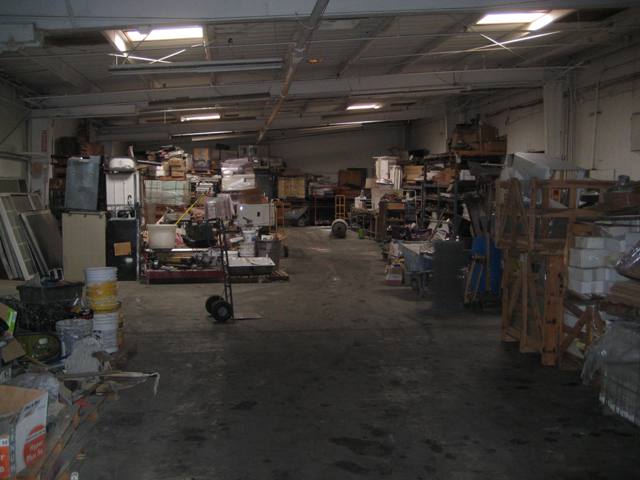


This was borderline hoarding. Storage was disorganized, with random articles stacked in solid piles up to the ceiling in some areas. There were no aisles and inadequate means of getting out from the storage area in the event of an emergency. Combustible material was stacked near an electrical switch, box, and panels, etc.
The loss control recommendation from the carrier: housekeeping. “There is excessive storage of combustible inventory and miscellaneous material throughout parts of the warehouse. Such arrangement of material (with 1 small walking path) could impede safe egress from the structure; The volume of closely packed material increases exposure to a rapidly spreading fire. The material also obstructs access to fire extinguishers and is stacked adjacent to electrical boxes and panels; The heavy fire load may not be controlled by the existing sprinkler system.”
The recommended solutions to this mess?
- The inventory should be rearranged so all electrical boxes/panels have a 3′ radius free of combustible material.
- The inventory should be rearranged to allow access to fire extinguishers.
- The inventory density should be reduced to allow better access to storage areas and improved water distribution for the sprinklers.
- Housekeeping should be improved and then maintained on a regular basis.
This is one of the most extreme examples of a disorderly premises that I have encountered. It doesn’t take an insurance professional to know that this is a severe property and general liability insurance hazard. There is absolutely no way of writing insurance with any carrier if you have a premises in this kind of shape. The risks are just too extreme. I’m not an obsessive compulsive neat freak by any means, but I ask myself if this insured has any bit of concern for protecting their assets? The point here is about risk management and risk reduction, not about making things look pretty at your home or business.
What type of housekeeping do you maintain at your home or business?
–JK
About Me

I grew up in Fullerton, CA and graduated from Servite High School in Anaheim. I have my Bachelors degree from Loyola Marymount University in Los Angeles. I currently live in Tustin, CA.
Please contact me if you need help with any of the following lines of insurance for your business:
-Cyber / Data Breach
-Commercial Property
-Commercial General Liability
-Products Liability
-Workers Compensation
-Commercial Auto
-Umbrella/Excess Liability
-Errors & Omissions/ Professional Liability
-Employment Practices Liability
-Directors & Officers
-Life & Disability Insurance
 Jimmy Kinmartin, CPCU