
Avoid the Jolt from a Lightning Bolt!
I came across this fierce 30 second video on Youtube today of a lightning bolt striking the shore of a beach about a hundred or so yards from a hotel balcony where some guy was filming. Check it out (some cursing included so beware)
The force and power are so crazy it knocked the guy back a little bit!
Living in Southern California, we don’t see a lot of intense thunder and lightning, but you should learn to identify the early signs of an oncoming thunder and lightning storm.
Typically you’ll see towering clouds in the shape of a cauliflower, dark sky, distant rumbles of thunder and flashes of lightning. When a storm is on the verge of striking your area, you need to take cover to get out of harm’s way.
Here’s how:
- Seek shelter in an enclosed building, if possible.
- If you are in a car, stay inside and keep the windows securely rolled up.
- Do not use a small shed, pavilion or lean-to as shelter; they do not provide enough protection.
- Stay several feet away from open windows, sinks, toilets, tubs, showers, electric boxes, outlets and appliances during a lightning storm. Lightning bolts can flow through these items, “jump” to you and give you a jolt.
- Do not use a landline telephone during a storm. Opt for a cellular or cordless phone, which is not connected to the building’s wiring.
If you are caught outside in a lightning storm:
- If your skin starts to tingle or your hair stands up, lightning may be about to strike. Crouch to the ground on the balls of your feet and place your feet close together. Then, place your hands on your knees and lower your head. Try to get as close to the ground as possible without placing your hands or knees on the ground.
- Avoid seeking shelter under trees, near metal fences, pipes or tall and long objects.
- If you are swimming, boating or fishing, seek shelter on land immediately.
- If you are boating and cannot get to shore before the storm hits, crouch your body down in the middle of the boat, as low as you can get.
Next time you’re in the path of a thunderstorm, you can stay cool knowing Jim Kinmartin taught you everything you need to know about dealing with it ;).
Planning is important when it comes to preparing for storms, and that includes having the proper home or business insurance. Contact your broker or me to learn more about insurance solutions for your home, business and life.
–JK
As Summer Heats Up, Put your Cellphone on “ICE”

70% of 9-1-1 calls are placed from cell phones
Today you can use your cellphone to email, take pictures, manage your calendar and even record video. However, they are still most valuable in calling for help when emergency strikes.
What can you do to prepare in case something happens to you and you can’t call for help? Entering an emergency contact in your cellphone contact list under “ICE,” which stands for In Case of Emergency, is a commonplace practice that’s helpful in the following ways:
- Most emergency responders check cellphones for an ICE entry, which enables them to quickly contact your loved ones in an emergency.
- Provides peace of mind for parents with children, knowing you’ll be contacted first in an emergency situation.
Don’t delay: Add “ICE” to you cellphone contact list today!
Credit: Zywave, Inc.
–JK
How far has car safety come in 50 years? Take a look
1959 Chevrolet Bel Air vs. 2009 Chevrolet Malibu car safety crash test.
In the 50 years since US insurers organized the Insurance Institute for Highway Safety, car crashworthiness has improved. Demonstrating this was a crash test conducted between a 1959 Chevrolet Bel Air and a 2009 Chevrolet Malibu. In a real-world collision similar to this test, occupants of the new model would fare much better than in the vintage Chevy.
“It was night and day, the difference in occupant protection,” says Institute president Adrian Lund. “What this test shows is that automakers don’t build cars like they used to. They build them better.”
The crash test was conducted at an event to celebrate the contributions of auto insurers to highway car safety progress over 50 years. Beginning with the Institute’s 1959 founding, insurers have maintained the resolve, articulated in the 1950s, to “conduct, sponsor, and encourage programs designed to aid in the conservation and preservation of life and property from the hazards of highway accidents.”
More information at http://www.iihs.org/50th/default.html
–JK
Happy Small Business Week 2013
This year marks the 50th anniversary of National Small Business Week. Every year since 1963, the President of the United States has issued a proclamation announcing National Small Business Week, which recognizes the critical contributions of America’s entrepreneurs and small business owners.
More than half of Americans either own or work for a small business, and they create about two out of every three new jobs in the U.S. each year. Small businesses have always been the backbone of our economy, and we know that the success of America’s small businesses is critical to growing our economy and increasing our nation’s global competitiveness.
Small businesses create two out of three net new private sector jobs in our economy. And today, half of all working Americans either own or work for a small business.
To all of the small businesses out there, this week is about you. Happy Small Business Week!
–JK
FEMA Wireless Emergency Alerts
Today the The Ready Campaign and the Ad Council released a new Public Service Announcement to help Americans Prepare for Severe Weather with Wireless Emergency Alerts (WEAs). There are many things that can save your life, and now your phone could be one of them. For more information visit www.Ready.gov/alerts.
You do not need to register to receive Wireless Emergency Alerts notifications. You will automatically receive alerts if you have WEA-capable phone and your wireless carrier participates in the program. To find out if your mobile device is capable of receiving WEA alerts, contact your mobile device carrier or visit this CTIA Customer Info Page
–JK
Heartwell Golf Course, Long Beach
I love golf and I’m fortunate to live practically walking distance from Heartwell Golf Course in Long Beach. It’s a fun little 18-Hole Par 3 course which opened in 1964. The distance of the holes range from 85 to 140 yards, so you don’t need much club here. It’s great for practicing your short game.
There are a couple of water hazards, and sand traps on a lot of the holes. Heartwell Golf Course has lights for night golf with a driving range, two huge practice greens, and restaurant which I have yet to try. The course is always in great shape every time I play.
My wife just picked up golf and on 5/11 she played her first ever real round on a golf course. No better place for a beginner than Heartwell! it was a perfect afternoon. Here’s a picture I took on the back 9.
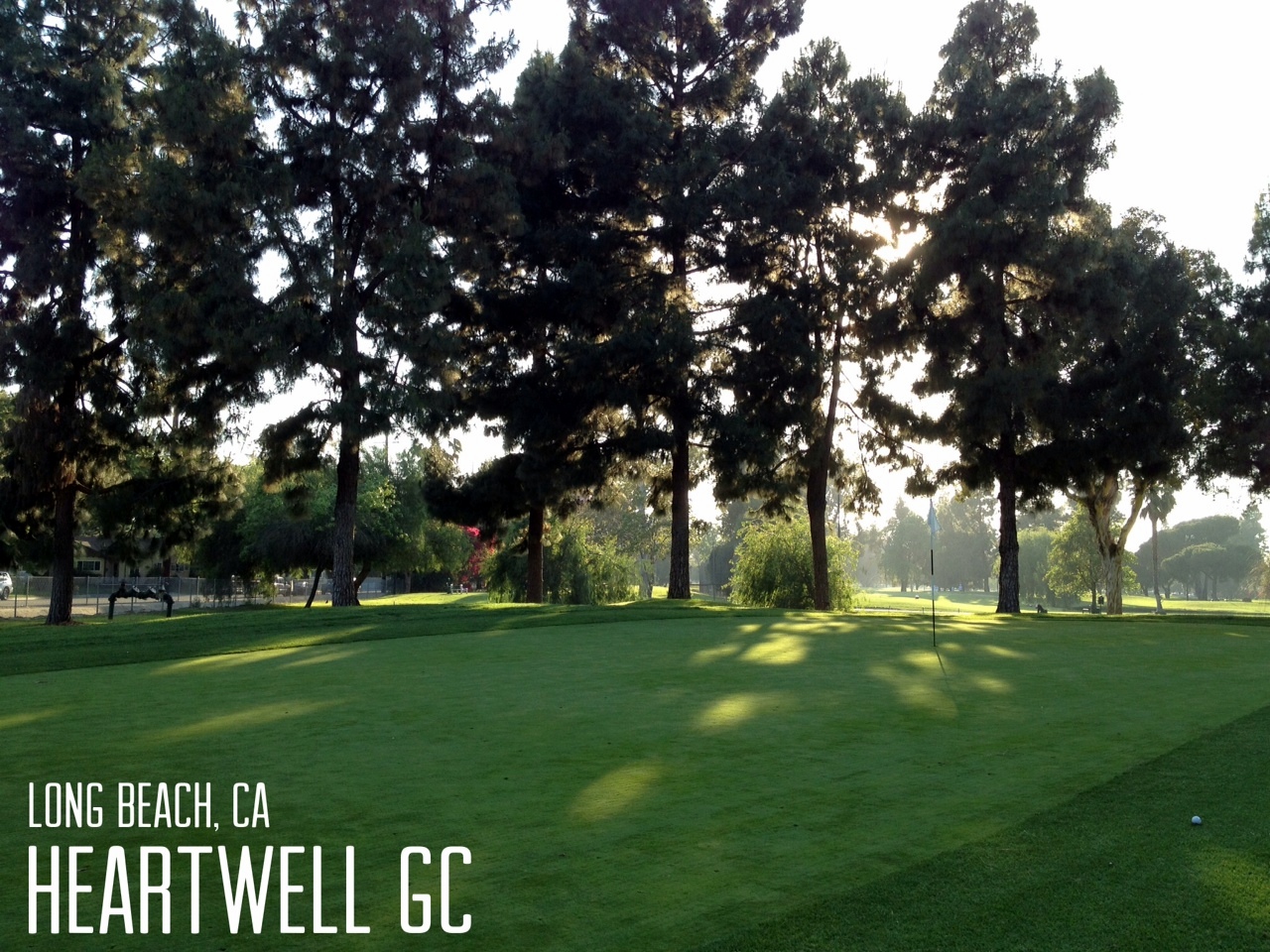
Check out Heartwell Golf Course in East Long Beach at 6700 East Carson Street, Long Beach, CA 90808
Website: www.heartwellgc.com
-JK
The Importance of Terrorism Insurance
In the wake of the recent Boston Marathon bombings, the issue of terrorism was brought to light again as a harsh reality we face this day in age in the United States and throughout the world.
Bob Hartwig of the Insurance Information Institute http://www.iii.org interviewed on FOX recently talking about terrorism insurance for businesses.
A standard business policy does not cover for damage or loss of business due to an act of terror. In an age where terrorism is becoming “the new normal”, having the proper coverage is important.
Contact me if I can help with questions on terrorism insurance, or the Terrorism Risk Insurance Act and how it relates to you business insurance.
-JK
What To Do In the Event of An Insurance Claim
When you deal with an incident that gives rise to an insurance claim, it’s usually a pretty crappy situation. It can be stressful, terrifying, frightening, and alarming in many cases. First things first, try not to panic. Hopefully it’s an incident you carry insurance for to be protected.
Your insurance contract requires that you report all claims promptly. Contact your insurance carrier or broker as possible after a property, liability, worker’s comp or automobile claim. An insurance company claims adjuster will be assigned to handle your claim. You should then be able to deal directly with the adjuster to settle your claim, but your broker can be there with you to assist you along the way.
Here’s step-by-step suggestions on how you should handle property, liability, workers compensation, and auto insurance claims.
Property Claims
In the event of damage to your building or contents:
- Protect the property from further damage:
- Call the proper authorities and utilities (gas, electric, telephone).
- Take photos of the damage before having emergency repairs made, such as boarding up windows or covering holes in the roof.
- Call your insurance broker or carrier to report the loss.
- Call a contractor to estimate the building damages.
- Separate damaged contents from undamaged contents. Do not discard any items until the claims adjuster gives you the authority to do so.
- Keep records of expenses if you are forced to temporarily relocate your business.
- Do not authorize repairs until the claims adjuster has given you the authority to do so.
After the claim is reported to the insurance company, the claims adjuster will:
- Contact you by phone or mail to discuss the loss
- Arrange for an appraiser to inspect extensively damaged property
- Assist you with your choice of contractors to make the repairs
- Contact you for a settlement
Liability Claims
In the event of injuries or damage to property of others which you allegedly caused:
- Call your insurance broker or carrier to report the claim.
- Forward any correspondence, including a summons from an attorney representing the other party.
- Do not discuss the claim with the other party or their attorney. Refer them to your insurance company’s claims adjuster or to us.
After the claim is reported to the insurance company, the claims adjuster will:
- Contact you to discuss the incident that allegedly caused the injury or damage to the property
- Deal directly with the other party and/or attorney to handle the claim
Workers’ Compensation Claims
In the event an employee is injured on the job:
- Complete the Employer’s First Report of Injury or Disease form for all claims. Either use the “call in” reporting system or fax the original form to the insurance company.
- Forward a copy of the First Report to your broker in the event of a disabling injury or death claim. They should follow-up with the insurance company for their prompt handling of the claim.
- Contact the insurance company to question the status of a claim. If you experience delays or have questions, contact your broker for assistance.
After you report the claim to the insurance company, the claims adjuster will:
- Contact the injured employee to discuss the accident
- Request copies of bills and doctors’ reports for medical treatment administered
- Contact you, the employer, if there is any lost time from work as a result of the injury
Auto Insurance Claims
In the event of an automobile accident:
- Report the accident to the police.
- Obtain information about the other people involved in the accident such as:
- Names, addresses and phone numbers
- Insurance company
- Type of vehicle
- Auto and driver’s license numbers.
- Have your vehicle towed to the nearest repair shop if the vehicle is not drivable. Do not authorize repairs until the claims adjuster gives you the authority to do so.
- Call your insurance broker or carrier to report the accident.
In the event of a windshield, vandalism or theft loss:
- Report the vandalism loss or theft to the police.
- Call us to report a loss.
After the claim is reported to the insurance company, the claims adjuster will:
- Contact you to request details of the accident and repair estimates
- Arrange for an appraiser to inspect the damages of vehicles that are not drivable or extensively damaged
- Contact you for a settlement
- Deal directly with the others involved in the accident
You should not talk to others involved in the accident, but refer them to your claims adjuster.
-JK
Source: Zywave, Inc.
Insurance Brokers Aren’t Just “Quote Messengers”
Yesterday I arranged an OSHA compliance assessment for a client of mine who has employees frequently working on rooftops to clean solar panels. This client is concerned about employees falling off the rooftops or ladders and asked for guidance on how to help prevent this from happening. They were very concerned about staying compliant with OSHA regulations too. So, we coordinated a meeting with a safety consultant to perform an OSHA compliance assessment (mock OSHA Audit). Here are a few action shots:


A lot of people have a misconception that insurance brokers are simply “quote messengers” and it drives me crazy. “Oh, I need insurance so I am going to call a handful of brokers, give them a few details, let them plug them into a computer and we’ll take the lowest price provided.” Don’t get me wrong, it’s nice to get multiple opinions and cover all the bases, but insurance brokers can and should provide a lot more value than this. In writing insurance for your business, finding the best policy for your needs is the first step, but what about all the other risks your business is exposed to?
Think about it….loss control and safety, human resources services, claims management, employee handbooks, etc. Who do you call when you need help with this stuff? I hope my clients are calling ME!
I have working relationships with highly trained safety consultants, HR professionals, payroll representatives, bookkeepers, etc. The list goes on. By starting with the basics, you can control those drivers that affect your insurance costs. When it comes to your business insurance, be proactive, not reactive when deciding on the right coverage for your protection.
Trust me, if you try to wing some policy together which you know nothing about, you’re going to pay a lot more than you ever would if you had an insurance partner do it right for you from the beginning. Don’t look for a quote messenger, look for a broker who’s going to be your partner and advocate in protecting your business.
-JK
Preventing Copper Theft
Have you ever noticed how many stories there are in the local news about stolen copper? From construction sites to vacant buildings, theft of copper has become a major problem for many communities throughout the country. Skyrocketing metal prices, especially copper, have made what was once a minor issue into a major problem costing over $1 billion/year according to the US Dept of Energy. Copper is recyclable and does not have any identifying marks making it difficult to determine if the metal is actually stolen property.
From pipes to wires to cables to rain gutters, copper components like these are being torn from walls and buildings. Thieves target copper in vacant buildings or difficult to secure areas including:
- Construction Sites – theft of copper plumbing, wiring, generators and materials.
- Vacant Buildings – theft of copper plumbing, wiring, air conditioners.
- Communications Towers – theft of copper wiring and cables.
- Electrical Sub-stations – theft of copper grounding bars and cables.
- Foreclosed Properties – theft of copper plumbing, wires, sprinkler systems, and cooling systems.
In addition, the collateral damage done from ripping pipes and wires out of walls far exceeds the actual cost of the copper stolen.
Copper Theft Crime Tips
Here are a few tips we recommend to help prevent copper theft:
- If you see something suspicious, say something
- Tour your property – take away the opportunity to steal
- Inventory your equipment and take photographs
- Lock copper materials inside buildings and utilize security cameras whenever possible
-
Remove the exterior of your exterior air conditioning units and spray paint the copper tubing with a fluorescent orange or green paint. Then replace the exterior
Here’s some more useful information on preventing copper theft from Church Mutual Insurance Company
-JK
Source: Long Beach Police Department
About Me

I grew up in Fullerton, CA and graduated from Servite High School in Anaheim. I have my Bachelors degree from Loyola Marymount University in Los Angeles. I currently live in Tustin, CA.
Please contact me if you need help with any of the following lines of insurance for your business:
-Cyber / Data Breach
-Commercial Property
-Commercial General Liability
-Products Liability
-Workers Compensation
-Commercial Auto
-Umbrella/Excess Liability
-Errors & Omissions/ Professional Liability
-Employment Practices Liability
-Directors & Officers
-Life & Disability Insurance
 Jimmy Kinmartin, CPCU