
Cyber Risks Lead 2024 Business Concerns in Travelers Survey
For 11 years, Travelers has posted an annual Risk Index. The Risk Index is a survey that looks at the top concerns of U.S. businesses, and how they manage them.
Their 2024 survey takes a deep dive into the top concerns of U.S. business leaders from small, medium and large businesses across a wide range of industries.
Some of these risks involve well-known issues, like rising medical costs, broad economic uncertainty, and the ability to attract and retain talent.
Cyber risks are the #1 business concern in 2024 per the survey. 62% of the 1,200 or so respondents cited cyber as a top concern.
Cyber ranked higher as a concern than medical cost inflation (59%), increasing employee benefits costs (59%), broad economic uncertainty (59%), and the ability to attract and retain talent (54%). Medical cost inflation was the highest concern last year.
I included a link to the 2024 Risk Index above but here’s the LINK again for reference.
If you have questions about cyber insurance coverage or would like to see what the cost would be for a cyber insurance policy for your company, please contact me to discuss.
-JK
Build Your Injury and Illness Prevention Program: Easy Tool for California Employers
All California employers are required to create an Injury and Illness Prevention Program (IIPP) that’s tailored to their business and accessible to all employees.
The State Compensation Insurance Fund offers a no-cost, easy-to-use Injury and Illness Prevention Program IIPP Builder℠. Also, to make it easier for companies with Spanish-speaking employees, this is now available in Spanish too.
The tool is available to all California businesses, regardless of whether they are a State Fund policyholder. It’s easy to switch between English and Spanish, and offering a program in the preferred language of Spanish-speaking employees can help business owners create a culture of safety in their workplace, reduce the risk of injuries, and promote healthy practices.
I provided the links above, but to create an IIPP in English or Spanish, visit www.SafeAtWorkCA.com, then simply create an account and follow the prompts to build and save a customized program.
State Compensation Insurance Fund policyholders can log in to create and save their Injury and Illness Prevention Program then return to revise, update, or translate it whenever they need to.
Of course, building your own IIPP isn’t ideal for all businesses. Some are more complex and need the help of a dedicated safety consultant.
If your business needs help building a tailored Injury and Illness Prevention Program, contact me for resources and referrals to help with this. I have many.
-JK
First Year Workers Account for 40% of Workers Compensation Claims
Workers who have been employed for less than a year are responsible for almost 40 percent of all workers’ compensation claims – according to the Workers’ Compensation Insurance Rating Bureau of California (WCIRB). This is staggering if you ask me. 40%?!!
There are many reasons that can lead to this statistic. Employee inexperience, unfamiliarity with workplace hazards and insufficient training to name a few.
The good news is, there was ways to help you ensure the safety of your new employees, preparing them properly for the workplace, preventing incidents and lowering claims.
Here are 7 proactive steps you can take to ensure the safety of your new employees. Actually, for ALL employees, but the emphasis here is the new employees who statistically show to be at higher risk:
1 – Comprehensive Onboarding and Training
Implement thorough onboarding programs that include detailed safety training. Make sure new employees are well-versed in workplace hazards, proper equipment use, and emergency procedures.
2 – Mentorship Programs
Create a supportive environment by pairing new employees with experienced mentors. These mentors can guide them through the job’s safety aspects and offer ongoing support, making them feel less isolated and more confident in their roles.
3 – Safety Culture Promotion
Foster a strong safety culture where employees feel comfortable reporting hazards and unsafe conditions without fear of retaliation
4 – Regular Safety Audits
Conduct regular safety audits and risk assessments to find and address potential hazards that affect new workers.
5 – Ergonomic Assessments
Make sure workstations and tasks are ergonomically designed to reduce strain and prevent injuries, particularly in industries like construction and restaurants where physical strain is common.
6 – Clear Communication
Keep open lines of communication about safety expectations and procedures. Encourage employees to ask questions and seek clarification on safety matters.
7- Adjust Workloads
Gradually increase the complexity and intensity of tasks assigned to new employees to allow them to build experience and confidence without overwhelming them
Proactively implementing these strategies significantly contributes to a safer work environment, reducing injuries among first-year employees and showing your commitment to their well-being.
But I want to emphasize, make sure you’re focusing on the safety and wellbeing of ALL employees. This creates a safe, positive work environment that can save a ton on operational costs by keeping your Experience Modification Rating DOWN.
I’m here to help!
if you have any questions or concerns, please contact me at jkinmartin@olsonduncan.com
Thanks for reading
-JK
California Requires Workplace Violence Prevention Plans
Starting on July 1, 2024, employers of all sizes will be required to have a written workplace violence prevention plan, maintain a violent incident log, and provide workplace violence prevention training to employees. These requirements will apply to nearly all California employers and employees. Exceptions include healthcare employers covered by the state’s workplace violence prevention plan standard, remote employees working at a location not controlled by the employer, and worksites with fewer than 10 employees that are not open to the public.
Below are some highlights of the law. You can find more complete information on the requirements in our platform and on Cal/OSHA’s Workplace Violence Prevention Guidance and Resources page, which includes helpful FAQs and a Fact Sheet.
For questions and free technical assistance, employers should contact the Cal/OSHA Consultation Services Branch at (800) 963-9424 or by email at InfoCons@dir.ca.gov.
Workplace Violence Prevention Plan
Employers must develop and maintain a written workplace violence prevention plan that all employees can access and that is tailored to address the hazards and corrective measures in each work area and operation. The plan must include mechanisms for involving employees, including in the implementation of the plan, identification and correction of hazards, ongoing improvement of the plan, reporting of incidents, and the design of training.
The plan can either be incorporated into the employer’s existing written injury and illness prevention program (as a stand-alone section) or maintained as its own document. Employers are required to review the plan regularly and conduct periodic inspections to identify workplace violence hazards.
Cal/OSHA has created a model workplace violence prevention plan for employers to use.
Violent Incident Log
Employers must keep a violent incident log with specific information about each workplace violence incident. The information in the log must come from employees who experienced the incident, witness statements, and investigational findings. Personal identifying information (such as names and addresses) that would allow someone to identify those involved in the incident should be excluded from the log. The log must be reviewed annually, when a violent incident occurs, and when a deficiency arises.
Training
Employers are required to provide employees with training on the workplace violence plan when it’s first established and annually thereafter. Additional training has to be provided when a new workplace violence hazard is identified or when changes are made to the plan, but this training can be limited to covering those specific topics. Any training materials the employer uses must be appropriate for the employees’ language, literacy, and educational level.
Action Items
Create a written workplace violence prevention plan, make it available to all employees, and provide training on the plan.
As usual, if you’re feeling overwhelmed about this and other regulations, contact me if you can use a hand and I will facilitate my resources and relationships to help you out.
-JK
Employment Practices Liability Insurance – Hindsight is 20/20
Today my client forwarded me a letter received in the mail from an Employment Law Firm alleging the following from a former employee:
👉 Retaliation
👉 Discrimination
👉 Harassment
👉 Failure to Provide Meal Periods
👉 Failure to Provide Rest Breaks
👉 Failure to Issue Accurate & Itemized Wage Statements
👉 Failure to Indemnify
👉 Failure to Provide Wages Due Upon Termination
-Client: “Does this fall under any insurance we have?”
-Me: “This unfortunately doesn’t fall under general liability or work comp. This would be under Employment Practices Liability Insurance which we touched on back in June.”
You see, together we went through the process of completing an application and taking it out to market for quotes seven months ago.
Pricing came in between $19k-$25k annually depending on the limits and retention/deductible chosen.
Due to the cost, my client elected to pass this time around.
Hindsight is always 20/20, but I am afraid this allegation is going to result in an expense for my client that will significantly eclipse the annual premium and retention that ultimately would have been paid for an EPL insurance policy quoted last June.
EPL is one of those coverage’s I cannot recommend enough, especially in this litigious hotbed of Southern California.
In my 16+ years in this profession, I have told this story more times than I can count with my fingers and it’s a terrible feeling to have to explain this in a time of need.
Managing people is arguably the toughest part of running an business.
I encourage you not to overlook Employment Practices Liability insurance for your organization. This area of coverage is NOT included within a Workers Compensation or General Liability insurance policy. It is a separate policy in itself.
Second Harvest Food Bank of Orange County
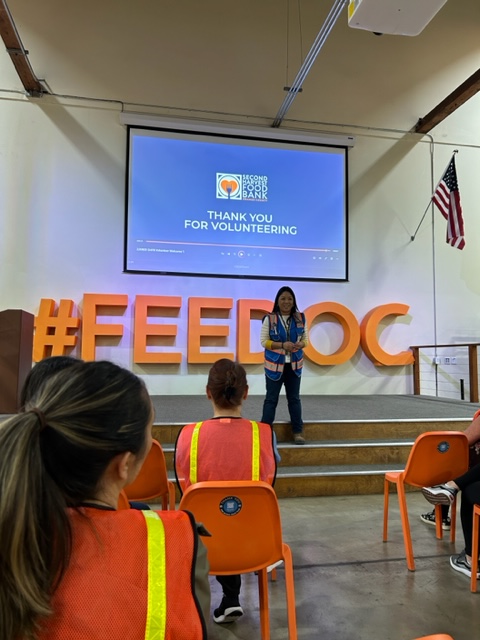
Yesterday I was grateful to spend a few hours with this ProVisors crew who served a few hours during a workday to pack meals for those in need.
Thank you to the Second Harvest Food Bank of Orange County for allowing us to volunteer.
Second Harvest’s mission is to provide dignified, equitable and consistent access to nutritious food, creating a foundation for community health. I highly recommend checking them out and volunteering if possible.
Second Harvest offers volunteer opportunities for ages 13 and older with a chaperone in their Distribution Center.
Check out some of the pictures of the day:




Why Are Commercial Property Insurance Costs So High Right Now?
The market for commercial property insurance has been getting more and more challenging over the past couple of years and it’s feeling like there’s no immediate end in sight.
Over the past 12 months, we’ve seen countless insured’s get non-renewed on their property insurance policies even with no claims. Very few markets are looking to write new business unless a risk is impeccable. Underwriting is tight and it seems like you have to go through hell and back providing loads of information to carriers for review.
In many cases, coverage is getting cut in half with limitations and endorsements and premium is doubling. It’s frustrating to be in the thick of all of it. No doubt, this is the hardest property insurance market we’ve seen in a generation.
So, why are commercial property insurance costs so high you ask?
Here are several factors contributing to premium increases for commercial property insurance coverage:
Catastrophe Losses: Hurricanes, floods, wildfires, tornadoes, winter storms. The frequency and severity of major catastrophes continue to stress the industry. In five of the past six years, these events have caused annual insured losses of more than $100B. Last year, total insured losses globally were estimated at a shocking $140B.
Reinsurance: Catastrophic events are a major factor driving up the cost of reinsurance — an expense carriers need to pass along to policyholders. Call it a perfect storm, but inflation and the economic environment has been making reinsurers more selective.
Underinsurance: High inflation has driven the cost of materials and services much higher, but not even half of business owners say they have increased their policy limits to accurately reflect what it would take to replace insured property now. Policyholders must have accurate valuations for their assets so they don’t come up short after a loss, and premiums will reflect those higher values.
Property Replacement Costs: Led by sizable increase in the cost of structural steel and the price of lumber, construction costs have jumped over the past few years. Similarly, machinery and equipment costs have increased over the same period. Also, many are still dealing with materials shortages and supply chain disruptions.
Skilled Labor Shortage: Nearly half of reconstruction costs are wages and salaries, which have increased over the past few years. Even with higher pay, contractors are struggling to find skilled labor and are delaying projects as a result. Higher rebuilding costs and longer delays may trigger an increase in business interruption losses.
Property Rate Need: For years, rising loss trends have outpaced rate increases, primarily because of the costs of catastrophes. Carriers need to continue to raise rates to try to close the gap.
In a nutshell, it’s a “perfect storm” of these variables that have really put the commercial property insurance market in a tough spot. And in talking to many professionals in the industry, this doesn’t seem to be ending any time soon. Maybe by way of a miracle we can get a year with [much] lower than average catastrophe loss? That would be a good start. And we definitely need inflation to level out too. Maybe we can get the perfect storm to happen the opposite way to get us back on track for a more stabilized commercial property insurance market. Fingers crossed.
Homeless Encampment Affecting Business Insurance Coverage
Only in California.
I have a clothing importer/distributor client in Los Angeles where we have seven different insurance policies/coverages spread out between six carriers.
We’ve been working on trying to find a standard carrier that would be willing to write their business auto, general/products liability, excess liability, property, and workers compensation insurance policies so that they’re packaged together with a single carrier.
Given the state of the hard insurance market, primarily the commercial auto and commercial property, I haven’t been having much luck getting underwriters to consider.
But there was a carrier that was willing to consider this one subject to loss control visit prior to offering quote terms.
Well the loss control inspection was formally done and lo and behold, the carrier declined to quote this for us. One of the primary reasons, because of the homeless encampment behind their building which sits off the train tracks.
Only in California.
If the property insurance market wasn’t tough enough already, a homeless encampment is preventing us from getting a carrier to offer coverage for my insured. Oh, they don’t even own the building. They’re a tenant. But it doesn’t matter with millions of dollars of contents sitting within the building.
This video encapsulates the carrier’s reasoning for declining to quote.
These homeless encampments notoriously burn. You see it all the time. As you can see in this video, the adjacent building is very exposed to the out of control fire and can easily catch fire as a result.
Super frustrating. Hard to believe the world we’re living in sometimes in California. This was a first for me in terms of getting declined by a carrier for this reason.
That’s it, that’s the post.
Thanks for reading.
75% of Small Businesses Are Underinsured According to New Survey
According to the 2023 Hiscox Underinsurance in Small Business Report, which surveyed 1,000 small businesses last July, just about half of small businesses’ revenues are on the rise.
47% of small businesses surveyed have experienced a revenue increase since 2021. 32% have had a decrease in revenue.
Those businesses that have expanded in the past two years may now be underinsured, while those that have seen revenues drop may be paying more than they need to.
The 2023 Hiscox Underinsurance in Small Business Report “gauges US businesses’ protection against potential lawsuits and claims, as well as testing their understanding of insurance policies.”
The survey found widespread insurance illiteracy and a nationwide underinsurance crisis, leaving small businesses open to loss risks ranging from property damage to lawsuits.
Of the small businesses participating in the survey, 75% of small businesses in the U.S. do not possess sufficient insurance.
The type of coverage most businesses have is also important. When asked what kind of coverage businesses had, this is what Hiscox found:
- 65% had general liability coverage
- 45% had property insurance
- 35% had worker’s compensation insurance
- 32% had professional liability insurance
Of those businesses that had coverage, 68% of those with coverage purchased it because they were concerned about the consequences of a potential claim. Only 20% noted they purchased insurance because a vendor or partner mandated it.
A growing business is a good thing but it’s important to be sure your insurance coverage keeps up. The importance of working with a knowledgeable insurance broker is paramount. And not only a broker that is knowledgeable, but one who is proactive and continuously working with your business as it grows to ensure coverage is tailored to meet the risk exposures that come with expansion.
Have questions about your business insurance?
Cyber Risks Remain a Top Business Concern
The 2023 Travelers Risk Index reveals that in an ever-changing world filled with fluctuating and emerging threats, cyber risks remain a top overall business concern.
The Travelers Risk Index provides an annual snapshot of risk viewpoints from over 1,200 business decision makers across the country. The 2023 survey looks at the top concerns of U.S. businesses and how companies are dealing with the risks they face every day. The survey participants represent small, mid-sized and large businesses from a variety of industries including construction, real estate, healthcare, technology, retail, transportation, wholesalers, professional services, manufacturing, banking/financial services, publicly traded, nonprofit and public sector.
Notably, 58% of survey participants say they worry about cyber risks.
The cyber concerns facing organizations include unauthorized access to financial accounts, a security breach/someone hacking into a system, system glitches, ransomware and someone using a phishing email to fool employees into transferring funds out of an organization.
See the results of the 2023 Travelers Risk Index and tips HERE.
About Me

I grew up in Fullerton, CA and graduated from Servite High School in Anaheim. I have my Bachelors degree from Loyola Marymount University in Los Angeles. I currently live in Tustin, CA.
Please contact me if you need help with any of the following lines of insurance for your business:
-Cyber / Data Breach
-Commercial Property
-Commercial General Liability
-Products Liability
-Workers Compensation
-Commercial Auto
-Umbrella/Excess Liability
-Errors & Omissions/ Professional Liability
-Employment Practices Liability
-Directors & Officers
-Life & Disability Insurance

