
Sharefest Annual Workday 2013
This past Saturday, a few of us from my office, ISU-Olson Duncan Insurance, participated in the Sharefest annual workday. Special thanks to my wife Joanelle for joining us.
Sharefest Community Development is an organization dedicated to creating an imprint of lasting positive change in the South Bay and Harbor areas of Los Angeles County. The organization partners with churches, businesses, civic leaders, schools, and residents.
Sharefest’s annual workday is a community building day where thousands of volunteers are mobilized into the community to work on projects designed to meet tangible needs. Volunteers paint, clean, plant, refurbish, and beautify schools, parks and public facilities all at no cost to recipients.
Our job for the day was sanding and re-painting classroom doors at Jane Addams Middle School in Lawndale.
Here are some pictures from the day:
-

- Enjoying lunch from Chick-fil-A
-

- Joanelle prepping to paint
-
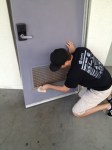
- Sanding before painting





-

- Joanelle an Me









-

- Heidi D. and Joanelle teaming up on a door
-JK
Garden State – 28 Days
I’ve had a few people ask how the backyard vegetable garden is coming along. Here’s day 1 compared to day 28:


Added some garlic, corn, and planted some new herbs and lettuce seeds in areas that don’t seem to be growing much.
-JK
Insurance Brokers Aren’t Just “Quote Messengers”
Yesterday I arranged an OSHA compliance assessment for a client of mine who has employees frequently working on rooftops to clean solar panels. This client is concerned about employees falling off the rooftops or ladders and asked for guidance on how to help prevent this from happening. They were very concerned about staying compliant with OSHA regulations too. So, we coordinated a meeting with a safety consultant to perform an OSHA compliance assessment (mock OSHA Audit). Here are a few action shots:



A lot of people have a misconception that insurance brokers are simply “quote messengers” and it drives me crazy. “Oh, I need insurance so I am going to call a handful of brokers, give them a few details, let them plug them into a computer and we’ll take the lowest price provided.” Don’t get me wrong, it’s nice to get multiple opinions and cover all the bases, but insurance brokers can and should provide a lot more value than this. In writing insurance for your business, finding the best policy for your needs is the first step, but what about all the other risks your business is exposed to?
Think about it….loss control and safety, human resources services, claims management, employee handbooks, etc. Who do you call when you need help with this stuff? I hope my clients are calling ME!
I have working relationships with highly trained safety consultants, HR professionals, payroll representatives, bookkeepers, etc. The list goes on. By starting with the basics, you can control those drivers that affect your insurance costs. When it comes to your business insurance, be proactive, not reactive when deciding on the right coverage for your protection.
Trust me, if you try to wing some policy together which you know nothing about, you’re going to pay a lot more than you ever would if you had an insurance partner do it right for you from the beginning. Don’t look for a quote messenger, look for a broker who’s going to be your partner and advocate in protecting your business.
-JK
Backyard Vegetable Gardening
I’m a big fan of vegetable gardening. I’ve been growing in our backyard for about a year now. We have a nice 100 square foot plot of soil in our backyard which gets a lot of sun and allows me to grow a variety of herbs and vegetables. Last week, being daylight savings and the early start of Spring, I planted cabbage, tomatoes, beets, lettuce, spinach, cilantro, green onion, and parsley. Take a look
There’s not a lot to see yet, but in the next 30-60 days, there should be some nice greens. It takes some time and patience, but it’s rewarding when you’re eating your own homegrown vegetables. I love cooking too, so putting the two together makes for some nice hobbies.
If you’re interested in growing in your own backyard, here are some common fruits and vegetables to grow by season:
Winter: Citrus fruits (such as grapefruits, lemons and oranges), bananas, kale, leeks, mushrooms, onions, pears, potatoes, rutabagas, turnips and winter squash (such as butternut and acorn)
Spring: Apricots, asparagus, bananas, broccoli, cabbage, collard greens, green beans, honeydew melon, lettuce, mangoes, peas, onions, leeks, mushrooms, pineapple, rhubarb, spinach and strawberries
Summer: Apricots, bananas, beets, bell peppers, blackberries, blueberries, raspberries, cantaloupe, cherries, corn, cucumbers, eggplant, garlic, grapefruits, grapes, green beans, honeydew, melon, kiwifruit, lima beans, mushrooms, nectarines, okra, peaches, peas, plums, radishes, strawberries, summer squash, tomatillos, tomatoes, watermelon and zucchini
Fall: Apples, bananas, beets, broccoli, Brussels sprouts, carrots, cauliflower, cranberries, garlic, ginger, grapes, mushrooms, parsnips, pears, pineapple, pumpkins, rutabagas, sweet potatoes, Swiss chard, winter squash (such as butternut and acorn) and yams.
To see what’s growing seasonally in your region, visit:
http://snap.nal.usda.gov/foodstamp/nutrition_seasons.php.
-JK
Meanwhile, in Connecticut
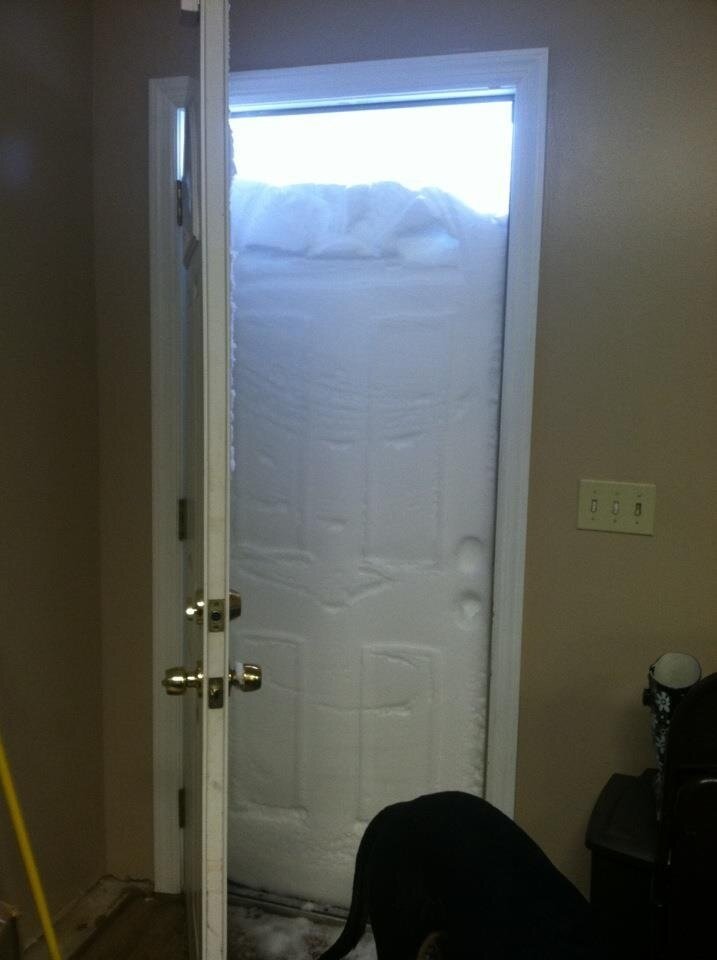
By Southern California standards, it’s a brisk day today with high’s in the 50’s, but imagine if you lived in Trumbull, Connecticut and woke up to this gift left by the Northeast blizzard, Nemo.
-JK
Labor Day Trip To Santa Fe, New Mexico
I’m almost a week late on this one, but this past Labor Day weekend, Joanelle and I visited Santa Fe, NM for a nice little weekend getaway. To be honest, Santa Fe is not a place I would have thought about visiting for a vacation. However, we went for a friend’s wedding and very happy we did! Santa Fe was GREAT!
We were able to get a direct flight out of LAX which was nice. The flight out there is about two hours. Very easy. We flew in to Albuquerque and caught a shuttle to Santa Fe which took another hour. However, Santa Fe has its own airport and it is great since it’s so small and easy to get in and out of (I know this because we flew back home from Santa Fe). I thought Long Beach Airport was easy. You should see Santa Fe! It’s tiny! American Airlines flies there which is what we flew from LA.
Back to the trip, the town of Santa Fe is a charming place, as Joanelle explains it. There’s just something about it that puts you in a relaxed frame of mind. The highlight of our trip was the Santa Fe Plaza which is the central part of town. It’s filled with restaurants, stores, and museums among other things. The food was excellent everywhere we ate. Our hotel, Hotel Chimayo, was in the center of all the action so we didn’t need a car. We walked everywhere. To make a long story short, I haven’t been on a trip in a long time where I felt I was able to get away and relax and feel recharged again. Santa Fe, NM did it for us and I hope to make it back there again soon. Here are a few pictures from our trip:

Cathedral Basilica of St. Francis

New Mexico Museum of Art

Joanelle and I on the front steps of the Cathedral Basilica of St. Francis

Santa Fe Plaza from the Thunderbird Bar & Grill

Picture I took from the plane when landing at LAX. This is the Williams Fire in the San Gabriel Mountains when it just started burning.
-JK
What If I Have Trouble Finding Insurance for My Business?
In most cases businesses can obtain insurance in the standard insurance market with the help of a licensed and qualified insurance broker. However, if your business has experienced significant losses, your business is considered to be engaged in high-risk operations (with a greater chance of claims frequency or severity), or you have recently started your business, you may not be able to locate insurance in the standard commercial insurance market. You do have options, however, in securing commercial insurance elsewhere.
Surplus Lines Insurance
When an insurance broker is marketing your insurance coverage and has had applications declined from three licensed commercial insurance carriers, they can proceed to obtain insurance from the “surplus lines market.” Sometimes referred to as the “non-admitted” market, surplus line companies offer insurance to businesses that cannot obtain insurance in the standard insurance market. While these companies are not licensed by the California Department of Insurance (CDI), they do have to go through an approval process that includes providing evidence of minimum capital and other strict requirements. When these requirements have been met to the CDI’s satisfaction, the CDI may approve the company to conduct business in California and add them to the List of Approved Surplus Line Insurers.
A surplus line company can only be accessed through a specially licensed broker, also referred to as a wholesaler. The broker must have a surplus line license issued by the CDI in order to sell surplus line insurance. Before purchasing insurance from a surplus line insurance company, your insurance broker must provide you with a disclosure that the insurance you are buying is being issued from a surplus line company.
Although surplus line insurers must follow the Fair Claims Settlement Practices Regulations (regulations that govern how insurers handle claims), the CDI has limited jurisdiction over the operation of surplus line insurers. If the carrier becomes insolvent (goes bankrupt), your only course of action will be through the courts. The California Insurance Guarantee Association (CIGA), which protects claims with admitted insurers, does not apply to surplus line insurers. All insurance brokers should be able to supply information on the financial solvency of any surplus line company that it represents. There are independent rating organizations that analyze insurance company solvency such as A.M. Best Company.
Most states identify the standard lines insurance companies as “admitted,” “licensed” or “standard” and the excess and surplus lines insurance companies as “non-admitted,” “unlicensed” or “non-standard.” However, these terms tend to reflect a negative connotation in regards to the strength and security of a surplus lines insurer. The fact of the matter is, most states require surplus lines insurance companies to maintain higher minimum capital levels than they require admitted markets to carry. Just because a carrier isn’t licensed or admitted in the state of CA, don’t assume they’re inferior. Plenty of established businesses secure their insurance coverage through the surplus lines insurance market.
It’s safe to assume a ladder manufacturer secures their insurance from a surplus lines insurance carrier:
–JK
2011 Blog In Review
The WordPress.com stats helper monkeys prepared a 2011 annual report for this blog.
Here’s an excerpt:
A New York City subway train holds 1,200 people. This blog was viewed about 7,000 times in 2011. If it were a NYC subway train, it would take about 6 trips to carry that many people.
A Cab Fare Can Be A Lot Like an Insurance Premium
Picture this scenario: You’re at a party with friends drinking alcohol throughout the night. It’s getting late and time to start thinking about making it home. You drove to the party, but driving home after having a “few” drinks? Hmm….decisions decisions. You might not be wasted or anything, but what if you get behind the wheel to drive? Are you willing to take that risk?
 The irrational side of your mind is telling you “This is going to be a good $40-$50 just to get home.” Then, I’m going to have to get up tomorrow morning and get a ride from someone to pick up my car.”
The logical side of your brain tells you “What’s $50 bucks compared to getting pulled over and slammed with a DUI and going through ten years of hell and torment and spending tens of thousands of dollars in penalties for making a stupid decision?”
What decision would you make? Have you made in this situation in the past?
This scenario got me thinking about how a cab fare can be a great analogy for buying insurance.
Calling the cab to get home in this sequence of events is a lot like buying insurance. With insurance, you are spending a small amount of money (an insurance premium) that you don’t necessarily want to pay, but do so to protect your livelihood. With a cab fare, you’re paying the price to make it home safely. It kind of sucks having to spend that money on an insurance premium or cab fare when you can technically use it to buy those new Nike shoes you’ve been eyeballing on Zappos.
If you choose the alternative, to play with fire and drive your own car, you are taking on a serious amount of risk. This is a lot like NOT buying insurance.Yeah, you may get lucky and make it home fine, but if you get pulled over, or hit someone, you can be screwed forever, possibly for life! You want to save some money and avoid the hassle of paying your insurance premium, but if you suffer a loss, your business could be done for good.
Ask yourself, are you in a position where you would rather “save your money” and not buy the necessary insurance to protect your business? By paying the monthly premium, you’re protecting you and/or your business from otherwise serious risk.
Trust me on this, should you decide not to purchase insurance and suffer a loss, you’ll really be wishing you can turn back the clock and pay that monthly insurance premium to save your business.
Sadly, many learn the hard way when it comes to purchasing insurance. That monthly insurance premium is nothing in comparison to what you might be paying for a loss when you’re not insured. Think ahead and consider buying it now before it’s too late! Take that cab home instead of getting behind the wheel and putting yourself at risk.
Back To Work!
Happy Monday morning! I hope you all had an outstanding Thanksgiving.
I spent most of the weekend in Lake Arrowhead, CA with my family just as we have done traditionally for the past 30 years. My family has a place there, so we’re up there at least a handful of times a year to kick back and relax. It was great to get a few days to sit back, watch a lot of football (USC 50- UCLA 0), and eat more than we can handle. Here are a few pictures from the weekend:

View of Lake Arrowhead from our balcony

My Family- from L to R: Me, Joanelle (my fiance), Dad, Mom, Julie (sister), Pat, Tom (brothers)

My fiance Joanelle and Me
What about you? How did you spend the Thanksgiving weekend?
–JK
About Me

I grew up in Fullerton, CA and graduated from Servite High School in Anaheim. I have my Bachelors degree from Loyola Marymount University in Los Angeles. I currently live in Tustin, CA.
Please contact me if you need help with any of the following lines of insurance for your business:
-Cyber / Data Breach
-Commercial Property
-Commercial General Liability
-Products Liability
-Workers Compensation
-Commercial Auto
-Umbrella/Excess Liability
-Errors & Omissions/ Professional Liability
-Employment Practices Liability
-Directors & Officers
-Life & Disability Insurance
 Jimmy Kinmartin, CPCU