
Lessons Learned – Week of August 22, 2010
If you haven’t seen this video by now, you probably haven’t been anywhere near the internet in the last couple weeks.
Melodi Dushane, from Toledo, OH, was so frustrated that she couldn’t order chicken nuggets – because the restaurant was serving breakfast – that she attacked the member of staff. On the surveillance video, which was released by police, Dushane, 25, gets out of her car and goes on a rampage. The best part of the video is after she pulls away, it’s business as usual at this McDonald’s when the next customer pulls up and is served no problem.
Lesson Learned: I thought I got irritable when I’m hungry! Melodi had an Unhappy Meal that night and was served with two months in jail and a year’s probation. Fast food fury!
Risky Business? There’s a Surplus Lines Insurance Carrier For That
Most businesses have no difficulty getting insurance in the “standard” insurance market, but if your business has a significant loss history or is engaged in high-risk operations, you might not be able to find insurance in the standard commercial insurance market. This doesn’t mean you’re out of luck as a business owner. Rather, you’ll be looking at the “surplus” lines insurance market for your business insurance.

It's safe to assume a trampoline manufacturer has product liability insurance placed with a surplus lines insurance carrier
The surplus lines insurance market, also referred to as the “non-admitted” market, is a segment in the insurance industry where the more difficult or unusual risks are written. Examples of specialized risks include professional liability insurance or high risk business operations such as a manufacturer of medical devices or explosives.
Insurance brokers usually turn to the surplus lines market for their clients after they are denied by at least three state licensed “standard” commercial insurance carriers. Most states identify the standard lines insurance companies as “admitted,” “licensed” or “standard” and the excess and surplus lines insurance companies as “non-admitted,” “unlicensed” or “non-standard.” However, these terms tend to reflect a negative connotation in regards to the strength and security of a surplus lines insurer. The fact of the matter is, most states require surplus lines insurance companies to maintain higher minimum capital levels than they require admitted markets to carry.
As for obtaining insurance for a tough-to-place businesses, the surplus lines insurance market can only be accessed through a specially licensed broker. The broker must have a surplus lines license in order to sell surplus lines insurance. Your broker must provide you with a disclosure notice if your insurance is being issued with a surplus lines company.
Now, for a cheesy analogy to tie this all together, insurance is a lot like love. They say there’s someone out there for everyone. Well when it comes to insurance, there’s an insurance carrier out there for every business. Surplus lines insurance carriers help make the business world go round.
-JK
Commercial Umbrella Insurance Defined
 Commercial umbrella insurance, also referred to as excess liability, provides coverage when a liability claim goes above the aggregate limit of liability and the basic policy limits are exhausted. By purchasing a commercial umbrella, you can protect your business from being liable for this excess liability in a judgement. For instance, if you have $1 million in general liability coverage and a covered claim is settled for $1.5 million, your small business’s umbrella liability insurance policy would pick up the additional amount.
Commercial automobile, commercial general liability, workers compensation, or any other liability policies can be covered by a commercial umbrella.
Not only does an umbrella cover underlying insurance policies, but they may also provide coverage if a basic liability policy is not in force or when there are gaps in coverage under basic liability policies. When a commercial umbrella needs to step up and provide coverage for basic liability loss, it does not pay the loss from the first dollar. It’s common to have a Self-Insured Retention (SIR) amount of at least $10,000. SIR is the equivalent to a deductible. That means if there is a liability claim or loss and no corresponding underlying policy in force, you must pay the first $10,000 of the loss before the umbrella policy responds.
Commercial umbrella policies are typically purchased in $1M increments. The premiums vary depending on your business classification and underlying policies. Policies are often inexpensive considering the added coverage a business gains. For everyday businesses with average risk exposures, umbrella premiums are usually in the ballpark of $400-$600 annually for each $1M purchased.
You can never go wrong purchasing a commercial umbrella policy for your small business. A single umbrella provides broadened protection over all your small business liability exposures. Having the added protection of a liability umbrella policy is coverage no small business should go without.
-JK
Lessons Learned – Week of August 15, 2010
On Wednesday, an 1,100 pound bull leaped out of a bullring in Tafalla, northern Spain and charged into a crowd of spectators. Some 40 people were injured, but nobody was killed. The bull had already twice tried to jump the barrier during the event, breaking one of his horns, and was about to be removed from the arena when he launched himself into the crowd.
Lesson Learned: Don’t provoke an 1,100 pound bull. You play with fire, you’re going to get burned.
What Is Employment Practices Liability Insurance?
Employment Practices Liability Insurance provides protection for an employer against claims made by employees, former employees, or potential employees. It covers discrimination (age, sex, race, disability, etc.), wrongful termination of employment, sexual harassment, and other employment-related allegations. These types of claims are not covered under a general liability insurance policy.

In December 2009, NASCAR settled a $225 million sexual harassment and racial discrimination lawsuit by former official Mauricia Grant
Who Needs Coverage?
Employment Practices Liability Insurance (EPLI) is needed by any business with employees and those which begin to hire employees. It used to be that EPL claims were limited to major corporations. This is no longer the case. In today’s litigious climate, employers of all sizes are vulnerable. According to EEOC data, 41% of all EPLI claims are brought against small employers with 15 to 100 employees.
Why is Employment Practices Liability Insurance Needed?
Statistics show businesses are more likely to face an employment claim than a property or general liability claim. Cases against employers are on the rise. Once these claims manifest, they become a huge burden on a businesses assets and can easily put a small employer out of business for good. Here are some powerful statistics that bring the seriousness of EPL claims to light:
- The average amount paid for out of court settlement is $40,000.
- Defense of an average EPL case, through trial, costs over $45,000.
- The median compensatory award for EPLI cases is $218,000.
- 67 percent of all employment cases that litigate result in judgement for the plaintiff.
- 41 percent of all EPLI claims are brought against small employers with 15 to 100 employees.
- Six out of ten employers have faced employee lawsuits within the last five years.
- The U.S. Equal Employment Opportunity Commission (EEOC) announced this past January that in 2009, more than 93,000 workplace discrimination charges were filed with the federal agency nationwide. This is the second highest level ever recorded
EPLI policies will reimburse your company against the costs of defending a lawsuit in court, even if a claim is groundless or fraudulent. They will also compensate for judgments and settlements. It doesn’t matter whether your company wins or loses the suit. Policies typically do not pay for punitive damages or civil or criminal fines, however.
How much does an EPLI Policy Cost?
The cost of coverage depends on your type of business, the number of employees you have, and various risk factors such as prior claims or loss history. Your insurance agent can provide a quote with very minimal information, often right on the spot.
-JK
Commercial Building Vacancies – A Property Insurance Concern
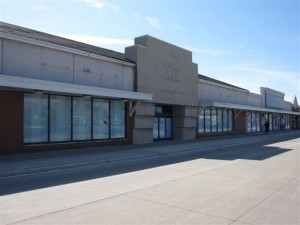 These past few years, the economy has been merciless. We’ve seen homes lost, businesses folding, and the American public as a whole has been agonizing as a result. It’s a trickle down effect. When jobs are lost, people don’t have money to spend, and businesses must close their doors. When those doors are closed, commercial building owners don’t have tenants to fill their space. All too often, it takes months or years before a vacancy is filled. And when things can’t seem to be any worse, this creates a whole new potential problem from an insurance standpoint.
Under the commercial property insurance form drafted by the Insurance Services Office and used by most insurance carriers, there is a vacancy clause in the property policy form which alters insurance coverage for buildings vacant for more than 60 consecutive days. Insurance carriers will generally not pay for any physical loss or physical damage caused by any of the following perils:
• Vandalism • Sprinkler leakage, unless you had protected the system against freezing • Building Glass Breakage • Water Damage • Theft • Attempted Theft
For any other covered causes of loss besides these, insurance carriers will usually reduce the amount they would otherwise pay by 15%.
If you own a commercial building which is currently vacant, contact your insurance agent to discuss possible alternatives or resolutions. As if the unrelenting economy hasn’t thrown enough at us, make sure you’re aware of this very important clause on your property insurance policy and stay protected!
-JK
Lessons Learned – Week of August 8, 2010
Amazingly, the biggest story in the news this week is Steven Slater, aka, the rogue JetBlue flight attendant who lost his mind after a rough day on the job.
It is a hard-to-beat story: Going off on a passenger, grabbing a couple of beers and sliding down a parked plane’s emergency chute to end his 20 year career as a flight attendant.
In lieu of this spectacle, this week’s lesson learned is themed, “A Bad Day In the Office”
Lesson Learned: Come up with a creative way of venting your frustrations after a bad day at work and you might be an overnight celebrity too.
General Liability Insurance: What Does “Additional Insured” Mean?
As a business owner, it’s likely you’ve been asked at some point or another to add a client, landlord, or similar entity onto your general liability insurance policy as an “additional insured.” You might ask, why do I need to put them on my business insurance policy?? What about their insurance policy? Well, here’s a little background on what it means and why it is requested so often in doing business.
 Adding another entity as an additional insured on your general liability insurance policy serves to protect that additional party in the event of negligence on your part as the primary policyholder, or “named insured.” It is not the intent of your policy to pick up the liability of another party when you had nothing to do with a claim or occurrence.
Here are some loss examples to give you a better understanding:
• You are a sub-contractor and have added a general contractor on your policy as an additional insured by request. An individual walking the grounds of your job site sustains a serious injury from a fall caused by a pothole in a parking lot. The parking lot is being built by you. This individual brings a suit against the general contractor who is covered as an additional insured on your policy.
• You are a tenant of a commercial building and have added the landlord of your building as an additional insured per the terms of your lease. A customer visits your premises and slips on a wet spot on the vinyl floor. The customer cracks their head open and brings a suit against the landlord who is covered under your policy.
Typically, a larger and more powerful business will require that smaller entities (desiring to do business) have the larger business named as an additional insured. This reduces the loss exposure of the additional insured and keep its premiums manageable.
-JK
Workers Compensation – Employee or an Independent Contractor?
One of the biggest dilemma’s concerning workers compensation insurance coverage is whether a given individual is an employee or an independent contractor. It applies to pretty much any industry. Recently, I had a discussion with a janitorial services business which uses a specialist to do  floor waxing when needed. The owner told me this individual is an independent contractor. I explained to the owner that individual might be considered an employee in the eyes of an insurance carrier.
The reality is there is no definitive test to determine Employee or an Independent Contractor! It’s not a black and white issue. In many cases, it is the court of law who decides. California Workers Compensation laws are construed liberally; in other words, in favor of the claimant. There is a presumption of employment unless the employer can prove otherwise.
There are certain basic questions which might help determine the status, however. The following circumstances can help determine the relationship between and employee versus an independent contractor:
| Employee | Independent Contractor |
| Has the right to control the manner and means of accomplishing the result desired | Responsible only for the result of the work performed |
| Has a specific title and/or position | Engaged in a distinct occupation or business |
| Works under the direction of a boss | Is a specialist, does actual work without supervision |
| Uses company tools and/or equipment | Supplies their own |
| Working hours are set by the company | Has no set hours, may come and go at will |
| Is paid salary or by the hour | Paid on a per-job basis |
| The person assumes they are an employee | The person believes they are an independent contractor and usually has a certificate of insurance |
These are just a handful of circumstances. If you have additional insight to share, please comment below!
-JK
Lessons Learned – Week of August 1, 2010
This weekend is family wedding weekend for me (Congrats Chris & Annie!). In commemoration, this week’s lessons learned is a wedding theme:
Lesson Learned: Drink Responsibly! (and refrain from any pole dancing)
About Me

I grew up in Fullerton, CA and graduated from Servite High School in Anaheim. I have my Bachelors degree from Loyola Marymount University in Los Angeles. I currently live in Tustin, CA.
Please contact me if you need help with any of the following lines of insurance for your business:
-Cyber / Data Breach
-Commercial Property
-Commercial General Liability
-Products Liability
-Workers Compensation
-Commercial Auto
-Umbrella/Excess Liability
-Errors & Omissions/ Professional Liability
-Employment Practices Liability
-Directors & Officers
-Life & Disability Insurance

