
Four Insurance Endorsements You Shouldn’t Go Without
First off, what’s an endorsement you ask? As defined by the Insurance Information Institute, an endorsement is a written form attached to an insurance policy that alters the policy’s coverage, terms, or conditions. When an insurance policy is endorsed, the premium paid for the policy can change. However, not by much considering the additional coverage provided.
The following four endorsements are not typically part of a regular property or general liability insurance policy, but they are a must if they apply to your operations.
- Hired & Non-Owned Auto Liability: Hired & Non-owned auto is a small endorsement which can have a huge impact on your general liability insurance coverage. It protects your business from bodily injury and property damage claims caused by a vehicle you rent or borrow; or caused by vehicles owned by others, such as your employees. A simple errand to the store by an employee can put your business at high risk if you don’t have this endorsement on your general liability policy.
- Employee Benefits Liability: Liability of an employer for an error or omission in the administration of an employee benefit program. Coverage is intended to extend to the “administration” of these plans, including counseling employees, handling records, enrolling/terminating/cancelling employees in specified plans on a timely basis, etc. This endorsement is usually added to the general liability policy but may also be provided by a fiduciary liability policy.
- Earthquake Sprinkler Leakage (For CA & other earthquake regions): Earthquake is an excluded peril on a standard property insurance policy and your fire sprinklers bursting as a result of an earthquake and discharging water all over your property is not covered either. However, by adding an Earthquake Sprinkler Leakage endorsement to your property policy, you would be covered for the water damage caused by bursting sprinklers from an earthquake. This is never more than a few hundred dollars to add.
- Sewer Drain & Backup: Fall and spring tend to be the wettest seasons of the year, making buildings and homes most susceptible to the backup of sewer or drain lines. These events don’t occur often, but when they do, it can become a small disaster. A standard property insurance policy excludes coverage for such an event. The backup of sewer and drains as well as the failure of a sump pump is also excluded on a standard property policy. The damage you sustain from either of these problems will not be covered and you’ll be responsible to pay for the loss and the clean up. You shouldn’t go without this coverage endorsement.
To reiterate, it’s never more than a few hundred dollars annually to add any of these endorsements to your existing property or general liability insurance policies. In fact, it’s usually less than $100 in many cases for small businesses. With the amount of coverage provided by adding them, this is pocket change! Be sure to review your policies today to see if you carry these endorsements on your current policies.
–JK
Florida Man Sues Bar For Not Halting His Drinks
In a story reported last month, a 73-year-old Florida man got a ticket from police after he was hit by a car while riding his scooter home from a bar. Now, he claims the bar is to blame for selling him too many drinks, and he wants the bar to pay.
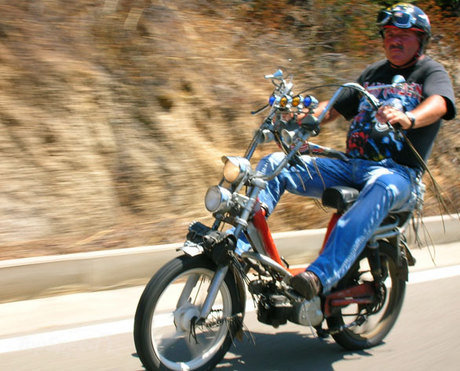
John Wasko of Manatee, FL filed a lawsuit against The Oasis Bar, saying the bar should have stopped giving him drinks. He’s seeking more than $15,000 in compensation. Ironically, Wasko was not booked for a DUI, but was ticketed for riding in front of a vehicle. Rough night! This happened in January, but Wasko waited 9 months to file suit.
After the accident, Wasko was taken to the hospital with non-life-threatening injuries, but he blamed the injuries on the bar’s failure to know when to stop selling him drinks. His lawsuit claims the servers were not trained well enough to know his condition and when to stop selling him drinks.
What does this have to do with insurance?
Businesses that sell and serve liquor need liquor liability insurance for alcohol related claims. A general liability insurance policy does not provide coverage for these scenarios. Liquor liability insurance is a form of commercial insurance that protects businesses against loss or damages claimed as a result of a patron becoming intoxicated and injuring themselves or others. It provides coverage for bodily injury or property damage resulting from:
- Causing or contributing to the intoxication of any person;
- Furnishing alcoholic beverages to a person under the legal drinking age or under the influence of alcohol; or
- Violating any statute, ordinance, or regulation relating to the sale, gift, distribution, or use of alcoholic beverages
Liquor liability insurance coverage will reimburse your company against the costs of defending a lawsuit in court, even if a claim is groundless or fraudulent.
This story is just a random example of a liquor liability claim. As you can imagine, they happen all the time because people generally make dumb decisions when they’re drinking. Funny thing is they rarely seem to think they’re fault when they get into trouble. Make sure you are covered adequately if someone blames you for over-serving them!
–JK
Commercial Property Insurance – What Insurance Carriers Review Before Writing Coverage
Commercial property insurance is a “first party” coverage designed to protect the assets of a building owner. In simple terms, commercial property insurance protects buildings and contents for losses such as fire, smoke, vandalism, sprinkler leakage, collapse, theft, etc.
If you are a commercial building owner applying for commercial property insurance, carriers look at various physical characteristics of your building when underwriting. They use the “COPE” method which is an acronym that stands for four property risk characteristics:
- Construction (e.g., frame, brick, masonry, etc.)
- Occupancy (how the building is being used)
- Protection (e.g., quality of the responding fire department, adequacy of water pressure and water supply in the community, the presence or absence of smoke alarms, burglar alarms, etc.)
- Exposure (risks of loss posed by neighboring property or the surrounding area, taking into consideration what is located near the property, such as an office building, a subdivision, or a fireworks factory).
Construction type is a major component in property pricing. If construction type is incorrectly identified, the premium pricing will either be too high or too low.
Occupancy is very important to an underwriter because it helps determine the combustibility of a particular building. Each time the occupancy of a building changes, it presents a different underwriting situation and will need to be re-evaluated by an underwriter. Also, common hazards such as the plumbing, heating, roofing, and electrical systems are important factors. Underwriters will want to know when these were last updated or inspected if over 30 years of age.
In addition to evaluating the actual building and contents to be insured, insurance carriers will look at the exposures and occupancies surrounding the building to be insured. An acceptable risk may be affected by the proximity or conditions of exposing properties.
Finally, public fire protection is a key underwriting consideration, as it is the most essential element in controlling a fire once it has started and gained headway.
The pictures below are an example of a commercial building which insurance carriers desire to insure. It is well maintained, has a low-risk tenant, in a nice industrial area, with low-risk neighboring businesses (i.e. – no dynamite manufacturers next door or anything comparable).
When possible, I prefer to visit buildings first hand before sending to insurance carriers for quotes. This way, I know the exposures when discussing with underwriters.
–JK
Insuring An Industrial Chemical Manufacturing Business
Today I visited a client to do an annual review of their insurance program which we handle here at our firm. This is not your everyday business when you consider their operations. This is an industrial chemical blending manufacturer which produces chemicals used in a variety of industries. From solutions used in everyday household cleaning products, to compounds used to preserve metals through oxidation, their insurance demands are unique compared to most businesses. Here are some of the pictures I took during my visit:
Some of the coverages which apply to their operations are:
- Property Insurance (Building & Contents)
- Business Income & Extra Expense Coverage
- Workers Compensation Insurance
- Earthquake Insurance
- Commercial Auto Insurance
- Commercial General Liability (Including product liability)
- Employee Benefits Liability
- Pollution Legal Liability Insurance
- Excess Liability/ Umbrella Insurance
- Employment Practices Liability Insurance
- Group Health Insurance
Every business has unique exposures, so insurance policies need to be written specific to the demands of each and every business. Insurance is not one size fits all by any means!
–JK
One-Armed Man Wins Discrimination Lawsuit Against Taxi Company
From the Las Vegas Review-Journal:
A one-armed man who was rejected as an applicant for a taxi driving job won a $30,000 settlement from Vegas Western Cab Co., the Equal Employment Opportunity Commission said Thursday.
The EEOC said it reached a settlement with the taxi company in the lawsuit it filed on behalf of Joel Walden, a single-arm amputee.
When he applied for job as a taxi driver in 2006, Walden met all the requirements in the taxi job announcement, was experienced as a driver and had a clean driving record, the commission said. However, the taxi company refused to hire Walden because of his disability, the EEOC said.
What does this have to do with me?
Business owners, you’re not immune to these types of claims. Employment Practices Liability Insurance (EPLI) is needed by any business with employees and those which begin to hire employees. It used to be that EPL claims were limited to major corporations. This is no longer the case. In today’s litigious climate, employers of all sizes are vulnerable. According to EEOC data, 41% of all EPLI claims are brought against small employers with 15 to 100 employees.
Employment Practices Liability insurance insures against claims of wrongful termination, failure to hire, failure to promote, various types of discrimination, as well as sexual harassment.
These policies will reimburse your company against the costs of defending a lawsuit in court, even if a claim is groundless or fraudulent. They will also compensate for judgments and settlements. It doesn’t matter whether your company wins or loses the suit. Policies typically do not pay for punitive damages or civil or criminal fines, however.
The cost of coverage depends on your type of business, the number of employees you have, and various risk factors such as prior claims or loss history. Your insurance agent can provide a quote with very minimal information, often right on the spot.
–JK
What Is A Claims Made Insurance Policy?
Two different methods are used by insurance companies to determine coverage when writing liability insurance:
- “claims made” policies
- “occurrence” policy
Most often, commercial general liability insurance is written on an occurrence basis while employee benefits liability, professional liability and employment practices liability insurance will be written on a claims-made coverage form.
 On an “occurrence” policy, the coverage trigger is the date of the event or accident giving rise to a claim. The policy in force on the date of the event causing the loss must respond with both defense and/or indemnity. Even if a claim arises years after a policy has expired, the date you receive notice of the claim doesn’t matter. Occurrence policies do not provide coverage for prior acts. They do remain available for claims that arise years after a policy term has expired, however. If an accident or event occurs during the term of an occurrence policy, that policy must respond to any future claim.
As for claims-made policies, coverage is triggered by the date you first became aware and notify the insurance carrier of a claim or potential claim. The carrier’s policy in force on the date you became aware and give notice is the insurer who must defend and settle the claim. A claims-made policy may reach back in time and provide coverage for claims made today from negligent acts, errors or omissions that occurred years before the policy was purchased.
The following conditions must be met before prior acts coverage is granted:
- You must receive notification of a claim or potential claim situation during the policy period.
- The claim or potential claim situation must be reported to the insurer during the policy period.
- The negligent act, error or omission giving rise to the claim must occur after a “prior acts” or “retroactive” date listed in the policy declarations.
- You or your firm had no prior knowledge of a mistake, error or controversy on the date coverage was purchased.
The “prior acts” or “retroactive” date is a crucial piece in a claims-made policy. Your policy declarations page will clearly identify a “retroactive” date that determines how far back prior acts coverage extends. Claims resulting from services rendered before the “retroactive” date are not covered.
Think before you decide to cancel or non-renew your claims made liability policy
If you decide to cancel or not renew your claims-made policy, you must consider purchasing an Extended Reporting Period or “TAIL” coverage to insure you for incidents which occurred while the policy was in force but was reported after the policy was cancelled. For example:
If you purchased a claims-made policy with an effective date of January 1, 2010 and chose to cancel or let the policy lapse without TAIL coverage or an Extended Reporting Period — any claims made after December 31, 2010 would not be covered. If you were sued in 2012 for a wrongful act committed in 2010 (during which time you were covered), the insurance company would not be responsible for paying any claim. An Extended Reporting Period Endorsement (TAIL) “extends your right to report a claim” to your prior insurance company after the policy has ended, canceled or lapsed.
As I often note, make sure your insurance agent is knowledgeable and experienced with claims made insurance forms. It gets complicated. Also, note that I am writing this from an insurance perspective; only to be used for informational purposes! My intent isn’t to provide legal advice here. That’s what lawyers are for…
–JK
Technology Errors and Omissions Liability Insurance
Technology Errors and Omissions insurance, also referred to as professional liability, protects IT based businesses against claims for programming errors, software performance, or the failure to perform the work as promised in a contract.
More formally explained, it protects technology companies if they are faced with the two most common forms of liability risks:
- claims for “malpractice” in which companies are sued for failing to maintain accepted standards of care as a technology professional or company, and
- breach of contract claims for failing to perform contracted services in a timely manner and within the contractual terms.
 To paint a picture of an actual claim scenario, consider this:
Your design team spent numerous hours creating a website they felt met the client’s needs perfectly. But weeks after the site launched, you learn that a member of your team accidentally deleted critical content on the site. This created a liability exposure for your client who sues you for restitution. Just when you think things can’t get worse, you learn that your general liability insurance will not cover your employee’s error.
How will you pay for damages to your client – and the legal expenses related to the lawsuit? Either of the types of errors and omissions allegations outlined above can tie up company funds, personnel and focus for years; and IT based businesses are especially prone to high dollar lawsuits.
Don’t be fooled, however. Technology Errors and Omissions insurance coverage is NOT provided by a commercial general liability policy. IT consultants and companies who have general liability without professional liability (Errors or Omissions) coverage are taking a serious risk. It’s the same concept as a doctor practicing medicine without malpractice insurance.
All Types of IT Firms Need Errors and Omissions Insurance:
From massive software giants to individual consultants writing programs or servicing computers out of their homes, all are equally at risk for E&O liability suits. Here are some more examples of the types of businesses that need this coverage:
Software and computer-related services
- Prepackaged or custom software developers
- Website designers
- Computer consultants
- Systems integrators
Electronics manufacturing
- Electronic components
- Consumer electronics
- Computers
- Communications equipment
Telecommunications & connectivity services
- Long distance telecommunications carriers
- Internet/Application Service Providers
- Web site hosting
Technology Errors & Omissions insurance is a technical and specialized line of insurance. If your business is in need of this coverage, be certain the insurance agent you’re reaching out to is knowledgeable on the subject and understands ins and outs of these policy forms!
–JK
Worker Loses Part of Finger at Large Commercial Bakery
From LATimes.com:
Another employee has lost part of a finger at Bimbo Bakeries, a company with plants throughout California whose record of workplace accidents was highlighted by The L.A. Times last year. Bimbo Bakeries USA makes a number of well-known brands of breads, tortillas and pastries, including Orowheat, Tia Rosa and Entenmann’s
The company’s total number of amputations is nine since 2003!
“Nine Bimbo Bakeries workers have had parts of digits or a limb amputated since 2003 at plants across the state, where regulators have found inadequate training and machines without proper guarding.”
 In an investigation last fall, the L.A. Times found that seven employees had lost parts of fingers or a limb in accidents at California plants over the last seven years. In six of those cases, investigators found that machines did not have proper guards to prevent employees from reaching in, officials said.
In October, Cal/OSHA sent its “high hazard” unit to four California Bimbo plants. Inspectors found equipment that lacked proper guarding. The division fined Bimbo $230,000, including more than $120,000 in rarely issued “willful” citations for companies that intentionally disregard safety regulations. Bimbo has appealed those charges.
Then, in January, an employee lost part of his finger in a tortilla machine that investigators later found did not have proper guards.
Inspectors cited “the willful failure of Bimbo Bakeries to guard the openings around … the tortilla production lines” and insufficient training of workers, among other things. The division recommended $123,000 more in fines, including more willful citations. (read full story here)
What Can I do to Keep My Employees Safe?
The following page provides links to numerous Occupational Safety and Health Administration (OSHA) resources and information designed specifically for smaller employers, including the free On-site Consultation Program, safety and health tools and publications, easy-to-follow guides for specific OSHA standards, and descriptions of benefits that small businesses receive from OSHA.
–JK
All Businesses Are Vulnerable to Catastrophic Auto Liability Claims
Last month, on August 9th, a tour bus carrying Japanese sightseers from Las Vegas, NV to a national park in Utah, crashed on Interstate 15 north of Cedar City, Utah. Three were killed in the crash and 11 injured.
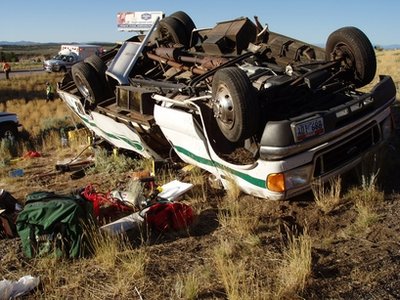
This photo released by the Utah Highway Patrol shows the bus at the scene of a crash north of Cedar City, Utah
The 26 year-old driver of the bus was reported to have smoked marijuana heavily for several days before falling asleep at the wheel of the tour bus when it crashed. He was charged yesterday with 10 felony counts of negligent driving under the influence, and one misdemeanor charge of having marijuana residue in his system.
To date, no charges have been filed against the bus company he was driving for. That company supplied the shuttle bus and driver to other tour operators who organized the trip.
What if this happened to your business?
You might not be in the tour bus industry, but this doesn’t mean an accident of this magnitude can’t happen to your business. Do you own commercial autos titled under your business? Have a commercial auto insurance policy in force? Or, do you simply have employees run errands to the post office, store, or to pick up your lunch? What if your employee was distracted at the wheel and veered off the road killing or injuring others? Are you certain your business is covered for these circumstances? You may want to inquire with your insurance agent NOW to confirm.
Aside from having the proper insurance coverage in force to protect your business from auto liability claims, here are some basic risk management measures you can take as a business owner to help mitigate the situation. Although, following these measures is no guarantee accidents will NOT happen.
If you have additional stories, advice, or recommendations to share, please comment!
–JK
Workers Compensation and Strip Clubs Seem To Have Something In Common
From HRMmorning.com
It’s not what you think — workers compensation cheats aren’t spending their extra dough at strip clubs. Apparently, they’re making a little extra cash on and off stage.
It appears as though one of the best places to find a workers’ compensation cheats is at the local strip clubs.
Consider the evidence:
- A Quakertown, PA, woman was arrested and charged with two
 counts of insurance fraud and theft by deception after an investigation found her working as a stripper at a local gentleman’s club while receiving workers’ compensation payments for a back injury. She had received nearly $23,000 in compensation and more than $4,000 in medical expenses after she claimed to have been injured in a fall while working as a waitress at a family restaurant.
- A Frankfort, NY, man was found working as a DJ for a strip club while collecting benefits for an accident he sustained as a painter 23 years ago. He had even denied in three written statements to the New York State Insurance Fund that he had returned to work. He was arrested on felony charges of third-degree insurance fraud and fraudulent practices after bilking more than $46,000 from the system.
- An Islip, NY, man has been charged with insurance fraud after police
 found him working as a bouncer at an all-nude club while collecting worker’s compensation payments. Officials claim he defrauded the town of Islip, where he used to work as a mechanic, out of more than $17,000.

–JK
About Me

I grew up in Fullerton, CA and graduated from Servite High School in Anaheim. I have my Bachelors degree from Loyola Marymount University in Los Angeles. I currently live in Tustin, CA.
Please contact me if you need help with any of the following lines of insurance for your business:
-Cyber / Data Breach
-Commercial Property
-Commercial General Liability
-Products Liability
-Workers Compensation
-Commercial Auto
-Umbrella/Excess Liability
-Errors & Omissions/ Professional Liability
-Employment Practices Liability
-Directors & Officers
-Life & Disability Insurance
 Jimmy Kinmartin, CPCU