
Insurance Claims Tips for Retailers
Unfortunately, even the best-run retail stores can experience accidents, thefts or other losses. While an insurance policy provides important protection in case of a covered loss, retailers can take some simple steps to protect their business before and during the claim process.
Have Important Information Ready
 Inspect and inventory your property. As a matter of standard business practice, take a full inventory of all your property — both stock and other business property.
- Take photos or videos to supplement your written records. Being able to verify ownership of your inventory and other property is key to any property claim.
- Inspect your property regularly to document conditions both inside and out, and document your findings. Maintain a file of original purchase invoices.
- Keep insurance information handy. Keep your insurance policy number and contact information for your insurance carrier’s Claims Department in an easily accessible place, both at your business and somewhere off premises.

If You Need to Make a Claim
File the Claim. Claims professionals are experienced in helping businesses recover from a loss. They can provide helpful advice and guide you through the claims process.
In the Event of a Theft
- If your business should experience a theft, taking note of the details can make your claim a much smoother process.
- Notify the police. Be sure to obtain the case or complaint number and the precinct or department information.
- Gather alarm company information. If you have an alarm company, obtain the contact information and note the make and model of their system.
- Gather surveillance information. If you have surveillance camera tapes or videos, retrieve the tapes as soon as possible.
- Make a list of claimed items. List stolen property and their values. Locate support documentation and original purchase invoices.
- Assign a spokesperson. Determine who is the most knowledgeable insured to discuss this loss with the insurance company, make sure they have or can get the needed information and can act as the contact person for your business.
- Secure the premises. Protect your premises from further intrusion by boarding up broken glass, repairing locks, etc.
In Case of a Medical Accident
- Get medical help. If there is a medical emergency, get immediate medical help for any injured person. If there is doubt whether medical help is necessary, err on the side of caution.
- Collect information. Obtain contact information of anyone who witnessed the incident to share with the proper authorities. Show genuine concern, but never discuss liability or fault. Take the time to observe the scene of the accident.
- Take a picture. Pictures of possible defects or other property damage can sometimes make a big difference in adjusting a claim. Take a picture or make a video of the place where the incident occurred. Note possible contributing factors, such as weather conditions.
- Protect the scene. Secure the scene of the incident to prevent people from entering the area. Redirect people away from affected walkways or parking areas.
- Secure a defective product. If a defective product is involved in the claim, protect it so that it can be examined later. Make sure no one can use, remove, tamper with or alter it.
No business expects to have to make an insurance claim. But by being prepared — both before and after the unexpected happens — you can help to protect your retail store and make your claims process as easy and straightforward as it can be.
These details are provided for information purposes only. It is not intended to be a subsitute for individual legal counsel or advice on issues discussed here. Readers seeking resolution of specific legal issues or business concerns related to the topic should consult their attorney and/or insurance representative.Baseball Is Here! Dodgers vs. Giants
For those that know me, I love baseball, especially the Dodgers. April is a great time of year, as it’s the start of another Major League baseball season. Although it’s only Spring, I associate it as the start of a long Summer.
It was a great start of the season for the Dodgers as they took three of four games from the weekend series against the Giants. I went to the game last night. Here’s a video I took of Matt Kemp’s two-run homer in the first as the Dodgers beat the Giants 7-5. Lot’s of games still to be played!
-JK
Dude, Where’s My Arm?
File this one under bad trips, the Montana Supreme Court ruled a Montana man is entitled to receive workers compensation insurance benefits after being mauled while feeding bears at an adventure park…….after smoking pot. Yep, the man got high before he stepped into a bear pen to feed the omnivores. Shouldn’t he be chillin’ on the couch be playing Madden or something instead?
 The court ruled that the man was an employee who had been compensated and was “within the scope of his employment” while working at the park. His impairment wasn’t a “major factor” in his mauling since there wasn’t specific evidence about his level of impairment . Also acknowledged was the fact that grizzlies are “equal opportunity maulers.”
Some notable analogies from the judge: “when a grizzly bear is sighted on a trail in Glacier National Park, the trail is closed to all hikers, not just the hikers who may have recently smoked marijuana.” And, the owner “installed multiple electrified fence lines at the bear park to separate the grizzly bears from all customers, not just the customers who may have recently smoked marijuana.
On the flip side of the story, the park owner claimed the man was really a volunteer. It was discovered that the adventure park didn’t even carry worker’s compensation insurance.
Really? You own an adventure park with wild animals and don’t carry workers compensation insurance? I don’t know who’s more foolish, the guy getting high before feeding bears, or the owner of an adventure park, with a bear pen, who doesn’t carry workers compensation insurance?
Luckily for the baked bear feeder, he was able to recover some of his medical expenses stemming from the attack.
I’m not advocating smoking marijuana, but if you choose to, don’t step into a cage to feed wild animals! What a buzz kill.
–JK
Source – KXLU – Helena, MT
Flood Damage Vs. Water Damage – There Is A Difference
It has been raining a lot this week in Southern California and I just wrote a flood insurance policy for the first time since 2007, so this is a post about floods. Got it?
Anywhere it rains, it can flood. What defines a flood you ask? A flood is “a general and temporary condition where two or more acres of normally dry land or two or more properties are inundated by water or mud-flow.” Many conditions can result in a flood including: hurricanes, broken levees, outdated or clogged drainage systems and rapid accumulation of rainfall.

IMAGE SOURCE PAGE: http://thegazette.com
Just because you haven’t experienced a flood in the past, doesn’t mean you won’t in the future. Flood risk isn’t just based on history, it’s also based on a number of factors: rainfall, river-flow and tidal-surge data, topography, flood-control measures, and changes due to building and development.
Flood is not a covered peril on your property insurance policy. However, that doesn’t mean water damage is not covered at all. There’s a difference between flood damage and water damage and it’s important that you know the difference when it comes to insurance coverage.
FLOOD INSURANCE
As the name implies, a standard flood insurance policy, which is written by the National Flood Insurance Program, provides coverage up to the policy limit for damage caused by flood. The dictionary defines “flood” as a rising and overflowing of a body of water onto normally dry land. For insurance purposes, the word “rising” in this definition is the key to distinguishing flood damage from water damage. Generally, damage caused by water that has been on the ground at some point before damaging your home is considered to be flood damage. A handful of examples of flood damage include:
- A nearby river overflows its banks and washes into your home.
- A heavy rain seeps into your basement because the soil can’t absorb the water quickly enough
- A heavy rain or flash flood causes the hill behind your house to collapse into a mud slide that oozes into your home.
Flood damage to your home or business can be insured only with a flood insurance policy — no other insurance will cover flood damage. Flood insurance is available through your insurance agent, insurance company or local Federal Emergency Management Office (FEMA). An excellent resource for flood insurance is Floodsmart.gov, the official site of the NFIP.
HOMEOWNERS/ COMMERCIAL PROPERTY INSURANCE
Homeowners insurance and commercial property insurance policies do not provide coverage for flood damage, but they do provide coverage for many types of water damage to your property. Just the opposite from flood damage, for insurance purposes, water damage is considered to occur when water damages your home before the water comes in contact with the ground. A few examples of water damage include:
- A hailstorm smashes your window, permitting hail and rain free access into your home.
- A heavy rain soaks through the roof, allowing water to drip through your attic or ceiling.
- A broken water pipe spews water into your home.
It’s important to note that flood insurance and homeowners insurance do not duplicate coverage for water damage. Instead, they complement each other.
It is up to you to talk to your insurance agent or insurance company about flood insurance and homeowners insurance, and then decide which insurance coverage you need to protect your home, its contents and your family.
Source: Insurance Information Network of California
–JK
Why Buy Life Insurance?
A: Although not the only answer, life insurance is a good business succession plan
Would your business suffer if they lost a key person?
If you are a business owner, would you like to be in business with your partner’s spouse?
These are two questions that most often lead to the purchase of life insurance by a business. Replacing the value of a key team member can literally spell the difference between survival and demise of a business. This reinforces the need for Key Person Life Insurance.
Not only do most business people not want to be in business with their partner’s spouse, but the spouse doesn’t want to be in business. To provide dignity in a time of pain, and to allow the business to go on without controversy over who gets what and who is in charge – these are the reasons for a Buy/Sell Agreement funded with life insurance.
Do you have a life insurance insurance policy as a business succession plan? If not, here’s a good resource to start: ISUQuickLife.com
Or, call your agent to discuss.
–JK
Happy St. Patrick’s Day!
Happy St. Patrick’s Day! Especially to my very own brother Patrick. To commemorate the big day, be sure to read these priceless Irish toasts. Simple and comical. Enjoy!
I drink to your health when I’m with you,
I drink to your health when I’m alone,
I drink to your health so often,
I’m starting to worry about my own!
But the greatest love, above all loves,
Even greater than that of a mother,
Is the tender, passionate, undying love
Of one beer drunken slob for another.
Here’s to being single…
Drinking doubles…
And seeing triple!
Here’s to women’s kisses,
and to whiskey, amber clear.
Not as sweet as a woman’s kiss,
But a darn sight more sincere!
Here’s to our wives and girlfriends…
May they never meet!
As you ramble through life, whatever be your goal,
Keep your eye upon the doughnut, and not upon the hole.
Best while you have it, use your breath.
There is no drinking after death.
May misfortune follow you the rest of your life,
But never catch up.
May you die in bed at 95 years,
Shot by a jealous wife!
May you have the health of a salmon:
A strong heart and a wet mouth!
May your bank account always be bigger than your troubles.
A toast to your coffin.
May it be made of 100 year-old oak,
And may we plant the tree together, tomorrow.
–JK
Flood Safety Awareness Week: March 14-18, 2011
Apparently, it is flood safety awareness week. I had no clue.
With the potential for massive snow melt and rain storms, many communities nationwide face the threat of flooding this spring. When it comes to insuring your home or business from floods, the most important thing to note is that flood is NOT a covered peril on your property insurance policy. Flood insurance must be purchased separately and can financially protect your property and belongings from costly flood damage.
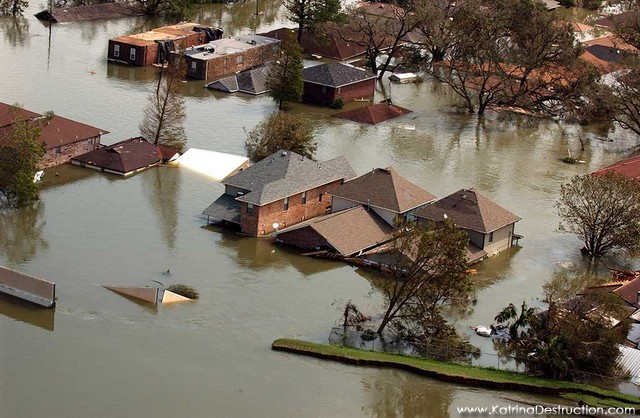
Photo by Jocelyn Augustino/FEMA
Flood Safety Awareness Week is sponsored by the National Oceanic and Atmospheric Administration (NOAA) and supported by the Federal Emergency Management Agency (FEMA). It was created to highlight the causes and consequences of flooding and educate communities on how to prepare for and protect their homes and businesses from the devastating effects of flooding.
Tips & Tools You Can Use
The National Flood Insurance Program’s (NFIP) FloodSmart Campaign is working with FEMA and NOAA to encourage home and business owners to take the steps necessary now to guard against the risks of flooding. Here are some tools and resources you can use:
- Ready.gov/floodawareness: Visit the Ready’s Flood Safety Awareness landing page for fact sheets and other important preparedness tips.
- FloodSmart.gov: Visit FloodSmart.gov’s homepage to find important spring preparedness and flood insurance information and outreach tools.
- Blog posts and social media promotion. FEMA will be blogging and spreading the word through their social media tools (Facebook and Twitter) next week.
Insurance Topics In the News (3/6-3/12)
- States Must Decide if Workers’ Comp Benefits Extend to Illegal Workers: (Read)
- Property & Casualty insurance workforce hit a 20-year low in January: (Read)
- THEN AND NOW: Long Beach Earthquake, 1933 & 2011
- Court: Former NFL Redskins Punter Can Collect Workers Compensation for back injury: (Read)
- Virgin Atlantic forced to pay $500,000 for massage injuries to employees: (Read)
- Japan Earthquake 2011: Devastating Photos Of The Wreckage
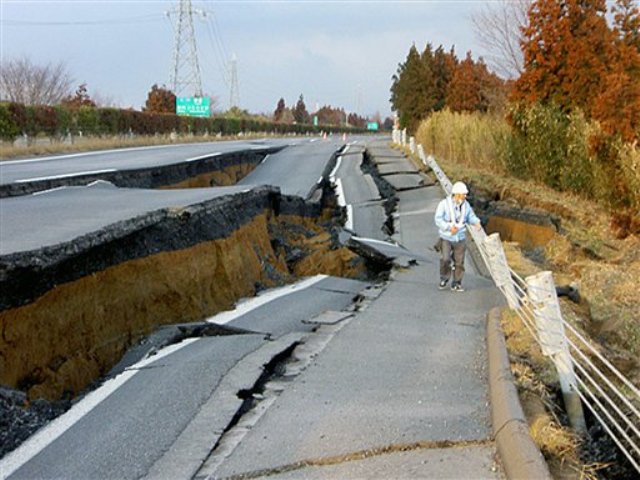
AP Photo/Nexco East Japan via kyodo News
–JK
Employee Benefits Liability
Do you offer employee benefits for your employees? If so, pay close attention to this subject: Employee Benefits Liability.
Picture this scenario:
Busy Betty, office manager for your small business, functions in countless different job capacities ranging from purchasing agent to human resources manager. One day while dealing with other urgent issues, Betty forgets to enroll a new employee on your firm’s medical insurance plan. The error isn’t discovered until the employee is hospitalized with a life threatening cancerous tumor and the bills started to roll in—over $300,000 in all.
What now?!
Well, in a case like this, it’s safe to assume that busy Betty (your business essentially) will be found liable for the damages. This is when you’re hoping you have an endorsement on your commercial general liability insurance policy known as “Employee Benefits Liability” coverage.
Carrying Employee Benefits Liability coverage means your commercial general liability insurance carrier will pay those sums that the you become legally obligated to pay as damages because of any negligent act, error, or omission committed in the “administration” of your employee benefit program, barring any exclusions. The amount of insurance paid is limited to the amount of liability coverage you carry on your general liability insurance policy.
“Administration” of employee benefit programs is defined as:
- Counseling employees, including their dependents and beneficiaries, with respect to your employee benefit program;
- Handling records in connection with your employee benefit program;
- or, effecting or terminating any employee’s participation in a plan included in the employee benefit program.
Employee benefit programs typically entail group life insurance, group accident or health insurance, profit-sharing plans, and pension plans.
Employee Benefits Liability coverage does not apply to losses arising out of any dishonest, fraudulent, criminal or malicious act or omission, committed by any insured; or claims or suits based upon failure of any investment to perform as represented by any insured; or advice given to any person to participate or not to participate in any plan included in the employee benefit program. Other exclusions apply, so keep a close eye on your policy forms. Here’s an example of a typical Employee Benefits Liability coverage form.
In most cases, minimal premium charges apply for this important endorsement (as low as $50 to $100 annually). This is a no brainer if you have an employee benefit program in force. Don’t waste time digging up a copy of your policy to confirm. Call your insurance agent today. Also keep in mind that this coverage is written on a claims made basis.
–JK
Gas Prices Up- Reduce Your Fuel Costs, NOW!
I don’t know about you, but as I have making my daily 40 minute commute to work, I’m seeing these gas prices skyrocketing by the hour it seems! I can’t help but notice the local gas station signs and their prices increasing over .07 cents a day! Whoever’s job it is to bring the pole out and update those numbers is working overtime. Here in LA, we’re above the $4 mark per gallon at some stations. In fact, I filled up my tank on Monday and my receipt came out to $62.70 and I’m not even driving a truck or an SUV. As if it isn’t frustrating enough for individuals, businesses with auto fleets are feeling more pain at the pump and it’s cutting into their bottom line.
Here are 10 Ways to Reduce Your Fuel Costs, NOW!
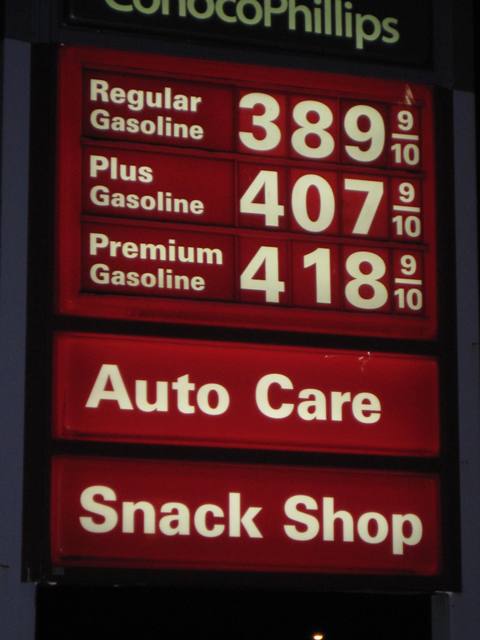
Here's a picture I took last night, 3/02, of a gas station sign in my neighborhood in Long Beach
Purchase Fuel Wisely – Save up to 20%
- Use the right grade of gasoline/ Don’t top off: most cars run fine on regular. Check your vehicle owner’s manual to find out what’s right for your car. (See regular vs. premium.) Don’t “top off” at the pump and make sure your fuel fill cap is on tight and working right. Regular grade fuel cost about 20-cents per gallon less than premium grade.
- Look for the Best Price / Limit Purchases When gas prices are High: Today’s gasolines provide very similar engine performance (although some brands have different gasoline blends that provide other benefits), so choose stations in your area with the lowest prices. Fuel prices can vary 10% within a few blocks. Avoid filling the tank during high-price periods.
Alter Travel Practices – Save up to 30%
- Use Carpooling/ Public Transit/ Non-Motorized Options: Ride the bus, carpool, bicycle or walk instead of driving alone. Sharing a ride to work with a friend or two effectively doubles your fuel economy for the trip and may allow you to use the diamond lane.
- Take Advantage of Telecommuting/ Telecommunications Technology: Many employers offer telecommuting as an option. Use the computer and telephone to replace vehicle trips for business, shopping and services when possible.
Drive More Efficiently – Save up to 20%
- Don’t Drive Aggressively/ Drive at the Speed Limit: Avoid aggressive driving and aggressive starts. All vehicles lose fuel economy at speeds above 55 mph. Driving 65 instead of 75 mph reduces fuel cost 13%. Driving 55 would save 25%.
- Reduce Air Conditioner Use/ Close Windows: Using the air conditioner increases fuel cost from 13% up to 21%. If it’s cool enough, use the flow-through ventilation instead of rolling down the windows or using the AC.
- Eliminate Extra Wind Resistance and Weight: Using a loaded roof rack increases fuel consumption. Carry the load inside your vehicle if you can. Removing unnecessary weight is better still.
- Minimize Vehicle Idling: Today’s vehicles are designed to warm up fast. Avoid idling when you can; idling is 0 miles per gallon.
Improve the Efficiency of the Vehicle You Drive – save up to 50%
- Maintain Vehicle Efficiency: Regular maintenance as prescribed by the vehicle owner’s manual will help your vehicle achieve its best fuel economy. Some overlooked maintenance items, such as a dirty air filter and under-inflated tires, can increase your fuel cost up to 13%. When replacing your tires, replace them with the same make and model as the tires that were on your vehicle when it was new. It’s been estimated that if all Californians properly inflated and aligned their tires, we’d save 300 million gallons of gasoline a year!
- Drive or Purchase a Fuel-Efficient Vehicle: Drive your most fuel-efficient vehicle whenever possible. When purchasing, consider the most fuel-efficient vehicle and save up to 50%. Consider a hybrid-electric, a diesel vehicle, or even a motorcycle. The next best option is to purchase the most fuel-efficient vehicle within the class of vehicles you are considering.
Final Word on Gasoline-Saving Devices
Please also be aware that many companies will try to sell you mileage improving devices. Some claim that they will save you 10 to 50%. Buyers Beware! The U.S. EPA and Federal Trade Commission have both said that there are no devices that will boost your mileage any appreciable amount. See web page for Energy Myths on Gasoline-Saving Products.
Source: California Energy Commission
-JK
About Me

I grew up in Fullerton, CA and graduated from Servite High School in Anaheim. I have my Bachelors degree from Loyola Marymount University in Los Angeles. I currently live in Tustin, CA.
Please contact me if you need help with any of the following lines of insurance for your business:
-Cyber / Data Breach
-Commercial Property
-Commercial General Liability
-Products Liability
-Workers Compensation
-Commercial Auto
-Umbrella/Excess Liability
-Errors & Omissions/ Professional Liability
-Employment Practices Liability
-Directors & Officers
-Life & Disability Insurance
 Jimmy Kinmartin, CPCU