
Worker Loses Part of Finger at Large Commercial Bakery
From LATimes.com:
Another employee has lost part of a finger at Bimbo Bakeries, a company with plants throughout California whose record of workplace accidents was highlighted by The L.A. Times last year. Bimbo Bakeries USA makes a number of well-known brands of breads, tortillas and pastries, including Orowheat, Tia Rosa and Entenmann’s
The company’s total number of amputations is nine since 2003!
“Nine Bimbo Bakeries workers have had parts of digits or a limb amputated since 2003 at plants across the state, where regulators have found inadequate training and machines without proper guarding.”
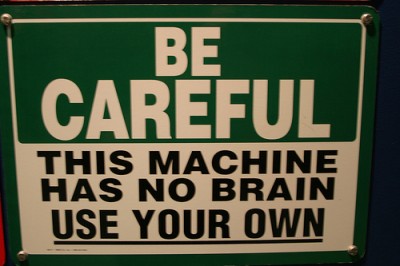 In an investigation last fall, the L.A. Times found that seven employees had lost parts of fingers or a limb in accidents at California plants over the last seven years. In six of those cases, investigators found that machines did not have proper guards to prevent employees from reaching in, officials said.
In October, Cal/OSHA sent its “high hazard” unit to four California Bimbo plants. Inspectors found equipment that lacked proper guarding. The division fined Bimbo $230,000, including more than $120,000 in rarely issued “willful” citations for companies that intentionally disregard safety regulations. Bimbo has appealed those charges.
Then, in January, an employee lost part of his finger in a tortilla machine that investigators later found did not have proper guards.
Inspectors cited “the willful failure of Bimbo Bakeries to guard the openings around … the tortilla production lines” and insufficient training of workers, among other things. The division recommended $123,000 more in fines, including more willful citations. (read full story here)
What Can I do to Keep My Employees Safe?
The following page provides links to numerous Occupational Safety and Health Administration (OSHA) resources and information designed specifically for smaller employers, including the free On-site Consultation Program, safety and health tools and publications, easy-to-follow guides for specific OSHA standards, and descriptions of benefits that small businesses receive from OSHA.
–JK
Not So Fun Business Injury Facts
 Businesses deal with risk everyday. Whether it be liability risks such as injuries to employees or customers, or property loss risks such as fire or theft, businesses must implement risk control and risk management procedures to protect their operations. Of course, accidents happen and this is why insurance is necessary. Here are six (not so fun) injury facts courtesy of Travelers Insurance:
- 25,000 slip and fall accidents occur daily in the U.S., accounting for 15 percent of all workplace accidents. It is also the leading injury to people on company premises.
- Back injuries account for more lost work time than any other workplace injury. Often, the source is improper lifting.
- Fires in commercial buildings cost more than $2 billion in annual property damage and loss. Lack of, or improper maintenance of sprinkler systems plays a significant role.
- Musculoskeletal disorders results in over $45 billion in loss wages and productivity costs. Organized office workstations and poor ergonomic practices are contributors.
- Adverse weather is the leading cause of vehicle accidents and fatalities. Many company drivers don’t understand the risk or how to adjust their driving behaviors.
- Falls from ladders injure over 20,000 American workers annually. Some injuries result in permanent disabilities and even fatalities. Safety starts before the ladder is even mounted.
What Makes a Good Business Insurance Agent?
It’s fair to assume that most business owners want to develop a long-term relationship with an insurance agent. They want this because they don’t really like insurance, nor do they bother to read insurance policies. They wish someone else would just take care of it for them! By partnering with a professional agent who does like insurance and actually does read policies, it’s one less worry for a business owner, and a big one.
 The way the insurance market is set up is not really in the best interests of the business owner. Many small business owners are constantly being approached by insurance agents that may represent just a handful of carriers. These agents are really just sales agents for the insurance company. The insurance company might tell the agent something like, “we’re really competitive for workers compensation in the restaurant business.” These small agents will then call all the restaurants and say, “I can get it for you cheaper”. As a result, many small businesses have multiple agents because they have been buying based on price. If insurance policies were a commodity, that might be okay, but, if you’ve ever read one, you find they’re really complicated contracts. What the small business owner really needs is a broker that is not trying to feed a few carriers, but will truly place the insurance with the right carrier and the right price.
So, how do you make sure a business insurance agent is professional and reputable? Here’s what to look for:
- Independence. Independent agents represent a variety of different companies—not just one. They can evaluate and compare the products of several insurance companies to find the right combination of coverage and value for each individual client.
- Licensing by the state.
- Number and names of companies the agent represents.
- Number of years the agent and agency have been in business.
- The agent’s professional designations. For example, CPCU (Chartered Property and Casualty Underwriter) and CLU (Chartered Life Underwriter) are among the industry’s most rigorous and prestigious designations.
- Areas of specialization. Some agents and agencies have experience in specialized products, such as insurance for a restaurant, an IT consultant, or a home business.
- Recommendations and referrals. How did you hear about the agent and the agency? Did someone you trust refer you?
- Full-service capability. Is this a full-service agency for business, personal, health, and disability products?
- Service representatives. Who will handle your account for routine updates and transactions?
- Claims help. Ask if the agent plays a role in handling and tracking claims. Will the agent help resolve disputes that might arise with an insurance company?
- Policy review. Does the agency occasionally review and update policies to make sure your insurance is keeping pace with changes in your situation?
- Industry associations. Does your agent participate in any local, state, or national trade associations? These activities often signify professionalism and a commitment to continuing education in the insurance field.
What kind of relationship do you have with your agent? How do you feel about their services? How do you know you’re in the best position with your business insurance?
-JK
*Information supplied by the Independent Insurance Agents & Brokers of America and the ISU Group One Responsible Source™ program.
What Is Employment Practices Liability Insurance?
Employment Practices Liability Insurance provides protection for an employer against claims made by employees, former employees, or potential employees. It covers discrimination (age, sex, race, disability, etc.), wrongful termination of employment, sexual harassment, and other employment-related allegations. These types of claims are not covered under a general liability insurance policy.

In December 2009, NASCAR settled a $225 million sexual harassment and racial discrimination lawsuit by former official Mauricia Grant
Who Needs Coverage?
Employment Practices Liability Insurance (EPLI) is needed by any business with employees and those which begin to hire employees. It used to be that EPL claims were limited to major corporations. This is no longer the case. In today’s litigious climate, employers of all sizes are vulnerable. According to EEOC data, 41% of all EPLI claims are brought against small employers with 15 to 100 employees.
Why is Employment Practices Liability Insurance Needed?
Statistics show businesses are more likely to face an employment claim than a property or general liability claim. Cases against employers are on the rise. Once these claims manifest, they become a huge burden on a businesses assets and can easily put a small employer out of business for good. Here are some powerful statistics that bring the seriousness of EPL claims to light:
- The average amount paid for out of court settlement is $40,000.
- Defense of an average EPL case, through trial, costs over $45,000.
- The median compensatory award for EPLI cases is $218,000.
- 67 percent of all employment cases that litigate result in judgement for the plaintiff.
- 41 percent of all EPLI claims are brought against small employers with 15 to 100 employees.
- Six out of ten employers have faced employee lawsuits within the last five years.
- The U.S. Equal Employment Opportunity Commission (EEOC) announced this past January that in 2009, more than 93,000 workplace discrimination charges were filed with the federal agency nationwide. This is the second highest level ever recorded
EPLI policies will reimburse your company against the costs of defending a lawsuit in court, even if a claim is groundless or fraudulent. They will also compensate for judgments and settlements. It doesn’t matter whether your company wins or loses the suit. Policies typically do not pay for punitive damages or civil or criminal fines, however.
How much does an EPLI Policy Cost?
The cost of coverage depends on your type of business, the number of employees you have, and various risk factors such as prior claims or loss history. Your insurance agent can provide a quote with very minimal information, often right on the spot.
-JK
Why Your Business Should Consider A Cell Phone Usage Policy
Did you know that more than 1.5 million collisions a year, or 4,300 crashes daily are caused by driver distractions or inattentive driving? This comes from the National Highway Traffic Safety Administration. Probably the most obvious reason for driver distraction comes from cell phones and PDA’s. Whether it be text messaging, emailing, or straight talking, people on the road seem to make it their priority, putting driving secondary. Even here in California where it’s against the law to use hand-held devices while operating a vehicle, most don’t seem to care from what we see first-hand on the road every day. If it isn’t the cell phone, then it might be laptops, GPS systems, food, drinks, reading, writing, grooming and other crazy things.
 A 2009 study from the Virginia Tech Transportation Institute reflects the severity of cell phone distraction while driving. From dialing and talking to reaching and texting, cell phone usage while driving can be over 23 times riskier than non-distracted driving. Text messaging is by far the riskiest as the study results show.
The important message here is if you’re an employer, you may be held liable if one of your employees causes an accident, catastrophic or not, from distracted driving. As long as that employee is driving in the course of employment, then beware. It’s highly recommended to establish a cell phone usage policy for your business and to educate your employees on the potential severity of their actions. If employees must use their phone to conduct business, they should at least pull over to the side of the road or into a parking lot. Or, get out of the car completely.
1.5 million accidents a year is substantial number. However, it might only take one employee accident to affect your business substantially. Know your risks!
-JK
Photo Courtesy of TPS Report; Additional Resource: Insurance Information Institute
9 Tips For Emergency Preparedness Planning
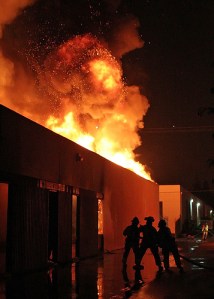
Courtesy of http://www.flickr.com/photos/smokeshowing
With everything going on out here in California this week with the Kern County wildfires, this post is more about risk management and mitigation rather than insurance. Fires and natural disasters can happen to anyone at anytime and in the blink of an eye and destroy everything you own and have worked extremely hard to build. Although there’s no stopping the rage of a fire, the devastation of an earthquake, or the wreckage of a flood, there are things you can do to mitigate loss.
Here’s a small list of steps you can take to prepare yourself for a natural disaster courtesy of The Hartford Emergency Preparedness Planning.
9 Practical Tips for the Small Business Owner
1- Establish an Evacuation Plan: Be sure everyone can get out quickly in an emergency. Designate primary and secondary evacuation routes and exits. Make sure these routes are clearly marked, well-lit, wide enough, and clear at all times. Train your employees in evacuation procedures and practice at least annually.
2- Keep an updated list of telephone numbers, including emergency personnel, hospital, public health, utilities, insurance agent, and disaster relief agencies. Include contact names and telephone numbers for customers, suppliers, and distributors. Keep a copy off site
3-Keep essential items on hand in the event of an emergency: first aid kit, flashlight with fresh batteries, battery powered radio, waterproof plastic bags and covers, camera with film, tool kit, and appropriate supply of bottled water and nonperishable food.
4- Protect vital records critical to your business (e.g., financial statements, account information, blueprints, product lists, etc.) Select a safe that has been tested and listed by Underwriters Laboratories UL rates safes for resistance to fire and heat, as well as resistance to burglary tools and torches. Or, keep copies offsite if possible.
5- Back up all critical electronic data and programs at least daily. Backing up these valuable assets can help a business recover from a data loss or hardware failure and get back online quickly.
6- Secure backup copies of critical data and programs in a physical location seperate from your premises to protect against damage from theft, fire, water and other physical hazards.
7- Determine if your business is located in an area that is prone to natural hazards (e.g., flood, earthquake, wildfires). Once you have identified perils to which your business is vulnerable, take steps to minimize potential damage to the building and contents (e.g.- if you are in earthquake territory, anchor tall bookcases and file cabinets to wall studs to keep them from falling).
8- Review your current property insurance policy with your insurance agent. Be sure that you understand the coverages (e.g., buildings, personal property, presonal property of others, business income, etc.), deductibles, and limits of insurance. You will need to buy seperate policies for flood or earthquake damage as they are excluded perils on property insurance policies.
9- Keep insurance information and contact names and numbers in a safe place. This will expedite the claim process in the event of a loss.
-JK
About Me

I grew up in Fullerton, CA and graduated from Servite High School in Anaheim. I have my Bachelors degree from Loyola Marymount University in Los Angeles. I currently live in Tustin, CA.
Please contact me if you need help with any of the following lines of insurance for your business:
-Cyber / Data Breach
-Commercial Property
-Commercial General Liability
-Products Liability
-Workers Compensation
-Commercial Auto
-Umbrella/Excess Liability
-Errors & Omissions/ Professional Liability
-Employment Practices Liability
-Directors & Officers
-Life & Disability Insurance
 Jimmy Kinmartin, CPCU