
10 Good Questions To Ask About Business Auto Insurance
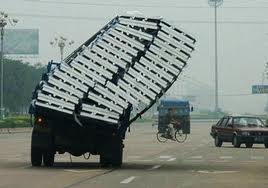 On any given workday, you may have employees on the road operating a variety of vehicles. Whether you provide company vehicles or your employees use their own vehicles, commercial auto insurance is a must.
Commercial/ business auto insurance provides coverage for cars, trucks and vans used by you or your employees for business purposes. Your business vehicles are not covered by your businessowners policy or personal auto insurance, so you must buy a separate policy.
When shopping for the right coverage for your business, here are ten good questions to ask about business auto insurance:
1. Is coverage mandatory for a business that uses vehicles?
Yes. Just like with personal auto insurance, it’s against the law to drive a vehicle without insurance to cover injuries or damage to others that an employee causes as a result of a car accident.
2. Is Business Auto Insurance better than Personal Insurance?
Business Auto coverage is similar to the coverage you may carry on your personal auto policy; however, business auto exposures can be more complex requiring specialty coverages to be considered based on individual business needs.
3. How do I find out about what’s out there?
The most effective way to compare rates and coverage available to you is through an independent agent or broker. They should be able to point you to the right type of policy based on the type of business you have and how you use your vehicles.
4. What can I do to influence the premium I pay?
The best ways to keep rates down is to make sure that you’re a safe driver, hire and employ safe drivers and use less expensive vehicles for your business.
5. What factors impact the premium I pay for Business Auto Insurance?
Insurance premiums can be affected by everything from the type of business you operate, to the type of vehicles you own; to the radius you operate your business in, and the driving records of yourself and your employees.
6. What is the reputation of the insurance company?
Make sure you do the research before moving forward with a Business Auto policy. Ask your insurance representative or go online to answer questions like — Do they have a long history? Are they reputable? Do they know your business?
7. What extra benefits are added onto the policy without additional cost?
Every insurance company is different. So make sure to ask about extra benefits when shopping around, because they could prove useful when an accident happens and save you money in the long run.
8. Does coverage vary state to state?
It definitely can. Each state has its own rules and regulations that can affect rates and types of coverage that an insurance carrier can make available to your business.
9. Are all my employees covered by my Business Insurance policy?
They should be, but there are exceptions. This is a very important question to ask when you’re shopping around for the best Business Auto policy.
10. How does the claims process work?
The process usually includes reporting an accident to both the police and your insurance company, assessing the damage, and working with a claims handler. When selecting an insurance carrier, be sure to ask about any benefits they offer in the event of an accident, like a network of repair shops where the work is guaranteed as long as the vehicle is leased or owned.
Source: The Hartford
What If I Have Trouble Finding Insurance for My Business?
In most cases businesses can obtain insurance in the standard insurance market with the help of a licensed and qualified insurance broker. However, if your business has experienced significant losses, your business is considered to be engaged in high-risk operations (with a greater chance of claims frequency or severity), or you have recently started your business, you may not be able to locate insurance in the standard commercial insurance market. You do have options, however, in securing commercial insurance elsewhere.
Surplus Lines Insurance
When an insurance broker is marketing your insurance coverage and has had applications declined from three licensed commercial insurance carriers, they can proceed to obtain insurance from the “surplus lines market.” Sometimes referred to as the “non-admitted” market, surplus line companies offer insurance to businesses that cannot obtain insurance in the standard insurance market. While these companies are not licensed by the California Department of Insurance (CDI), they do have to go through an approval process that includes providing evidence of minimum capital and other strict requirements. When these requirements have been met to the CDI’s satisfaction, the CDI may approve the company to conduct business in California and add them to the List of Approved Surplus Line Insurers.
A surplus line company can only be accessed through a specially licensed broker, also referred to as a wholesaler. The broker must have a surplus line license issued by the CDI in order to sell surplus line insurance. Before purchasing insurance from a surplus line insurance company, your insurance broker must provide you with a disclosure that the insurance you are buying is being issued from a surplus line company.
Although surplus line insurers must follow the Fair Claims Settlement Practices Regulations (regulations that govern how insurers handle claims), the CDI has limited jurisdiction over the operation of surplus line insurers. If the carrier becomes insolvent (goes bankrupt), your only course of action will be through the courts. The California Insurance Guarantee Association (CIGA), which protects claims with admitted insurers, does not apply to surplus line insurers. All insurance brokers should be able to supply information on the financial solvency of any surplus line company that it represents. There are independent rating organizations that analyze insurance company solvency such as A.M. Best Company.
Most states identify the standard lines insurance companies as “admitted,” “licensed” or “standard” and the excess and surplus lines insurance companies as “non-admitted,” “unlicensed” or “non-standard.” However, these terms tend to reflect a negative connotation in regards to the strength and security of a surplus lines insurer. The fact of the matter is, most states require surplus lines insurance companies to maintain higher minimum capital levels than they require admitted markets to carry. Just because a carrier isn’t licensed or admitted in the state of CA, don’t assume they’re inferior. Plenty of established businesses secure their insurance coverage through the surplus lines insurance market.
It’s safe to assume a ladder manufacturer secures their insurance from a surplus lines insurance carrier:
–JK
1985 Product Liability Insurance
I’ve been in the insurance industry just short of five years now helping business owners with their insurance needs. If I could turn back the clock 27 years, it would be a dream for me to write product liability insurance for this awesome product, the music vest. Treat your eyes to this gem:
–JK
Large California Traffic Ticket Fines Effective 01/06/2012
If you’re a California driver, pay close attention to this one. The Golden State of California is broke and is looking for ways to pay some bills. Aside from raising taxes like our brilliant politicians up in Sacramento like to do as a “solution” to all our fiscal problems, they looking to the highways to generate some revenue for their pockets.
 Take note of the following California traffic ticket fines which took effect on Friday, 1/6. Sorry, I’m a few days late on this. I received this information from an email. Apparently, these details were taken from an article in the L.A. Times. I tried to find it but no luck. If you come across the story, please send to me so I can give some credit to where it’s due.
Rumor has it that the California Highway Patrol is under pressure to issue a lot more tickets than last year with at least 30% increase in fines over 2009, so beware of radar guns, highway and traffic cameras installed everywhere and the tougher enforcement of parking rules.
Traffic Ticket Fines (Effective 01/06/2012)
- VC 12814.6 $214 Failure to obey license provisions
- VC 14600(A) $214 Failure to notify DMV of address change within 10 days Note: The fine may be reduced with valid proof of correction.
- VC 16028(A) $796 Failure to provide evidence of financial responsibility (insurance) Note: This fine may be reduced with proof of insurance on or after the violation date.
- VC 21453(A) $436 Failure to stop at a red signal.
- VC 22349 $214 Unsafe speed, 1 to 15 miles over the limit.
- VC 22350 $328 Unsafe speed, 16 to 25 miles over the limit.
- VC 22450 $214 Failure to stop at a stop sign.
- VC 22454(A) $616 Passing a school bus with flashing red signals.
- VC 23123(A) $148 Driving while using a wireless phone not hands free, first offense.
- VC 23123(B) $256 Driving while using a wireless phone not hands not free, each subsequent offense.
- VC 23123.5 $148 Driving while using a wireless device to send, read or write text.
- VC 23124 $148 Minor driving while using a wireless phone.
- VC 22500 $976 Parking in a bus loading area.
- VC 22507(A) $976 Violation of disabled parking provisions, first offense.
- VC 22507(B) $1876 Violation of disabled parking provisions, second offense.
- VC 26708 $178 Unlawful material on vehicle windows.
- VC 27150 $178 Adequate muffler required.
- VC 27315 $148 Mandatory use of seat belts.
- VC 27360 $436 Mandatory use of passenger child restraints. Note: This fine may be reduced by completing a court authorized child seat diversion program.
- VC 27400 $178 Headsets or Earplugs covering both ears.
- VC 27803 $178 Violation of motorcycle safety helmet requirements.
- VC 34506 $616 Commercial Driver – Log book violation.
- VC 4000 $256 No evidence of current registration. Note: The fine may be reduced with valid proof of correction.
- VC 4159 $178 Notify DMV of change of address within 10 days. Note: The fine may be reduced with valid proof of correction.
- VC 5200 $178 Proper display of license plates. Note: The fine may be reduced with valid proof of correction.
- VC 9400 $178 Commercial weight fees due. Note: The fine may be reduced with valid proof of correction
So what do you think? Will these California traffic ticket fines convince you to be more cautious on the road?
Clean Up Your Mess!
I wrote insurance coverage for a commercial building earlier this year, property and general liability, only to receive a phone call a couple of months later from the carrier telling me that an inspection was done on the building and for lack of a better term, the premises was an absolute mess. It needed a fix quickly, or coverage was going to be cancelled short-term. The call took me by surprise so I decided to visit the property myself. Here’s what I discovered:
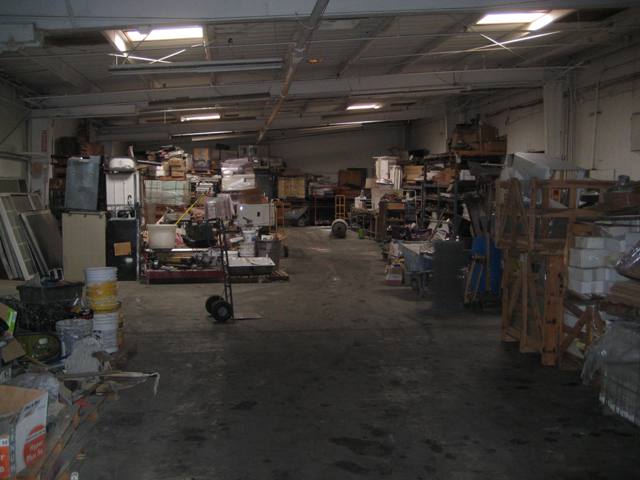


This was borderline hoarding. Storage was disorganized, with random articles stacked in solid piles up to the ceiling in some areas. There were no aisles and inadequate means of getting out from the storage area in the event of an emergency. Combustible material was stacked near an electrical switch, box, and panels, etc.
The loss control recommendation from the carrier: housekeeping. “There is excessive storage of combustible inventory and miscellaneous material throughout parts of the warehouse. Such arrangement of material (with 1 small walking path) could impede safe egress from the structure; The volume of closely packed material increases exposure to a rapidly spreading fire. The material also obstructs access to fire extinguishers and is stacked adjacent to electrical boxes and panels; The heavy fire load may not be controlled by the existing sprinkler system.”
The recommended solutions to this mess?
- The inventory should be rearranged so all electrical boxes/panels have a 3′ radius free of combustible material.
- The inventory should be rearranged to allow access to fire extinguishers.
- The inventory density should be reduced to allow better access to storage areas and improved water distribution for the sprinklers.
- Housekeeping should be improved and then maintained on a regular basis.
This is one of the most extreme examples of a disorderly premises that I have encountered. It doesn’t take an insurance professional to know that this is a severe property and general liability insurance hazard. There is absolutely no way of writing insurance with any carrier if you have a premises in this kind of shape. The risks are just too extreme. I’m not an obsessive compulsive neat freak by any means, but I ask myself if this insured has any bit of concern for protecting their assets? The point here is about risk management and risk reduction, not about making things look pretty at your home or business.
What type of housekeeping do you maintain at your home or business?
–JK
Why Am I Being Asked For A “Waiver of Subrogation” On My Insurance?
Ever heard of the term, “waiver of subrogation”? Sounds pretty foreign, doesn’t it? Well it kind of is. If you’re a business owner with liability insurance, you may have had a request from a client or landlord at some point asking for a certificate of insurance with a “waiver of subrogation” for general liability, workers compensation and/or auto liability. I’m actually writing this post because it’s something that I have been working on this week trying to place a new client with an insurance carrier. This client happens to be a self-storage facility.
You see, this self storage facility houses a beer distributor. One of the conditions of writing insurance for this client (the storage facility) with this particular carrier, is to have the tenant (beer distributor) provide a “certificate showing that the insured is named as an additional insured on the General Liability policy with waivers for both the GL and auto. Minimum $1 million limits.”
What does Waiver of Subrogation mean?
The definition of ‘Waiver of Subrogation” is: “The relinquishment by an insurer of the right to collect from another party for damages paid on behalf of the insured. A waiver of subrogation is often referred to as “transfer of rights of recovery.” A waiver prohibits an insurance carrier from recovering the money they paid on a claim from a negligent third-party.
For example, suppose you own a building which burns down due to the negligence of a third-party. Normally you could sue the negligent third-party for causing your building to burn down. If your fire insurance company pays off your claim, however, the insurance company is then “subrogated” to your claim against the negligent third-party. This means your claim against the negligent third-party is treated as having been assigned to the insurance company, which may sue him/her to recover the amount it paid you on account of the fire loss.
Many, but not all, general liability policies allow you to waive your rights of subrogation as long as it is done in writing and prior to a loss. Some contractual agreements, such as some facility rental agreements, require you to waive your right of subrogation (and therefore your insurance company’s rights) against them in the event of a claim.
The good news is that you, the insured, doesn’t have to worry too much about what this terminology means should you get a request from a client or landlord. Simply forward to your insurance agent/broker and be sure to bounce any questions that you may have off them. Our job is to be your insurance partner and deal with these types of insurance requirements or questions you have.
–JK
Long Beach Grand Prix (and 10 Safe Driving Tips)
This past weekend was the Long Beach Grand Prix, probably the biggest weekend annually in Long Beach and by far one of my favorites. We went on Saturday and enjoyed a perfect day of sun, fast cars, thundering loud sound and jam-packed bars. I’m not necessarily a race fan, but if you ever get a chance to check out a live race and get up front in the action, you won’t be disappointed. The speed and noise of these IndyCars give me the chills every time I see them.
Check out this short clip I filmed track-side. This was Saturday’s IndyCar qualifying for the main race on Sunday. Cars are flying by at 160-170 mph at this point on the track:
With the theme of fast cars and driving, take a moment to browse over these 10 safe driving tips:
Top 10 Safe Driving Tips
- Don’t Drive Drunk – More than 30 percent of all auto accident fatalities in the United States involve drivers impaired by alcohol. It’s easy to avoid driving drunk. If you’ve been drinking, ask a sober friend for a ride or call a cab. If you’re planning to drink, make sure you have a designated driver. The mild inconvenience of taking a cab home is nothing compared to the disastrous consequences of driving drunk.
- Don’t Speed – Research has shown that for every mile per hour you drive, the likelihood of your being in an accident increases by four to five percent
- Avoid Distractions – One researcher compared the reaction time of a 20-year-old driver talking on a cell phone to that of a 70-year-old driver. What’s more, working a cell phone behind the wheel can delay reaction times by as much as 20 percent.
- Don’t Drive Drowsy – A study conducted by researchers at Virginia Tech reported that 20 percent of all accidents have sleepiness as a contributing factor
- Wear Your Seat Belt– NHTSA statistics reveal that more than half of all accident fatalities were people who weren’t using seat belts
- Be Extra Careful in Bad Weather
- Don’t Follow Too Closely – The three-second rule is simple. Find a stationary object on the side of the road. When the car ahead of you passes it, start counting seconds. At least three seconds should pass before your car passes the same object
- Watch Out for the Other Guy – One good rule of thumb to use is, “Assume everyone else on the road is an idiot.”
- Practice Defensive Driving – Defensive driving is not only safer, it can save you money. Many insurance companies offer discounts to drivers who complete defensive driving courses.
- Keep Your Vehicle Safe– One of the most common maintenance problems that can lead to a crash is improper tire pressure. Uneven tire pressure, or pressure that is too high or low, can impact performance or lead to a blowout — especially in high-performance cars or heavy vehicles like SUVs
For these tips and more, visit www.howstuffworks.com
Employee Benefits Liability
Do you offer employee benefits for your employees? If so, pay close attention to this subject: Employee Benefits Liability.
Picture this scenario:
Busy Betty, office manager for your small business, functions in countless different job capacities ranging from purchasing agent to human resources manager. One day while dealing with other urgent issues, Betty forgets to enroll a new employee on your firm’s medical insurance plan. The error isn’t discovered until the employee is hospitalized with a life threatening cancerous tumor and the bills started to roll in—over $300,000 in all.
What now?!
Well, in a case like this, it’s safe to assume that busy Betty (your business essentially) will be found liable for the damages. This is when you’re hoping you have an endorsement on your commercial general liability insurance policy known as “Employee Benefits Liability” coverage.
Carrying Employee Benefits Liability coverage means your commercial general liability insurance carrier will pay those sums that the you become legally obligated to pay as damages because of any negligent act, error, or omission committed in the “administration” of your employee benefit program, barring any exclusions. The amount of insurance paid is limited to the amount of liability coverage you carry on your general liability insurance policy.
“Administration” of employee benefit programs is defined as:
- Counseling employees, including their dependents and beneficiaries, with respect to your employee benefit program;
- Handling records in connection with your employee benefit program;
- or, effecting or terminating any employee’s participation in a plan included in the employee benefit program.
Employee benefit programs typically entail group life insurance, group accident or health insurance, profit-sharing plans, and pension plans.
Employee Benefits Liability coverage does not apply to losses arising out of any dishonest, fraudulent, criminal or malicious act or omission, committed by any insured; or claims or suits based upon failure of any investment to perform as represented by any insured; or advice given to any person to participate or not to participate in any plan included in the employee benefit program. Other exclusions apply, so keep a close eye on your policy forms. Here’s an example of a typical Employee Benefits Liability coverage form.
In most cases, minimal premium charges apply for this important endorsement (as low as $50 to $100 annually). This is a no brainer if you have an employee benefit program in force. Don’t waste time digging up a copy of your policy to confirm. Call your insurance agent today. Also keep in mind that this coverage is written on a claims made basis.
–JK
Distracted Driving- Auto Accidents Don’t Announce Themselves
Have you seen this comical Lexus commercial on the air pertaining to distracted driving? This one really applies to everyone on the road. Auto accidents don’t announce themselves.
After watching the video, check out the tips below to avoid distracted driving. Be safe out there.
Tips to avoid distracted driving
- Be well rested and alert before driving.
- Keep safe driving as your first priority when driving.
- Consider taking a defensive driving course.
- Park to eat.
- Drink with a lid on your cup, only going slow and straight or stopped.
- Don’t hold a cup between your knees while driving.
- Pull to the curb to read a map or directions.
- Find out what landmarks are near your destination before arriving.
- Tell your passengers you need to keep your eyes on the road.
- Keep sun glasses within reach.
- Check rearview mirror BEFORE you enter a curve or turn.
- Keep both hands on the steering wheel in a curve or turn.
- Use restraints for your pet when you drive with them in the car.
–JK
What Do I do In the Event of An Auto, Property, or Liability Loss?
 Ever been in a car accident? Or, been affected by a fire, burglary, theft, etc? Even injured someone accidentally?
Chances are there was a flood of emotions going through your head if you’ve experienced any of these scenarios. During times like these, it’s likely you’ll have to rely on your insurance coverage to help you through it. These are the times you’re actually really happy your paid those insurance premiums.
Here are some tips on what to do in the event of an auto, property, or liability loss courtesy of Golden Eagle Insurance*:
Automobile Losses
- Make sure everyone is okay – call for medical assistance if necessary
- Notify the police about the loss
- Exchange contact and insurance information with other parties
- Get the names and phone numbers of any witnesses
- Make a diagram of accident
- Photograph the scene prior to moving the vehicle(s) if this can be safely done
- Take reasonable steps to move your vehicle from the scene and to safeguard it and any personal property contained in the vehicle from subsequent damage
- Make no commitments for payment
- Do not discuss fault or blame at the scene
- Do not discuss the details of the accident with anyone except the police, your insurance agent, claim adjuster, or your legal counsel
Property Losses
- Protect all property from further damage
- Preserve all evidence
- Locate purchase records to document values
- Describe extent of damage to property
- If emergency restoration services are needed, call a service such as Servpro at 1-800-SERVPRO
General Liability Losses
- Contact emergency personnel if necessary
- Document how, when and where the accident occurred
- Photograph scene and/or all damaged articles
- Complete accident investigation form (available from your agent or insurance carrier)
- Collect names, addresses and telephone numbers of injured persons
- Make note of any injuries/complaints
- Identify any potential witnesses and secure their names, addresses and telephone numbers
- Make no commitments for payment
- Do not discuss fault or blame at the scene
- Do not discuss the details of the loss with any party representing the injured person without first consulting with your insurance agent, claim adjuster or legal counsel
*While not an exhaustive list, the above information is provided to assist you should a loss occur. Nothing contained within this material should be construed as providing legal advice nor does it imply coverage will be afforded. Every claim submitted must be reviewed and evaluated based upon the applicable policy of insurance and the facts of loss.
–JK
About Me

I grew up in Fullerton, CA and graduated from Servite High School in Anaheim. I have my Bachelors degree from Loyola Marymount University in Los Angeles. I currently live in Tustin, CA.
Please contact me if you need help with any of the following lines of insurance for your business:
-Cyber / Data Breach
-Commercial Property
-Commercial General Liability
-Products Liability
-Workers Compensation
-Commercial Auto
-Umbrella/Excess Liability
-Errors & Omissions/ Professional Liability
-Employment Practices Liability
-Directors & Officers
-Life & Disability Insurance
 Jimmy Kinmartin, CPCU