
Flood Safety Awareness Week: March 14-18, 2011
Apparently, it is flood safety awareness week. I had no clue.
With the potential for massive snow melt and rain storms, many communities nationwide face the threat of flooding this spring. When it comes to insuring your home or business from floods, the most important thing to note is that flood is NOT a covered peril on your property insurance policy. Flood insurance must be purchased separately and can financially protect your property and belongings from costly flood damage.
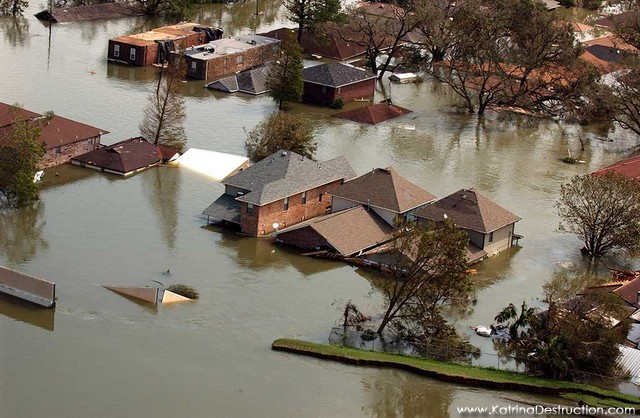
Photo by Jocelyn Augustino/FEMA
Flood Safety Awareness Week is sponsored by the National Oceanic and Atmospheric Administration (NOAA) and supported by the Federal Emergency Management Agency (FEMA). It was created to highlight the causes and consequences of flooding and educate communities on how to prepare for and protect their homes and businesses from the devastating effects of flooding.
Tips & Tools You Can Use
The National Flood Insurance Program’s (NFIP) FloodSmart Campaign is working with FEMA and NOAA to encourage home and business owners to take the steps necessary now to guard against the risks of flooding. Here are some tools and resources you can use:
- Ready.gov/floodawareness: Visit the Ready’s Flood Safety Awareness landing page for fact sheets and other important preparedness tips.
- FloodSmart.gov: Visit FloodSmart.gov’s homepage to find important spring preparedness and flood insurance information and outreach tools.
- Blog posts and social media promotion. FEMA will be blogging and spreading the word through their social media tools (Facebook and Twitter) next week.
Has An Earthquake Detection System Become Reality??
Plain and simple, natural disasters are horrendous! To put it politely, they S-U-C-K! Floods, tornado’s, hurricane’s, volcanic eruption’s, landslide’s, and notoriously here in California…earthquakes! All these natural disasters lead to some kind of loss, whether it be financial, environmental, or human loss. In most cases, there’s actually some degree of advanced warning as to when a natural disaster might strike. Take hurricane’s for example. We are able to pinpoint powerful storms in advance and prepare accordingly. If nothing else, this allows us to reduce the probability of human loss.
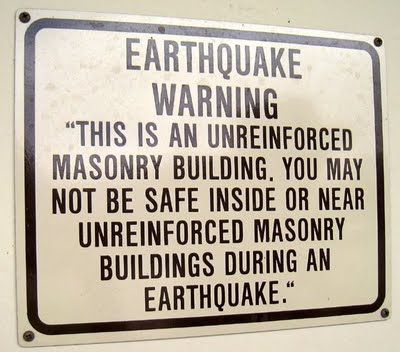 Unfortunately, advanced warning does not apply when it comes to the earth shifting, otherwise known as EARTHQUAKES! ………Or does it??
In an article published by Fox News, there is now “a state-of-the-art, first-in-the-world earthquake detection system in now installed and operational” in southern California, near Palm Springs, in the Coachella Valley. In fact, twelve locations are now in place with 120 sites planned, all meant to detect an earthquake and give people a chance to duck and cover, or brace themselves before the shaking begins.
This earthquake detection system was created by a company called QuakeGuard. The system works by way of sensors which are designed to detect the initial, or “P” energy waves given off by every quake, even though it’s only the later, or “S” waves that do all the damage. The time in-between the two waves varies depending on the proximity to the epicenter and as the first sensor closest to the quake goes off, it can offer advance notice — from a few seconds to a full minute– to other locations farther away.
The system can also be set to automatically open fire station doors, and water and gas valves for municipalities could be shut off. Back-up generators for hospitals could be turned on and, most importantly, warn school kids to duck and take cover.
Of the 12 sets of sensors currently set in place throughout the Coachella Valley in Southern California, all are tied to fire stations. Soon, they will be networked to every school in the area. Down the road, they can possibly be linked to hospitals, private businesses and even people’s homes.
A mobile system is also in development and would help rescue crews detect aftershocks. A few seconds could get rescuers out from under the rubble and thus out of harm’s way.
How great would this be for California or for any other regions affected by the earth moving?? It’ll be interesting to see how technology progresses. In this case, not soon enough! We can’t stop an earthquake, but it would be nice to be warned if one is on the way . The sudden jolt of the earth shifting is the probably the scariest part of an earthquake in my opinion. Let alone the damage and destruction that comes with it.
Would an earthquake detection system ease your fear of earthquakes?
–JK
Earthquake Safety – Prepare Your Workplace
For you Californians out there, according to the US Geological Survey, there is a 60% chance that a 6.7 magnitude or greater earthquake will occur in California in the next 30 years. I’ve been hearing that since elementary school so I don’t know how much longer we have if this is true. An earthquake of this size can can severely strain public services and disrupt business operations. The best way to survive an earthquake is to prepare before a big one hits. Here are some earthquake safety recommendations to consider for general guidance purposes.
Prepare your workplace for an earthquake
- Large equipment such as boilers, tanks, and machines need to be secured properly so they will not fall over in an earthquake.
- Furniture such as bookshelves and file cabinets along with storage racks and shelving should be strapped or attached to the wall to keep it stable and upright.
- Survey your workspace to make sure that heavy items are stored at lower heights or secured so they won’t fall.
- Photos and pictures should be hung onto the wall with screws or earthquake “j” clips.
- Keep doors, exits, and aisle ways clear at all times for quick evacuations.
- Keep areas under desks and tables uncluttered to make room to take cover in an earthquake.
- Store chemicals properly and in compatible groups.
Gather emergency supplies for the workplace
- Fire extinguishers should be charged and inspected monthly so they are always ready to use.
- Periodically test fire alarms, sprinklers, and emergency lighting.
- Keep flashlights, a radio, extra batteries, and a first aid kit on hand at all times.
- Consider stockpiling food, water, blankets, and sanitary supplies such as toilet paper and portable toilets.
- Keep enough supplies for the number of workers that may need to shelter or work at your facility after an earthquake.
- Prepare personal emergency supplies for your desk and your car, including comfortable clothes and shoes, a flashlight and batteries, first aid kit, food, water, and necessary medications.
Make an emergency plan at work and at home
- Businesses must have an emergency evacuation plan that details how employees will evacuate from the building, where they will meet, how to account for everyone, and how to get further instructions to act.
- Current emergency contact phone numbers for all employees and management are critical in an emergency.
- Businesses should also list and prioritize their functions in a Business Continuity Plan (BCP) that ensures access to the people, materials, and other supplies needed to continue work after an earthquake.
- Workers should have family emergency plans in place at home in case they are stranded at work or required to work after an earthquake.
- Keep enough emergency supplies on hand to maintain your family for at least 3 days.
- Make lists of emergency contact phone numbers and determine a meeting place for the family after an emergency.
Practice and train on your emergency procedures
- Practice emergency evacuations.
- Get training on first aid and CPR techniques.
- Train and remember to Duck, Cover and Hold in an earthquake. If you cannot take cover, stand against an interior wall and protect your head and neck with your arms.
- Practice your business recovery procedures by inspecting and restarting equipment and computers in the proper and prioritized order.
Earthquakes aren’t planned, but you can at least plan and practice earthquake safety measures to increase your chances of survival.
Keep in mind that standard property insurance policies exclude coverage for damages resulting from earth movement, including earthquakes. Read more about it here. In order to cover your home or business for earthquake damage, you must purchase a separate earthquake insurance policy.
–JK
What Do I do In the Event of An Auto, Property, or Liability Loss?
 Ever been in a car accident? Or, been affected by a fire, burglary, theft, etc? Even injured someone accidentally?
Chances are there was a flood of emotions going through your head if you’ve experienced any of these scenarios. During times like these, it’s likely you’ll have to rely on your insurance coverage to help you through it. These are the times you’re actually really happy your paid those insurance premiums.
Here are some tips on what to do in the event of an auto, property, or liability loss courtesy of Golden Eagle Insurance*:
Automobile Losses
- Make sure everyone is okay – call for medical assistance if necessary
- Notify the police about the loss
- Exchange contact and insurance information with other parties
- Get the names and phone numbers of any witnesses
- Make a diagram of accident
- Photograph the scene prior to moving the vehicle(s) if this can be safely done
- Take reasonable steps to move your vehicle from the scene and to safeguard it and any personal property contained in the vehicle from subsequent damage
- Make no commitments for payment
- Do not discuss fault or blame at the scene
- Do not discuss the details of the accident with anyone except the police, your insurance agent, claim adjuster, or your legal counsel
Property Losses
- Protect all property from further damage
- Preserve all evidence
- Locate purchase records to document values
- Describe extent of damage to property
- If emergency restoration services are needed, call a service such as Servpro at 1-800-SERVPRO
General Liability Losses
- Contact emergency personnel if necessary
- Document how, when and where the accident occurred
- Photograph scene and/or all damaged articles
- Complete accident investigation form (available from your agent or insurance carrier)
- Collect names, addresses and telephone numbers of injured persons
- Make note of any injuries/complaints
- Identify any potential witnesses and secure their names, addresses and telephone numbers
- Make no commitments for payment
- Do not discuss fault or blame at the scene
- Do not discuss the details of the loss with any party representing the injured person without first consulting with your insurance agent, claim adjuster or legal counsel
*While not an exhaustive list, the above information is provided to assist you should a loss occur. Nothing contained within this material should be construed as providing legal advice nor does it imply coverage will be afforded. Every claim submitted must be reviewed and evaluated based upon the applicable policy of insurance and the facts of loss.
–JK
Amazing Raw Video Footage of Flooding In Australia
Check out this intense raw footage from of heavy flooding in Toowoomba, Australia on Monday. A true lesson on the power of Mother Nature:
Floods are not covered by a homeowners or commercial property insurance policy. Rather, they must be covered on a separate policy. Homeowners and commercial property insurance covers damage to your property if caused by other perils, such as a fire or a tree falling, but water damage that results from flooding is not included in homeowners coverage.
What Is Flood Insurance?
Flood insurance provides protection from flooding which your home or business may experience. Flood insurance is a national program that’s backed by the federal government, which means you’ll pay the same price regardless of who sells you a flood insurance policy.
Purchasing flood insurance is fairly simple and may be required by your mortgage company if you live in an area that has a higher risk of flooding. In most cases, if you’re required to have flood insurance, the amount of coverage you should have should match the cost to rebuild your home or building.
What Types of Flooding Does Flood Insurance Cover?
Flood insurance covers flooding or rising waters due to sources such as rivers overflowing from melting snow, ocean surge driven by a hurricane, and failed dams or levees. If any of these situations could apply to your home or business, you may want to consider purchasing flood insurance if it’s not already required.
How to Find Out If You’re at Risk
The National Flood Insurance Program offers a flood risk profile to determine if your house is in a high-risk flood area. The site also offers helpful information and tools that include how much a flood could actually cost you, types of flood insurance policies, and how to prepare for and recover from a flood.
Where to Buy Flood Insurance
If you determine you need flood insurance, you may be able to purchase it from your insurance agent. If your agent doesn’t sell flood insurance, you can find coverage through the NFIP.
Note that when it comes to your auto insurance, flood is covered as long as you carry comprehensive physical damage on your vehicle and you have no special exclusions on your policy.
–JK
Snow Causes Metrodome Roof Collapse
Early on Sunday morning [12/12/10] in Minneapolis, MN, the Metrodome‘s (home of the Minnesota Vikings) roof collapsed following heavy snowfall over the weekend.
The roof is held up by hot air and a cable system which was unable to support the nearly 17 inches of snow Minneapolis received. The snowfall was the largest since a 1991 blizzard. It came a day before the Vikings were supposed to host the New York Giants. This is the second time the dome has collapsed. In April 1983, about a year after the Metrodome opened, heavy snow caused a similar cave-in.
Here is video footage of the collapse:
Is collapse a covered peril on a commercial property insurance policy?
Under the Special Property coverage form, collapse is specifically excluded from coverage. However, limited coverage is provided under the “Additional Coverages” section on the form, so you actually get some coverage back. (Carefully note that coverage for collapse may not be included in some named perils policies). Talk to your insurance agent about this…..you’re not expected to know what this all means, but you must understand! Otherwise, you may have gaps in coverage that you are unaware of.
For reference, the link below is the ADDITIONAL COVERAGES section on the special property coverage form which specifies what coverages apply for losses due to collapse.
Special Property Coverage Form: Section A.5.a “Collapse”
Every carrier and/or policy may have corresponding endorsements or exclusions, so be sure to contact your insurance agent if you have questions or concerns about your own coverage. Or, feel free to contact me anytime to discuss.
–JK
Tustin, CA Commercial Office Building Burns In Massive Fire
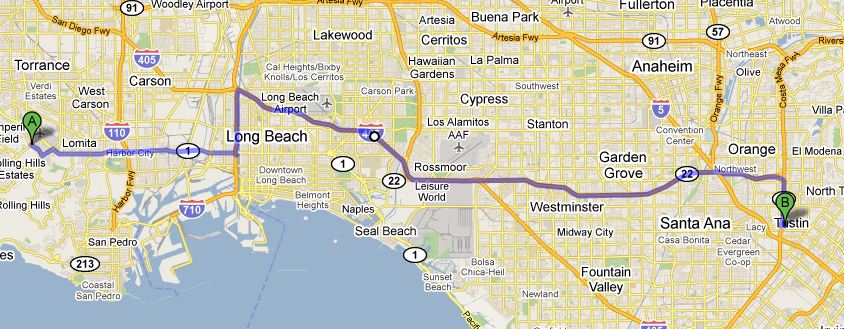 Not far from our office in Torrance, about 35 miles east in the city of Tustin, two firefighters were injured while battling a massive fire in a 50,000-square-foot commercial building on Tuesday.
The fire erupted inside the Maxim Healthcare building which is ironically the company I used to work for almost four years ago before I transitioned into the insurance world.
“All of a sudden, the glass just burst out of the first floor window, and flames immediately started coming out,” said a Maxim Healthcare employee. Firefighters had difficulties dealing with the massive 6-alarm fire. There were people inside the building at the time the fire was reported, however everybody got out okay.
The building was filled with years of important medical files and records. “All of our records were in there, either on the computer or on paper, so they’re up in flames,” said one Maxim employee. The flames were so intense that at one point, firefighters had to back out of the structure, and smoke could be seen for miles. About 100 firefighters responded, but an official cause of the fire has not been determined.
Here are pictures taken from the scene:


Large local fires like these always hit closer to home and make people realize it could happen to anyone, anytime. What if this happened to your building, your business, your office? Are you prepared?
7 tips for fire preparedness planning:*
- Establish an Evacuation Plan: Be sure everyone can get out quickly in an emergency. Designate primary and secondary evacuation routes and exits. Make sure these routes are clearly marked, well-lit, wide enough, and clear at all times. Train your employees in evacuation procedures and practice at least annually.
- Keep an updated list of telephone numbers, including emergency personnel, hospital, public health, utilities,insurance agent, and disaster relief agencies. Include contact names and telephone numbers for customers, suppliers, and distributors. Keep a copy off site
- Protect vital records critical to your business (e.g., financial statements, account information, blueprints, product lists, etc.) Select a safe that has been tested and listed by Underwriters Laboratories UL rates safes for resistance to fire and heat, as well as resistance to burglary tools and torches. Or, keep copies offsite if possible.
- Back up all critical electronic data and programs at least daily. Backing up these valuable assets can help a business recover from a data loss or hardware failure and get back online quickly.
- Secure backup copies of critical data and programs in a physical location separate from your premises to protect against damage from theft, fire, water and other physical hazards.
- Review your current property insurance policy with your insurance agent. Be sure that you understand the coverages (e.g., buildings, personal property, personal property of others, business income, etc.), deductibles, and limits of insurance. You will need to buy separate policies for flood or earthquake damage as they are excluded perils on property insurance policies.
- Keep insurance information and contact names and numbers in a safe place. This will expedite the claim process in the event of a loss.
*Other or additional measures may be required. Talk to a risk management professional
Never think it can’t happen to you! Be prepared.
–JK
Christmas Tree Safety Tips

(See video below showing how fast a dry tree can ignite)
Well, Thanksgiving has come and gone and the countdown for Christmas has officially begun, although retailers have been counting down since the end of September. We are officially 25 days away from the big day and that means it’s time to get out and find yourself that perfect Christmas tree. For most people, decorating the Christmas tree is their favorite part of the holiday. Although fun and decorative, natural and artificial Christmas trees start an average of 250 structure fires each year according to the National Fire Protection Association. These fires cause approximately 14 deaths, 26 injuries and $13.8 million in property damage yearly.
With this being said, the National Safety Council offers some Christmas tree safety tips to make sure a mishap doesn’t spoil your holiday season.
Christmas Trees
- Try to select a fresh tree by looking for one that is green. The needles of pines and spruces should bend and not break and should be hard to pull off the branches. On fir species, a needle pulled from a fresh tree will snap when bent, much like a fresh carrot. Also, look for a trunk sticky with sap.
- Cut off about two inches of the trunk and put the tree in a sturdy, water-holding stand. Keep the stand filled with water so the tree does not dry out quickly.
- Stand your tree away from fireplaces, radiators and other heat sources. Make sure the tree does not block foot traffic or doorways.
- If you use an artificial tree, choose one that is tested and labeled as fire resistant. Artificial trees with built-in electrical systems should have the Underwriters Laboratory (UL) label.
- Line-voltage holiday or decorative lights start an average of 170 home structure fires each year, according to the National Fire Protection Association. These fires cause approximately 7 deaths, 17 injuries and $7.9 million in property damage yearly.
- Keep natural trees watered!
Tree lights
- Only use indoor lights indoors (and outdoor lights only outdoors). Look for the UL label. Check lights for broken or cracked sockets, frayed or bare wires, or loose connections. Replace or repair any damaged light sets.
- Also, use no more than three light sets on any one extension cord. Extension cords should be placed against the wall to avoid tripping hazards, but do not run cords under rugs.
- Turn off all lights on trees and decorations when you go to bed or leave the house.
Tree ornaments
- Always use the proper step stool or ladder to reach high places.
- Read labels before you use materials that come in jars, cans and spray cans.
- Never place lighted candles on a tree or near any flammable materials.
- Avoid placing breakable tree ornaments or ones with small, detachable parts on lower branches where small children or pets can reach them.
- Do not hang popcorn chains and candy canes on the tree when small children are present. They may think that other tree ornaments are also edible.
Take these Christmas tree safety tips very seriously. Check out how fast this dry tree burns:
30 seconds might be too late!
(CYA disclaimer: Information and recommendations are compiled from sources believed to be reliable. I don’t assume responsibility for the correctness, sufficiency or completeness of this information or recommendations. Other or additional safety measures may be required under particular circumstances!)
–JK
Lessons Learned – Week of October 31, 2010
Always be prepared for an Earthquake! On October 21 at 10:21 a.m., California residents statewide practiced drop, cover and hold On in the 2010 California ShakeOut
Jimmy Kimmel prepared his staff with this hilarious video “Security Guard Adelina Braves Big Earthquake” Check out this Youtube clip from his show.
Sports Championships, Riots and How They Relate To Insurance
Congratulations to the San Francisco Giants who beat the Texas Rangers to win the World Series this week. It was the franchises first championship since 1954 and their first since moving to San Francisco from New York after the 1957 season. You think the fans were happy? Like many other professional sports championship victories, passionate “fans” often congregate and begin to riot in celebration.
Luckily, riots don’t happen often but rest assured if they do, it is a covered peril on a property insurance policy (unless there is a specific exclusion attached to the policy form). So if your business gets stuck in the middle of excess celebration and your business property is damaged in a riot or civil commotion, you are covered under a standard property insurance form. Just make sure you carry the appropriate amount of insurance to cover your particular needs.
About Me

I grew up in Fullerton, CA and graduated from Servite High School in Anaheim. I have my Bachelors degree from Loyola Marymount University in Los Angeles. I currently live in Tustin, CA.
Please contact me if you need help with any of the following lines of insurance for your business:
-Cyber / Data Breach
-Commercial Property
-Commercial General Liability
-Products Liability
-Workers Compensation
-Commercial Auto
-Umbrella/Excess Liability
-Errors & Omissions/ Professional Liability
-Employment Practices Liability
-Directors & Officers
-Life & Disability Insurance
 Jimmy Kinmartin, CPCU