
Eyes On NFL Sexual Harassment Controversy
This week in the news, the National Football League is at the center of an alleged harassment controversy. Mexican TV reporter, Ines Sainz, was covering the New York Jets for TV Azteca at last Saturday’s practice. Allegedly, when she went into the team’s locker room to interview QB Mark Sanchez, who has Mexican heritage, she said she heard comments from players such as “Oh my goodness she’s here,” and “OK, I want to be Mexican.”

(cc) jrsnchzhrs/Flickr
The story is making news this week, however, Sainz said she couldn’t definitively say whether the Jets’ conduct crossed a line that would warrant discipline. Sainz noted that she did not initiate the complaints about Jets players’ behavior. She said she mostly ignored the treatment Jets players were giving her in the locker room.
Whether or not Sainz was harassed is to be determined, but this brings to light harassment issues in the workplace and how business owners can be exposed to these types of potential claims. Employment Practices Liability Insurance (EPLI) provides protection for an employer against claims made by employees, former employees, or potential employees relating to many types of employee related lawsuits including claims of sexual harassment, discrimination, wrongful termination, failure to employ or promote, etc.
Due to today’s economic times, there are significant increases in the number of employment practices liability related claims. Statistics show that businesses are four times more likely to face EPL claims than a fire loss of ‘slip and fall’ liability claim. Six out of ten employers have faced employment lawsuits in the past five years. The average EPL claim cost is about $163,000.
Even if a groundless or fraudulent claim is brought against your business, EPLI policies will reimburse your company against the costs of defending a lawsuit in court.
No business is invisible to Employment Practices Liability claims, not even professional football franchises. Is your business protected?
–JK
Liquor Liability Insurance Basics
“Drinking makes such fools of people, and people are such fools to begin with that it’s compounding a felony.” -Robert Benchley
 You see it at sporting events, the company Christmas party, college campuses, bars, restaurants, weddings, concerts, tailgate party’s, birthdays, BBQ’s, everywhere! The list goes on. Booze is everywhere! The problem is, where there is alcohol being served or sold, there are always those who have had ten too many.
Those who get “over-served” often do dumb things which can be harmful to themselves and/or other innocent parties whom they encounter. That’s why businesses which manufacture, sell, serve, or facilitate the use or purchase of alcohol need to purchase liquor liability insurance.
Liquor liability insurance is a form of commercial insurance that protects businesses against loss or damages claimed as a result of a patron becoming intoxicated and injuring themselves or others. It provides coverage for bodily injury or property damage resulting from:
- Causing or contributing to the intoxication of any person;
- Furnishing alcoholic beverages to a person under the legal drinking age or under the influence of alcohol; or
- Violating any statute, ordinance, or regulation relating to the sale, gift, distribution, or use of alcoholic beverages.
Liquor liability is either sold as an add-on to a commercial liability policy or as a totally separate policy.
Liquor Liability laws vary by state. Some states have passed “Dram Shop Liability” laws which make it possible to hold those who serve alcohol to an intoxicated or underage customer responsible for damage or injury caused by these individuals. Most of these laws offer an injured person, such as the victim of a drunk driver, a method to sue the person who served the alcohol.
Originally, Dram Shop Liability laws were intended to apply to taverns, bars, and other establishments selling and serving alcohol. However, “social hosts” (such as those hosting a holiday party) also have some exposure to the risk of liability for serving alcohol.
When business owners host a holiday party and serve alcohol as part of the festivities, liquor liability would most likely be covered by their commercial general liability policy, but that is not a guarantee. It is best to check with your insurance agent first. Host liquor liability is a coverage under a commercial general liability insurance policy for businesses not ‘in the business of’ serving, manufacturing, distributing, selling, serving or providing alcohol.
Although damages in liquor liability lawsuits can be substantial, businesses often lack adequate liquor liability coverage. This exposes them to a substantial degree of liability. No matter how many measures a business owner takes to limit their liquor liability exposures, there’s no guarantee they won’t be dragged into a suit.
Drinking makes fools of people. Don’t allow their foolish actions ruin your business.
–JK
Lessons Learned – Week of September 5, 2010
GRENNE COUNTY, Ohio — (8/25) A 19-year-old, Brennan Eden, was driving well over 100 mph when he passed a police cruiser in the left shoulder of an interstate, striking a steel guard rail that sent his car flying into a bridge overpass. Amazingly, he survived!!
Lesson Learned: Either buy a bike or start taking the bus or something. Eden allegedly had prior legal trouble with traffic and speeding violations. According to his driving record, he was cited for failure to control after a crash last October. Then, just nine days later, records show that he was ticketed for driving 90 mph in a 65 mph zone. If he ever gets his license back, what do you think his insurance premiums would be?
Not So Fun Business Injury Facts
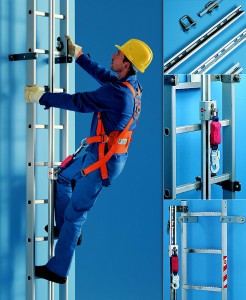 Businesses deal with risk everyday. Whether it be liability risks such as injuries to employees or customers, or property loss risks such as fire or theft, businesses must implement risk control and risk management procedures to protect their operations. Of course, accidents happen and this is why insurance is necessary. Here are six (not so fun) injury facts courtesy of Travelers Insurance:
- 25,000 slip and fall accidents occur daily in the U.S., accounting for 15 percent of all workplace accidents. It is also the leading injury to people on company premises.
- Back injuries account for more lost work time than any other workplace injury. Often, the source is improper lifting.
- Fires in commercial buildings cost more than $2 billion in annual property damage and loss. Lack of, or improper maintenance of sprinkler systems plays a significant role.
- Musculoskeletal disorders results in over $45 billion in loss wages and productivity costs. Organized office workstations and poor ergonomic practices are contributors.
- Adverse weather is the leading cause of vehicle accidents and fatalities. Many company drivers don’t understand the risk or how to adjust their driving behaviors.
- Falls from ladders injure over 20,000 American workers annually. Some injuries result in permanent disabilities and even fatalities. Safety starts before the ladder is even mounted.
Lessons Learned – Week of August 29, 2010
This week is the start of new college football season, so this is a college football theme with a ton of inspiration. This is a must see story about Jake Olson, a 12-year-old USC Trojan fan from California. He has become a staple of the USC football program since last season. The following video shows you why (ESPN did this piece at the end of last year). This one is guaranteed to weigh on your emotions. Seriously, I’ve never seen such optimism in someone. You’ll get your inspirational fix for weeks after watching this story:
Lesson Learned: There are a ton of lessons one can learn from this, but as a wise person once said, “Winning every battle does not define your character as much as how you handle yourself in moments of defeat”
What Makes a Good Business Insurance Agent?
It’s fair to assume that most business owners want to develop a long-term relationship with an insurance agent. They want this because they don’t really like insurance, nor do they bother to read insurance policies. They wish someone else would just take care of it for them! By partnering with a professional agent who does like insurance and actually does read policies, it’s one less worry for a business owner, and a big one.
 The way the insurance market is set up is not really in the best interests of the business owner. Many small business owners are constantly being approached by insurance agents that may represent just a handful of carriers. These agents are really just sales agents for the insurance company. The insurance company might tell the agent something like, “we’re really competitive for workers compensation in the restaurant business.” These small agents will then call all the restaurants and say, “I can get it for you cheaper”. As a result, many small businesses have multiple agents because they have been buying based on price. If insurance policies were a commodity, that might be okay, but, if you’ve ever read one, you find they’re really complicated contracts. What the small business owner really needs is a broker that is not trying to feed a few carriers, but will truly place the insurance with the right carrier and the right price.
So, how do you make sure a business insurance agent is professional and reputable? Here’s what to look for:
- Independence. Independent agents represent a variety of different companies—not just one. They can evaluate and compare the products of several insurance companies to find the right combination of coverage and value for each individual client.
- Licensing by the state.
- Number and names of companies the agent represents.
- Number of years the agent and agency have been in business.
- The agent’s professional designations. For example, CPCU (Chartered Property and Casualty Underwriter) and CLU (Chartered Life Underwriter) are among the industry’s most rigorous and prestigious designations.
- Areas of specialization. Some agents and agencies have experience in specialized products, such as insurance for a restaurant, an IT consultant, or a home business.
- Recommendations and referrals. How did you hear about the agent and the agency? Did someone you trust refer you?
- Full-service capability. Is this a full-service agency for business, personal, health, and disability products?
- Service representatives. Who will handle your account for routine updates and transactions?
- Claims help. Ask if the agent plays a role in handling and tracking claims. Will the agent help resolve disputes that might arise with an insurance company?
- Policy review. Does the agency occasionally review and update policies to make sure your insurance is keeping pace with changes in your situation?
- Industry associations. Does your agent participate in any local, state, or national trade associations? These activities often signify professionalism and a commitment to continuing education in the insurance field.
What kind of relationship do you have with your agent? How do you feel about their services? How do you know you’re in the best position with your business insurance?
-JK
*Information supplied by the Independent Insurance Agents & Brokers of America and the ISU Group One Responsible Source™ program.
General Liability Insurance – Medical Expenses Coverage
As it has been established, general liability coverage is for situations where a third-party claims you or your business was negligent for bodily injury or property damage and sues for those damages. General liability protects your business against incidents that may occur on your premises or at other covered locations where you normally conduct business. When you look at the declarations pages on your commercial general liability policy, it looks like this:
| BUSINESS LIABILITY | LIMITS OF INSURANCE |
| LIABILITY AND MEDICAL EXPENSES | $1,000,000 |
| MEDICAL EXPENSES – ANY ONE PERSON | $10,000 |
| PERSONAL AND ADVERTISING INJURY | $1,000,000 |
| DAMAGES TO PREMISES RENTED TO YOU | $300,000 |
| PRODUCTS-COMPLETED OPERATIONS AGGREGATE | $2,000,000 |
| GENERAL AGGREGATE | $2,000,000 |
Business owners often wonder what the medical expenses coverage entails. They sometimes ask why this limit is so low in comparison to the other limits listed? “Medical expenses are costly, why only $10,000 limits here?” The answer to this question is, where liability coverage is for situations where a third-party claims your negligence for bodily injury or property damage, the medical payments coverage is an exception, as it pays medical expenses for bodily injury to third parties as a result of your operations regardless of fault.
People are less likely to sue you if they receive prompt medical payments to cover the costs of any injuries they have sustained for which they could claim your business or organization is liable. Medical Payments coverage gets the payments to them without their having to file a lawsuit or go to court and engage in a lengthy claims process. This coverage also allows your insurer to pay small nuisance claims without the need for costly legal expenses.
If there is a liability claim and medical expenses are paid, but a lawsuit still arises, general liability will still protect for a covered claim. The purpose of medical expense coverage, however, is to prevent this from happening.
-JK
Lessons Learned – Week of August 22, 2010
If you haven’t seen this video by now, you probably haven’t been anywhere near the internet in the last couple weeks.
Melodi Dushane, from Toledo, OH, was so frustrated that she couldn’t order chicken nuggets – because the restaurant was serving breakfast – that she attacked the member of staff. On the surveillance video, which was released by police, Dushane, 25, gets out of her car and goes on a rampage. The best part of the video is after she pulls away, it’s business as usual at this McDonald’s when the next customer pulls up and is served no problem.
Lesson Learned: I thought I got irritable when I’m hungry! Melodi had an Unhappy Meal that night and was served with two months in jail and a year’s probation. Fast food fury!
Risky Business? There’s a Surplus Lines Insurance Carrier For That
Most businesses have no difficulty getting insurance in the “standard” insurance market, but if your business has a significant loss history or is engaged in high-risk operations, you might not be able to find insurance in the standard commercial insurance market. This doesn’t mean you’re out of luck as a business owner. Rather, you’ll be looking at the “surplus” lines insurance market for your business insurance.

It's safe to assume a trampoline manufacturer has product liability insurance placed with a surplus lines insurance carrier
The surplus lines insurance market, also referred to as the “non-admitted” market, is a segment in the insurance industry where the more difficult or unusual risks are written. Examples of specialized risks include professional liability insurance or high risk business operations such as a manufacturer of medical devices or explosives.
Insurance brokers usually turn to the surplus lines market for their clients after they are denied by at least three state licensed “standard” commercial insurance carriers. Most states identify the standard lines insurance companies as “admitted,” “licensed” or “standard” and the excess and surplus lines insurance companies as “non-admitted,” “unlicensed” or “non-standard.” However, these terms tend to reflect a negative connotation in regards to the strength and security of a surplus lines insurer. The fact of the matter is, most states require surplus lines insurance companies to maintain higher minimum capital levels than they require admitted markets to carry.
As for obtaining insurance for a tough-to-place businesses, the surplus lines insurance market can only be accessed through a specially licensed broker. The broker must have a surplus lines license in order to sell surplus lines insurance. Your broker must provide you with a disclosure notice if your insurance is being issued with a surplus lines company.
Now, for a cheesy analogy to tie this all together, insurance is a lot like love. They say there’s someone out there for everyone. Well when it comes to insurance, there’s an insurance carrier out there for every business. Surplus lines insurance carriers help make the business world go round.
-JK
Commercial Umbrella Insurance Defined
 Commercial umbrella insurance, also referred to as excess liability, provides coverage when a liability claim goes above the aggregate limit of liability and the basic policy limits are exhausted. By purchasing a commercial umbrella, you can protect your business from being liable for this excess liability in a judgement. For instance, if you have $1 million in general liability coverage and a covered claim is settled for $1.5 million, your small business’s umbrella liability insurance policy would pick up the additional amount.
Commercial automobile, commercial general liability, workers compensation, or any other liability policies can be covered by a commercial umbrella.
Not only does an umbrella cover underlying insurance policies, but they may also provide coverage if a basic liability policy is not in force or when there are gaps in coverage under basic liability policies. When a commercial umbrella needs to step up and provide coverage for basic liability loss, it does not pay the loss from the first dollar. It’s common to have a Self-Insured Retention (SIR) amount of at least $10,000. SIR is the equivalent to a deductible. That means if there is a liability claim or loss and no corresponding underlying policy in force, you must pay the first $10,000 of the loss before the umbrella policy responds.
Commercial umbrella policies are typically purchased in $1M increments. The premiums vary depending on your business classification and underlying policies. Policies are often inexpensive considering the added coverage a business gains. For everyday businesses with average risk exposures, umbrella premiums are usually in the ballpark of $400-$600 annually for each $1M purchased.
You can never go wrong purchasing a commercial umbrella policy for your small business. A single umbrella provides broadened protection over all your small business liability exposures. Having the added protection of a liability umbrella policy is coverage no small business should go without.
-JK
About Me

I grew up in Fullerton, CA and graduated from Servite High School in Anaheim. I have my Bachelors degree from Loyola Marymount University in Los Angeles. I currently live in Tustin, CA.
Please contact me if you need help with any of the following lines of insurance for your business:
-Cyber / Data Breach
-Commercial Property
-Commercial General Liability
-Products Liability
-Workers Compensation
-Commercial Auto
-Umbrella/Excess Liability
-Errors & Omissions/ Professional Liability
-Employment Practices Liability
-Directors & Officers
-Life & Disability Insurance
 Jimmy Kinmartin, CPCU