
Flood Damage Vs. Water Damage – There Is A Difference
It has been raining a lot this week in Southern California and I just wrote a flood insurance policy for the first time since 2007, so this is a post about floods. Got it?
Anywhere it rains, it can flood. What defines a flood you ask? A flood is “a general and temporary condition where two or more acres of normally dry land or two or more properties are inundated by water or mud-flow.” Many conditions can result in a flood including: hurricanes, broken levees, outdated or clogged drainage systems and rapid accumulation of rainfall.

IMAGE SOURCE PAGE: http://thegazette.com
Just because you haven’t experienced a flood in the past, doesn’t mean you won’t in the future. Flood risk isn’t just based on history, it’s also based on a number of factors: rainfall, river-flow and tidal-surge data, topography, flood-control measures, and changes due to building and development.
Flood is not a covered peril on your property insurance policy. However, that doesn’t mean water damage is not covered at all. There’s a difference between flood damage and water damage and it’s important that you know the difference when it comes to insurance coverage.
FLOOD INSURANCE
As the name implies, a standard flood insurance policy, which is written by the National Flood Insurance Program, provides coverage up to the policy limit for damage caused by flood. The dictionary defines “flood” as a rising and overflowing of a body of water onto normally dry land. For insurance purposes, the word “rising” in this definition is the key to distinguishing flood damage from water damage. Generally, damage caused by water that has been on the ground at some point before damaging your home is considered to be flood damage. A handful of examples of flood damage include:
- A nearby river overflows its banks and washes into your home.
- A heavy rain seeps into your basement because the soil can’t absorb the water quickly enough
- A heavy rain or flash flood causes the hill behind your house to collapse into a mud slide that oozes into your home.
Flood damage to your home or business can be insured only with a flood insurance policy — no other insurance will cover flood damage. Flood insurance is available through your insurance agent, insurance company or local Federal Emergency Management Office (FEMA). An excellent resource for flood insurance is Floodsmart.gov, the official site of the NFIP.
HOMEOWNERS/ COMMERCIAL PROPERTY INSURANCE
Homeowners insurance and commercial property insurance policies do not provide coverage for flood damage, but they do provide coverage for many types of water damage to your property. Just the opposite from flood damage, for insurance purposes, water damage is considered to occur when water damages your home before the water comes in contact with the ground. A few examples of water damage include:
- A hailstorm smashes your window, permitting hail and rain free access into your home.
- A heavy rain soaks through the roof, allowing water to drip through your attic or ceiling.
- A broken water pipe spews water into your home.
It’s important to note that flood insurance and homeowners insurance do not duplicate coverage for water damage. Instead, they complement each other.
It is up to you to talk to your insurance agent or insurance company about flood insurance and homeowners insurance, and then decide which insurance coverage you need to protect your home, its contents and your family.
Source: Insurance Information Network of California
–JK
Amazing Raw Video Footage of Flooding In Australia
Check out this intense raw footage from of heavy flooding in Toowoomba, Australia on Monday. A true lesson on the power of Mother Nature:
Floods are not covered by a homeowners or commercial property insurance policy. Rather, they must be covered on a separate policy. Homeowners and commercial property insurance covers damage to your property if caused by other perils, such as a fire or a tree falling, but water damage that results from flooding is not included in homeowners coverage.
What Is Flood Insurance?
Flood insurance provides protection from flooding which your home or business may experience. Flood insurance is a national program that’s backed by the federal government, which means you’ll pay the same price regardless of who sells you a flood insurance policy.
Purchasing flood insurance is fairly simple and may be required by your mortgage company if you live in an area that has a higher risk of flooding. In most cases, if you’re required to have flood insurance, the amount of coverage you should have should match the cost to rebuild your home or building.
What Types of Flooding Does Flood Insurance Cover?
Flood insurance covers flooding or rising waters due to sources such as rivers overflowing from melting snow, ocean surge driven by a hurricane, and failed dams or levees. If any of these situations could apply to your home or business, you may want to consider purchasing flood insurance if it’s not already required.
How to Find Out If You’re at Risk
The National Flood Insurance Program offers a flood risk profile to determine if your house is in a high-risk flood area. The site also offers helpful information and tools that include how much a flood could actually cost you, types of flood insurance policies, and how to prepare for and recover from a flood.
Where to Buy Flood Insurance
If you determine you need flood insurance, you may be able to purchase it from your insurance agent. If your agent doesn’t sell flood insurance, you can find coverage through the NFIP.
Note that when it comes to your auto insurance, flood is covered as long as you carry comprehensive physical damage on your vehicle and you have no special exclusions on your policy.
–JK
Snow Causes Metrodome Roof Collapse
Early on Sunday morning [12/12/10] in Minneapolis, MN, the Metrodome‘s (home of the Minnesota Vikings) roof collapsed following heavy snowfall over the weekend.
The roof is held up by hot air and a cable system which was unable to support the nearly 17 inches of snow Minneapolis received. The snowfall was the largest since a 1991 blizzard. It came a day before the Vikings were supposed to host the New York Giants. This is the second time the dome has collapsed. In April 1983, about a year after the Metrodome opened, heavy snow caused a similar cave-in.
Here is video footage of the collapse:
Is collapse a covered peril on a commercial property insurance policy?
Under the Special Property coverage form, collapse is specifically excluded from coverage. However, limited coverage is provided under the “Additional Coverages” section on the form, so you actually get some coverage back. (Carefully note that coverage for collapse may not be included in some named perils policies). Talk to your insurance agent about this…..you’re not expected to know what this all means, but you must understand! Otherwise, you may have gaps in coverage that you are unaware of.
For reference, the link below is the ADDITIONAL COVERAGES section on the special property coverage form which specifies what coverages apply for losses due to collapse.
Special Property Coverage Form: Section A.5.a “Collapse”
Every carrier and/or policy may have corresponding endorsements or exclusions, so be sure to contact your insurance agent if you have questions or concerns about your own coverage. Or, feel free to contact me anytime to discuss.
–JK
Tustin, CA Commercial Office Building Burns In Massive Fire
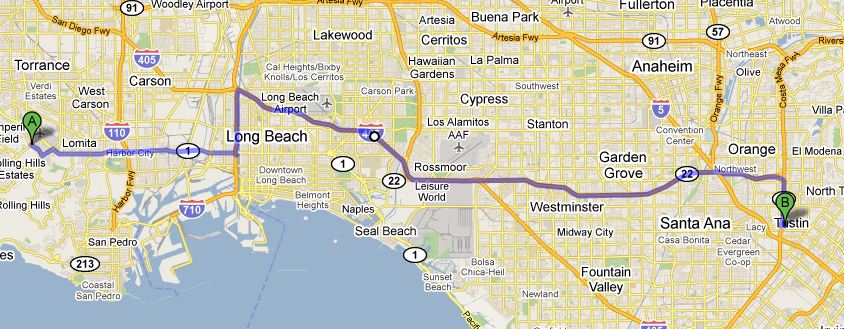 Not far from our office in Torrance, about 35 miles east in the city of Tustin, two firefighters were injured while battling a massive fire in a 50,000-square-foot commercial building on Tuesday.
The fire erupted inside the Maxim Healthcare building which is ironically the company I used to work for almost four years ago before I transitioned into the insurance world.
“All of a sudden, the glass just burst out of the first floor window, and flames immediately started coming out,” said a Maxim Healthcare employee. Firefighters had difficulties dealing with the massive 6-alarm fire. There were people inside the building at the time the fire was reported, however everybody got out okay.
The building was filled with years of important medical files and records. “All of our records were in there, either on the computer or on paper, so they’re up in flames,” said one Maxim employee. The flames were so intense that at one point, firefighters had to back out of the structure, and smoke could be seen for miles. About 100 firefighters responded, but an official cause of the fire has not been determined.
Here are pictures taken from the scene:


Large local fires like these always hit closer to home and make people realize it could happen to anyone, anytime. What if this happened to your building, your business, your office? Are you prepared?
7 tips for fire preparedness planning:*
- Establish an Evacuation Plan: Be sure everyone can get out quickly in an emergency. Designate primary and secondary evacuation routes and exits. Make sure these routes are clearly marked, well-lit, wide enough, and clear at all times. Train your employees in evacuation procedures and practice at least annually.
- Keep an updated list of telephone numbers, including emergency personnel, hospital, public health, utilities,insurance agent, and disaster relief agencies. Include contact names and telephone numbers for customers, suppliers, and distributors. Keep a copy off site
- Protect vital records critical to your business (e.g., financial statements, account information, blueprints, product lists, etc.) Select a safe that has been tested and listed by Underwriters Laboratories UL rates safes for resistance to fire and heat, as well as resistance to burglary tools and torches. Or, keep copies offsite if possible.
- Back up all critical electronic data and programs at least daily. Backing up these valuable assets can help a business recover from a data loss or hardware failure and get back online quickly.
- Secure backup copies of critical data and programs in a physical location separate from your premises to protect against damage from theft, fire, water and other physical hazards.
- Review your current property insurance policy with your insurance agent. Be sure that you understand the coverages (e.g., buildings, personal property, personal property of others, business income, etc.), deductibles, and limits of insurance. You will need to buy separate policies for flood or earthquake damage as they are excluded perils on property insurance policies.
- Keep insurance information and contact names and numbers in a safe place. This will expedite the claim process in the event of a loss.
*Other or additional measures may be required. Talk to a risk management professional
Never think it can’t happen to you! Be prepared.
–JK
Sports Championships, Riots and How They Relate To Insurance
Congratulations to the San Francisco Giants who beat the Texas Rangers to win the World Series this week. It was the franchises first championship since 1954 and their first since moving to San Francisco from New York after the 1957 season. You think the fans were happy? Like many other professional sports championship victories, passionate “fans” often congregate and begin to riot in celebration.
Luckily, riots don’t happen often but rest assured if they do, it is a covered peril on a property insurance policy (unless there is a specific exclusion attached to the policy form). So if your business gets stuck in the middle of excess celebration and your business property is damaged in a riot or civil commotion, you are covered under a standard property insurance form. Just make sure you carry the appropriate amount of insurance to cover your particular needs.
Four Insurance Endorsements You Shouldn’t Go Without
First off, what’s an endorsement you ask? As defined by the Insurance Information Institute, an endorsement is a written form attached to an insurance policy that alters the policy’s coverage, terms, or conditions. When an insurance policy is endorsed, the premium paid for the policy can change. However, not by much considering the additional coverage provided.
The following four endorsements are not typically part of a regular property or general liability insurance policy, but they are a must if they apply to your operations.
- Hired & Non-Owned Auto Liability: Hired & Non-owned auto is a small endorsement which can have a huge impact on your general liability insurance coverage. It protects your business from bodily injury and property damage claims caused by a vehicle you rent or borrow; or caused by vehicles owned by others, such as your employees. A simple errand to the store by an employee can put your business at high risk if you don’t have this endorsement on your general liability policy.
- Employee Benefits Liability: Liability of an employer for an error or omission in the administration of an employee benefit program. Coverage is intended to extend to the “administration” of these plans, including counseling employees, handling records, enrolling/terminating/cancelling employees in specified plans on a timely basis, etc. This endorsement is usually added to the general liability policy but may also be provided by a fiduciary liability policy.
- Earthquake Sprinkler Leakage (For CA & other earthquake regions): Earthquake is an excluded peril on a standard property insurance policy and your fire sprinklers bursting as a result of an earthquake and discharging water all over your property is not covered either. However, by adding an Earthquake Sprinkler Leakage endorsement to your property policy, you would be covered for the water damage caused by bursting sprinklers from an earthquake. This is never more than a few hundred dollars to add.
- Sewer Drain & Backup: Fall and spring tend to be the wettest seasons of the year, making buildings and homes most susceptible to the backup of sewer or drain lines. These events don’t occur often, but when they do, it can become a small disaster. A standard property insurance policy excludes coverage for such an event. The backup of sewer and drains as well as the failure of a sump pump is also excluded on a standard property policy. The damage you sustain from either of these problems will not be covered and you’ll be responsible to pay for the loss and the clean up. You shouldn’t go without this coverage endorsement.
To reiterate, it’s never more than a few hundred dollars annually to add any of these endorsements to your existing property or general liability insurance policies. In fact, it’s usually less than $100 in many cases for small businesses. With the amount of coverage provided by adding them, this is pocket change! Be sure to review your policies today to see if you carry these endorsements on your current policies.
–JK
Commercial Property Insurance – What Insurance Carriers Review Before Writing Coverage
Commercial property insurance is a “first party” coverage designed to protect the assets of a building owner. In simple terms, commercial property insurance protects buildings and contents for losses such as fire, smoke, vandalism, sprinkler leakage, collapse, theft, etc.
If you are a commercial building owner applying for commercial property insurance, carriers look at various physical characteristics of your building when underwriting. They use the “COPE” method which is an acronym that stands for four property risk characteristics:
- Construction (e.g., frame, brick, masonry, etc.)
- Occupancy (how the building is being used)
- Protection (e.g., quality of the responding fire department, adequacy of water pressure and water supply in the community, the presence or absence of smoke alarms, burglar alarms, etc.)
- Exposure (risks of loss posed by neighboring property or the surrounding area, taking into consideration what is located near the property, such as an office building, a subdivision, or a fireworks factory).
Construction type is a major component in property pricing. If construction type is incorrectly identified, the premium pricing will either be too high or too low.
Occupancy is very important to an underwriter because it helps determine the combustibility of a particular building. Each time the occupancy of a building changes, it presents a different underwriting situation and will need to be re-evaluated by an underwriter. Also, common hazards such as the plumbing, heating, roofing, and electrical systems are important factors. Underwriters will want to know when these were last updated or inspected if over 30 years of age.
In addition to evaluating the actual building and contents to be insured, insurance carriers will look at the exposures and occupancies surrounding the building to be insured. An acceptable risk may be affected by the proximity or conditions of exposing properties.
Finally, public fire protection is a key underwriting consideration, as it is the most essential element in controlling a fire once it has started and gained headway.
The pictures below are an example of a commercial building which insurance carriers desire to insure. It is well maintained, has a low-risk tenant, in a nice industrial area, with low-risk neighboring businesses (i.e. – no dynamite manufacturers next door or anything comparable).
When possible, I prefer to visit buildings first hand before sending to insurance carriers for quotes. This way, I know the exposures when discussing with underwriters.
–JK
About Me

I grew up in Fullerton, CA and graduated from Servite High School in Anaheim. I have my Bachelors degree from Loyola Marymount University in Los Angeles. I currently live in Tustin, CA.
Please contact me if you need help with any of the following lines of insurance for your business:
-Cyber / Data Breach
-Commercial Property
-Commercial General Liability
-Products Liability
-Workers Compensation
-Commercial Auto
-Umbrella/Excess Liability
-Errors & Omissions/ Professional Liability
-Employment Practices Liability
-Directors & Officers
-Life & Disability Insurance
 Jimmy Kinmartin, CPCU