
Fired ESPN Announcer Strikes Back With Lawsuit

Ron Franklin
Former ESPN announcer Ron Franklin, who was recently fired for allegedly making sexist comments to a sideline reporter before the Chick Fil-A Bowl, is suing ESPN for wrongful termination.
He confirmed the lawsuit on Wednesday but did not comment on the details of the lawsuit.
Franklin allegedly said to the sideline reporter, “Listen to me sweet baby, let me tell you something.” After the reporter told him not to talk to her like that, Franklin responded, “OK, then listen to me a-hole.”
Franklin later apologized in a statement. The longtime college football and basketball announcer worked for ESPN for 25 years.
What’s the moral of the story?
Employment Practices Liability claims such as this are not limited to major corporations such as ESPN. In today’s litigious climate, employers of all sizes are vulnerable. According to U.S. Equal Employment Opportunity Commission (EEOC) data, 41% of all EPL claims are brought against small employers with 15 to 100 employees. This is why any business with employees, or those which begin to hire employees must consider Employment Practices Liability Insurance (EPLI).
Employment Practices Liability insurance insures against claims of wrongful termination, failure to hire, failure to promote, various types of discrimination, as well as sexual harassment.
These insurance policies will reimburse your company against the costs of defending a lawsuit in court. They will also compensate for judgments and settlements. It doesn’t matter whether your company wins or loses the suit. Policies typically do not pay for punitive damages or civil or criminal fines, however.
One more benefit of these policies is that most include risk management services. Employment Practices Liability Insurance policies will typically offer an unlimited phone hotline service, online training, and state and federal compliance assistance from licensed attorneys.
If you are a business owner and are interested in more information on Employment Practices Liability Insurance, you can reach us here and we’ll be sure to follow-up with you:


Thank you,
–JK
Earthquake Safety – Prepare Your Workplace
For you Californians out there, according to the US Geological Survey, there is a 60% chance that a 6.7 magnitude or greater earthquake will occur in California in the next 30 years. I’ve been hearing that since elementary school so I don’t know how much longer we have if this is true. An earthquake of this size can can severely strain public services and disrupt business operations. The best way to survive an earthquake is to prepare before a big one hits. Here are some earthquake safety recommendations to consider for general guidance purposes.
Prepare your workplace for an earthquake
- Large equipment such as boilers, tanks, and machines need to be secured properly so they will not fall over in an earthquake.
- Furniture such as bookshelves and file cabinets along with storage racks and shelving should be strapped or attached to the wall to keep it stable and upright.
- Survey your workspace to make sure that heavy items are stored at lower heights or secured so they won’t fall.
- Photos and pictures should be hung onto the wall with screws or earthquake “j” clips.
- Keep doors, exits, and aisle ways clear at all times for quick evacuations.
- Keep areas under desks and tables uncluttered to make room to take cover in an earthquake.
- Store chemicals properly and in compatible groups.
Gather emergency supplies for the workplace
- Fire extinguishers should be charged and inspected monthly so they are always ready to use.
- Periodically test fire alarms, sprinklers, and emergency lighting.
- Keep flashlights, a radio, extra batteries, and a first aid kit on hand at all times.
- Consider stockpiling food, water, blankets, and sanitary supplies such as toilet paper and portable toilets.
- Keep enough supplies for the number of workers that may need to shelter or work at your facility after an earthquake.
- Prepare personal emergency supplies for your desk and your car, including comfortable clothes and shoes, a flashlight and batteries, first aid kit, food, water, and necessary medications.
Make an emergency plan at work and at home
- Businesses must have an emergency evacuation plan that details how employees will evacuate from the building, where they will meet, how to account for everyone, and how to get further instructions to act.
- Current emergency contact phone numbers for all employees and management are critical in an emergency.
- Businesses should also list and prioritize their functions in a Business Continuity Plan (BCP) that ensures access to the people, materials, and other supplies needed to continue work after an earthquake.
- Workers should have family emergency plans in place at home in case they are stranded at work or required to work after an earthquake.
- Keep enough emergency supplies on hand to maintain your family for at least 3 days.
- Make lists of emergency contact phone numbers and determine a meeting place for the family after an emergency.
Practice and train on your emergency procedures
- Practice emergency evacuations.
- Get training on first aid and CPR techniques.
- Train and remember to Duck, Cover and Hold in an earthquake. If you cannot take cover, stand against an interior wall and protect your head and neck with your arms.
- Practice your business recovery procedures by inspecting and restarting equipment and computers in the proper and prioritized order.
Earthquakes aren’t planned, but you can at least plan and practice earthquake safety measures to increase your chances of survival.
Keep in mind that standard property insurance policies exclude coverage for damages resulting from earth movement, including earthquakes. Read more about it here. In order to cover your home or business for earthquake damage, you must purchase a separate earthquake insurance policy.
–JK
What Do I do In the Event of An Auto, Property, or Liability Loss?
 Ever been in a car accident? Or, been affected by a fire, burglary, theft, etc? Even injured someone accidentally?
Chances are there was a flood of emotions going through your head if you’ve experienced any of these scenarios. During times like these, it’s likely you’ll have to rely on your insurance coverage to help you through it. These are the times you’re actually really happy your paid those insurance premiums.
Here are some tips on what to do in the event of an auto, property, or liability loss courtesy of Golden Eagle Insurance*:
Automobile Losses
- Make sure everyone is okay – call for medical assistance if necessary
- Notify the police about the loss
- Exchange contact and insurance information with other parties
- Get the names and phone numbers of any witnesses
- Make a diagram of accident
- Photograph the scene prior to moving the vehicle(s) if this can be safely done
- Take reasonable steps to move your vehicle from the scene and to safeguard it and any personal property contained in the vehicle from subsequent damage
- Make no commitments for payment
- Do not discuss fault or blame at the scene
- Do not discuss the details of the accident with anyone except the police, your insurance agent, claim adjuster, or your legal counsel
Property Losses
- Protect all property from further damage
- Preserve all evidence
- Locate purchase records to document values
- Describe extent of damage to property
- If emergency restoration services are needed, call a service such as Servpro at 1-800-SERVPRO
General Liability Losses
- Contact emergency personnel if necessary
- Document how, when and where the accident occurred
- Photograph scene and/or all damaged articles
- Complete accident investigation form (available from your agent or insurance carrier)
- Collect names, addresses and telephone numbers of injured persons
- Make note of any injuries/complaints
- Identify any potential witnesses and secure their names, addresses and telephone numbers
- Make no commitments for payment
- Do not discuss fault or blame at the scene
- Do not discuss the details of the loss with any party representing the injured person without first consulting with your insurance agent, claim adjuster or legal counsel
*While not an exhaustive list, the above information is provided to assist you should a loss occur. Nothing contained within this material should be construed as providing legal advice nor does it imply coverage will be afforded. Every claim submitted must be reviewed and evaluated based upon the applicable policy of insurance and the facts of loss.
–JK
Amazing Raw Video Footage of Flooding In Australia
Check out this intense raw footage from of heavy flooding in Toowoomba, Australia on Monday. A true lesson on the power of Mother Nature:
Floods are not covered by a homeowners or commercial property insurance policy. Rather, they must be covered on a separate policy. Homeowners and commercial property insurance covers damage to your property if caused by other perils, such as a fire or a tree falling, but water damage that results from flooding is not included in homeowners coverage.
What Is Flood Insurance?
Flood insurance provides protection from flooding which your home or business may experience. Flood insurance is a national program that’s backed by the federal government, which means you’ll pay the same price regardless of who sells you a flood insurance policy.
Purchasing flood insurance is fairly simple and may be required by your mortgage company if you live in an area that has a higher risk of flooding. In most cases, if you’re required to have flood insurance, the amount of coverage you should have should match the cost to rebuild your home or building.
What Types of Flooding Does Flood Insurance Cover?
Flood insurance covers flooding or rising waters due to sources such as rivers overflowing from melting snow, ocean surge driven by a hurricane, and failed dams or levees. If any of these situations could apply to your home or business, you may want to consider purchasing flood insurance if it’s not already required.
How to Find Out If You’re at Risk
The National Flood Insurance Program offers a flood risk profile to determine if your house is in a high-risk flood area. The site also offers helpful information and tools that include how much a flood could actually cost you, types of flood insurance policies, and how to prepare for and recover from a flood.
Where to Buy Flood Insurance
If you determine you need flood insurance, you may be able to purchase it from your insurance agent. If your agent doesn’t sell flood insurance, you can find coverage through the NFIP.
Note that when it comes to your auto insurance, flood is covered as long as you carry comprehensive physical damage on your vehicle and you have no special exclusions on your policy.
–JK
My First Video Blog Post!
Ladies and gentleman, I bring you my first video blog. Be easy on me though, this is my first time. I’m pretty sure this 90 second clip took 90 minutes to put up. However, I learned a lot in the process and am excited to add video to my blog. Thanks for watching!
–JK
2010 Blog In Review
The stats helper monkeys at WordPress.com mulled over how this blog did in 2010, and here’s a high level summary of its overall blog health:

The Blog-Health-o-Meter™ reads This blog is on fire!.
Crunchy numbers

A Boeing 747-400 passenger jet can hold 416 passengers. This blog was viewed about 1,900 times in 2010. That’s about 5 full 747s.
In 2010, there were 72 new posts, not bad for the first year! There were 205 pictures uploaded, taking up a total of 55mb. That’s about 4 pictures per week.
The busiest day of the year was July 1st with 177 views. The most popular post that day was About Me.
Where did they come from?
The top referring sites in 2010 were facebook.com, twitter.com, linkedin.com, mail.yahoo.com, and WordPress Dashboard.
Some visitors came searching, mostly for merry christmas quotes, office holiday party, jim kinmartin, cell phone usage policy, and small business building.
Attractions in 2010
These are the posts and pages that got the most views in 2010.
About Me June 2010
Featured Client Partner: ‘Mac–n-Mo’s Magical Morsels’ December 2010
1 comment
Why Your Business Should Consider A Cell Phone Usage Policy August 2010
Merry Christmas! (21 Christmas Quotes For Everyone) December 2010
Christmas Tree Safety Tips November 2010
Merry Christmas! (21 Christmas Quotes For Everyone)
21 Christmas quotes for everyone, from the funny to the more sentimental.
- “In the o
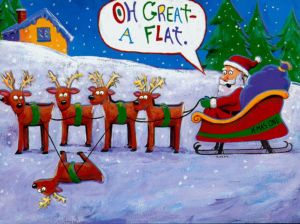 ld days, it was not called the Holiday Season; the Christians called it ‘Christmas’ and went to church; the Jews called it ‘Hanukka’ and went to synagogue; the atheists went to parties and drank. People passing each other on the street would say ‘Merry Christmas!’ or ‘Happy Hanukka!’ or (to the atheists) ‘Look out for the wall!'” -Dave Barry
 - “Christmas is a time when everybody wants his past forgotten and his present remembered. What I don’t like about office Christmas parties is looking for a job the next day.” -Phyllis Diller
- “The one thing women don’t want to find in their stockings on Christmas morning is their husband.” -Joan Rivers
- “Christmas is a race to see which gives out first – your money or your feet.”
- “Christmas at my house is always at least six or seven times more pleasant than anywhere else. We start drinking early. And while everyone else is seeing only one Santa Claus, we’ll be seeing six or seven.” -W.C. Fields
- “Mail your packages early so the post office can lose them in time for Christmas.” -Johnny Carson
- “I once bought my kids a set of batteries for Christmas with a note on it saying, toys not included.” -Bernard Manning
- “The Supreme Court has ruled that they cannot have a nativity scene in Washington, D.C. This wasn’t for any religious reasons. They couldn’t find three wise men and a virgin.” -Jay Leno
- “Let me see if I’ve got this Santa business straight. You say he wears a beard, has no discernible source of income and flies to cities all over the world under cover of darkness? You sure this guy isn’t laundering illegal drug money?” -Tom Armstrong
- “Oh look, yet another Christmas TV special! How touching to have the meaning of Christmas brought to us by cola, fast food, and beer… Who’d have ever guessed that product consumption, popular entertainment, and spirituality would mix so harmoniously?” -Bill Watterson, Calvin & Hobbes
- “There is no ideal Christmas; only the one Christmas you decide to make as a reflection of your values, desires, affections, traditions.” -Bill McKibben
- “Christmas waves a magic wand over this world, and behold, everything is softer and more beautiful.” -Norman Vincent Peale
- “There has been only one Christmas – the rest are anniversaries.” -W.J. Cameron.
- “Santa Claus has the right idea. Visit people once a year.” -Victor Borge
- “Never worry about the size of your Christmas tree. In the eyes of children, they are all 30 feet tall.” -Larry Wilde
- “Blessed is the season which engages the whole world in a conspiracy of love.” -Hamilton Wright Mabi
- “Let us remember that the Christmas heart is a giving heart, a wide open heart that thinks of others first. The birth of the baby Jesus stands as the most significant event in all history, because it has meant the pouring into a sick world of the healing medicine of love which has transformed all manner of hearts for almost two thousand years… Underneath all the bulging bundles is this beating Christmas heart.” -George Matthew Adams
- “I wish we could put up some of the Christmas spirit in jars and open a jar of it every month.” -Harlan Miller
- “If there is no joyous way to give a festive gift, give love away.”
- “The best of all gifts around any Christmas tree: the presence of a happy family all wrapped up in each other.”
- “Peace on earth will come to stay, when we live Christmas every day.” -Helen Steiner Rice

“MERRY CHRISTMAS TO ALL AND TO ALL A GOOD NIGHT!”
–JK
Featured Client Partner: ‘Mac–n-Mo’s Magical Morsels’
As an insurance agent, I take great pleasure in working with so many different types of businesses, large and small. Each and every business has its own story and background which make them unique. This is why my job is so enjoyable….every day brings something new to the table. There are some really notable stories behind these great businesses which I am going to start sharing with you here on my site. These are client partners I value and think you should know about. Without further ado, meet Maura Knowles and her business, ‘Mac–n-Mo’s Magical Morsels’.
 Maura Knowles, an established actor and creator of ”Mac–n-Mo’s Magical Morsels , usually begins her story with the line: ”Mac–n-Mo’s Magical Morsels were created out of love by Mo (that’s me), for Mac (that’s my Dad).” [See story from Jessica Lymberopoulos.]
In February, 2010, Mo’s dad suffered 2 massive heart attacks and underwent a quadruple bypass surgery. The operation was successful and he was discharged with very clear and strict dietary guidelines. To further complicate things, Mac is a diabetic.
Mac’s doctor put him on a new diet with strict guidelines and limitations. “Low salt, low-fat, low sugar, low cholesterol, no trans fat, more fiber. None of this, some of that. More of this, less of that.” Mac’s new diet proved to be a giant challenge, as he craved baked goods.
One Saturday morning, in March, Mac begged Mo to bake something sweet. Mo’s challenge was to find all natural ingredients, no preservatives, very little salt, no added sugar, higher fiber. She sought out doctor-approved ingredients and avoided all sugar, sodium, wheat (due to a wheat intolerance) and “fake stuff.” Maura returned to her parents’ kitchen with bags of seemingly incompatible food items. No one in the family could predict what the end result would be, but after a couple of days of concocting, Maura came up with “Magical Morsels.”
She, along with her mom and sister devoured them and most importantly, her dad relished each morsel, exclaiming, “these are magic!” Mo shared some with friends and soon she was taking order requests. One of those friends loved the morsels so much that he shared them with a friend who owned a food store in Los Angeles. After trying them, she approached Maura about selling them in her store.
Initially, Maura was skeptical of the idea. “I’m not in business. I’m an actor,” she said. But the store owner persisted, claiming that Maura’s Magical Morsels were delicious and that her son had devoured the entire bag. “I decided to go for it because there is nothing like it on the market. There’s no homemade treat for people with health conditions like my Dad that taste good,” Maura said. Each morsel is only 30 calories, 1g sugar, 0 sodium, 4 carbs & NO preservatives or artificial anything!
In September of this year, Maura took the plunge and Mac-n-Mo’s became a company. Now, four stores in the Los Angeles area are selling her gluten-free and vegan treats.
Maura’s mission for Mac-n-Mo’s is simple, yet deliberate. She’s hoping to change the way we eat snacks and treats, one morsel at a time.
You can visit Mo’s website at www.macnmos.com. Also, be sure to follow her on Twitter at @macnmomorsels.
Check out this video on Mo’s Magical Morsels:
Source: Fooducopia
–JK
Sports Championships, Riots and How They Relate To Insurance
Congratulations to the San Francisco Giants who beat the Texas Rangers to win the World Series this week. It was the franchises first championship since 1954 and their first since moving to San Francisco from New York after the 1957 season. You think the fans were happy? Like many other professional sports championship victories, passionate “fans” often congregate and begin to riot in celebration.
Luckily, riots don’t happen often but rest assured if they do, it is a covered peril on a property insurance policy (unless there is a specific exclusion attached to the policy form). So if your business gets stuck in the middle of excess celebration and your business property is damaged in a riot or civil commotion, you are covered under a standard property insurance form. Just make sure you carry the appropriate amount of insurance to cover your particular needs.
Six Employment Practices Statutes You Should Be Aware of as a Business Owner
 If you’re a small business owner, chances are you don’t have the luxury of your own Human Resources department to oversee employment law compliance or employee relations and communication. You probably have your hands tied in many other areas just trying to make it through each day. To make your job more difficult, state and federal bureaucracies throw lists of employment statutes at you that you must comply with or run the risk of getting sued. Among the long list, the following statutes are some of the more noteworthy ones, but certainly not the only to be concerned about:
- Title VII of Civil Rights Act of 1964 (Title VII): This statute is a common source of employment litigation. This Federal statute makes it unlawful for an employer to refuse to hire or terminate any individual, or otherwise to discriminate against any individual with respect to his compensation, terms, conditions, or privileges of employment because of race, color, religion, sex, including sexual harassment, national origin, and pregnancy, childbirth, or related medical conditions.
- Equal Pay Act: This act deals specifically with unlawful differentials in compensation based on sex. The Equal Pay Act makes it unlawful to pay employees at rates less than the rate applicable to employees of the opposite sex for equal work for jobs requiring equal skill, equal effort, equal responsibility, and where the work is performed in similar working conditions.
- Americans with Disability Act (ADA): The ADA prohibits discrimination on the basis of disability against a qualified prospective or current employee, defined as an individual with a disability who, with or without reasonable accommodations can perform his or her essential duties of the employment position for which the person desires or holds. Many states also have statutes that place additional requirements upon employers.
- Age Discrimination in Employment Act (ADEA): The ADEA applies to employees who are age 40 or over and makes it unlawful for an employer to fail or refuse to hire or terminate any employee or otherwise discriminate against any individual with respect to his or her compensation, terms, conditions, or privileges of employment because of their age. Many states apply ADEA to all ages prohibiting age discrimination of any kind.
- Fair Labor Standards Act (FLSA): The FLSA sets the minimum wage and maximum hour/overtime requirements. The Wage and Hour Division of the Department of Labor manages the administration of the FLSA.
- Family Medical Leave Act (FMLA): The FMLA offers certain employees with up to 12 weeks of unpaid, job protected leave a year, and requires health benefits to be maintained during leave as if the employee continued to work instead of taking the leave. This statute is the responsibility of the Department of Labor (DOL).
As a business owner, how do you feel when you read these? Content and compliant? Or disturbed? What if a lawsuit was brought against your business tomorrow for wrongful termination or emotional distress, among other things? You probably wouldn’t feel as bothered if you knew you had an Employment Practices Liability Insurance policy in force to protect your business.
As I’ve written on prior posts, Employment Practices Liability Insurance provides protection for an employer against claims made by employees, former employees, or potential employees. It covers discrimination (age, sex, race, disability, etc.), wrongful termination of employment, sexual harassment, and other employment-related allegations. Employment Practices Liability Insurance (EPLI) is needed by any business with employees and those which begin to hire employees. EPL claims are not limited to major corporations. In today’s litigious climate, employers of all sizes are vulnerable. In fact, six out of ten employers have faced employee lawsuits within the last five years.
The cost of employment practices liability coverage depends on your type of business, the number of employees you have, and various risk factors such as prior claims or loss history. Your insurance agent can provide a quote with very minimal information, often right on the spot. If you don’t have a policy in force now, you must consider calling your insurance agent right away to discuss. This might be your best alternative to not having your own HR department or HR director.
About Me

I grew up in Fullerton, CA and graduated from Servite High School in Anaheim. I have my Bachelors degree from Loyola Marymount University in Los Angeles. I currently live in Tustin, CA.
Please contact me if you need help with any of the following lines of insurance for your business:
-Cyber / Data Breach
-Commercial Property
-Commercial General Liability
-Products Liability
-Workers Compensation
-Commercial Auto
-Umbrella/Excess Liability
-Errors & Omissions/ Professional Liability
-Employment Practices Liability
-Directors & Officers
-Life & Disability Insurance
 Jimmy Kinmartin, CPCU